

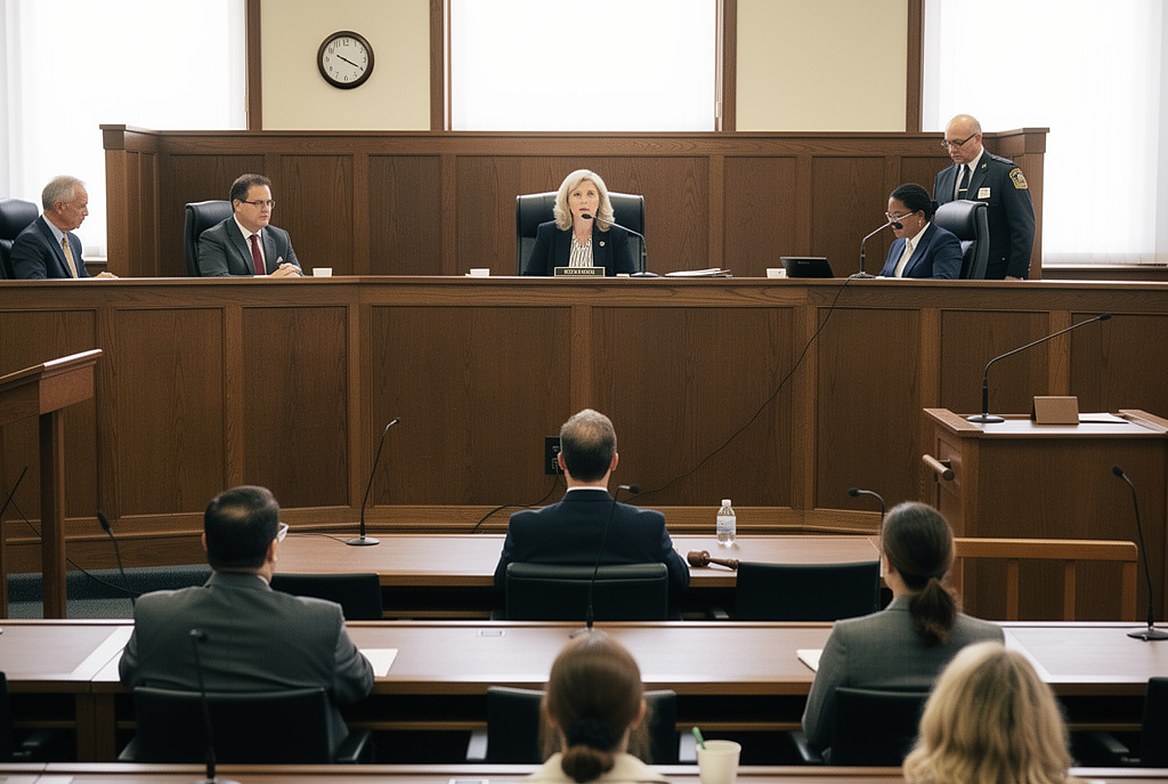

Practice Area · The Process
Divorce in Colorado.
Colorado divorce is a no-fault, disclosure-driven process with broad judicial discretion at the end of it. Understanding the sequence — and where cases are actually won or lost inside it — is the first strategic advantage.
The Framework
No-fault grounds. Fault still isn't irrelevant.
The only ground for divorce in Colorado is that the marriage is irretrievably broken. No one has to prove wrongdoing, and marital conduct doesn't decide who gets what. But there's a distinction most people miss: economic misconduct still counts. Dissipation — spending marital assets on an affair, gambling them away, quietly running down a business during the case — is squarely relevant to how property is divided. Conduct doesn't matter for the grounds; it can matter a great deal for the money.
Two clocks govern the start and end: at least one spouse must have been domiciled in Colorado for 91 days before filing, and the decree cannot enter until at least 91 days after the petition is filed and served (or after both spouses file jointly). Ninety-one days is the legal minimum — contested cases with real assets take considerably longer, and honest counsel says so up front.
The Sequence
Disclosure early. Trajectory set early.
The case begins with the petition, but it becomes real at mandatory financial disclosure: C.R.C.P. 16.2 requires affirmative financial disclosure early in the case — a sworn financial statement, mandatory disclosures, and supporting documents — not eventually. Incomplete disclosure is both a trap for the careless and an opportunity against the evasive; if a material asset or liability is misstated or omitted, the court may reallocate assets and liabilities on a motion filed within five years of the final decree.
Then temporary orders — who lives where, who pays what, how the children's time runs while the case proceeds. Temporary orders set the trajectory of the entire case: they create the status quo the final orders often resemble. Many Colorado courts require mediation or another form of dispute resolution before a contested permanent-orders hearing — a requirement that can be waived for good reason, such as safety concerns. I treat each of these stages as positioning for the endgame, not paperwork.
Posture and Timeline
Prepared to try it. Built to settle it.
Most divorces should settle, and the strong settlements go to the side that is fully prepared not to. My cases are built from the first week as though they will be tried — experts identified early, disclosures pressure-tested, a record kept clean — because that preparation is what makes the other side reasonable. Realistic timelines: an uncontested case can conclude near the 91-day floor; a contested case with a business or complex estate typically runs many months longer, driven mostly by valuation and discovery. Anyone promising faster is guessing with your money.
Common Questions
What everyone asks in the first call.
How long will this take?
The legal minimum is 91 days from filing and service (or a joint filing). Real answer: uncontested cases can finish close to that; contested cases with businesses or significant assets usually take substantially longer, because valuation and disclosure take time to do right. I'd rather give you an honest range on your facts than a number that sounds good.
Will we have to go to court?
Probably for little, possibly for nothing. Most cases resolve through negotiation or mediation. But the credible ability to try the case is exactly what makes settlement possible on good terms — so I prepare as if we will, in order to make it likely we won't.
Does it matter that my spouse had an affair?
Not for the divorce itself — Colorado is no-fault. But if marital money funded it, that's dissipation, and it belongs in the property analysis. The conduct conversation and the money conversation are different conversations.

The rest of this chapter.
How a Colorado divorce actually moves: temporary orders, mediation and litigation, privacy, and what happens when an order has to be modified, enforced, or appealed.
- Divorce in Coloradohow the process actually worksYou are here
- Mediation & Litigationsettle from strength→
- Privacy & Discretionengineered from the first filing→
- Emergency & Protection Ordersthe automatic injunction, and urgent relief→
- Modificationswhich door you knock on matters→
- Enforcement & Contemptorders are only as good as their enforcement→
- Appealswon at trial, by the record→
- Common Law Marriagewhether a marriage exists at all→
- Legal Separationsame process, different decree→
- Temporary Ordersthe first ninety days, governed→
- Attorney Fees & Costsfee-shifting and the level playing field→
- Protection Ordersthe shield, and the defense against it→
Engagement
Start with an honest map of the process.
A consultation is a scheduled working session — in person in Greenwood Village or by video — in which we go through your situation and I tell you what I would do. It is a paid meeting, not a free call and not a sales pitch; my assistant quotes the consultation fee when you schedule. There is no chatbot here: the contact form and the phone both reach my office, my assistant reviews every inquiry personally, and the meeting goes on my calendar. Please hold the confidential details until we have run a conflicts check.