
Income determination.
For an employee, income is on a pay stub. For an owner, a partner or an executive paid in bonus and equity, income is rebuilt: normalized over years, with the personal expenses run through the company added back, and the same dollars counted once. That number drives maintenance and child support for years.
- 01Three things that decide the number
- 02How I build the number
- 03Gross receipts minus ordinary and necessary…
- 04Paper income versus cash in hand
- 05Bonuses, equity, and the averaging fight
- 06When the court assigns an income you are…
- →What people ask first
Talk to us about your case.
303-507-5529One call. A real person picks up, hears you out, and tells you how we would handle what you are facing and what to do first. No phone tree, no sales pitch, no obligation. Your first conversation is with our intake paralegal, who will get you to Aaron fast.
Rather write? Send a short note and during business hours we call you back within the hour.
Run the worksheet with both numbers.
Once with the income on the tax return, once with the income after the add-backs the statute requires. The difference between the two results is what the case is about.
Open the child support calculator →“Income from any source,” construed broadly.
Colorado’s support statutes define gross income expansively: salaries, bonuses, commissions, dividends, rents, trust income, capital gains, severance, annuities, monetary gifts — and, tellingly, moneys drawn by a self-employed individual for personal use that are deducted as business expenses. Courts construe the definition broadly, and tax treatment does not control: a dollar the IRS lets you deduct can still be income for support. The exclusions are narrow — child support received, means-tested benefits, income from hours beyond full-time, and retirement-account growth a party has not actually taken (with a caution: a distribution that could be taken penalty-free may be considered).
Maintenance and child support both begin with a deceptively simple question: what is each spouse’s income? For a W-2 employee the answer is a pay stub. For an owner or executive it is the most contested number in the case.
Three things that decide the number.
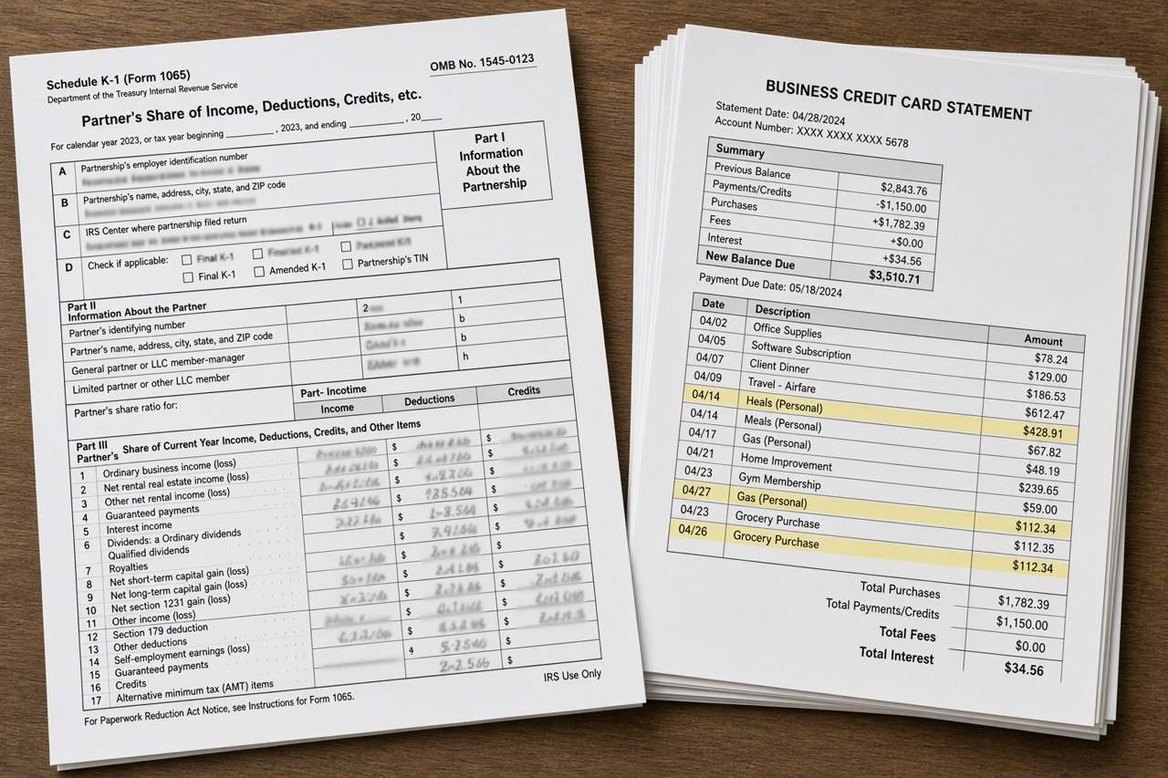
Business income is gross receipts minus the ordinary and necessary expenses required to produce it, excluding accelerated depreciation and any expense the court finds inappropriate. In practice it is an add-back exercise: owner draws, personal expenses run through the company, vehicles, phones and in-kind benefits.
A passive minority investor with no managerial input may have K-1 income counted only to the extent of actual distributions. A controlling owner enjoys no such shelter, because a controlling owner decides what gets distributed. Which side of that line the record puts you on can swing support by an order of magnitude.
Fluctuating income invites multi-year averages, which courts have approved; options count when exercised, as to the spread. A spouse who is voluntarily underemployed can be assigned potential income from labor-market evidence, with a 32-hour, 50-week default where reliable data is missing.
How I build the number.

Bonuses, equity that vests on four schedules, deferred compensation not yet accessible, and retained earnings inside the owner’s control each have their own rule, and the record has to prove which rule applies. I work from the tax returns to the general ledger to the bank statements, with a forensic accountant where the money is large enough to justify one, so the income the court uses is the income that actually exists.
Gross receipts minus ordinary and necessary expenses.
For self-employment and business income, the statute defines income as gross receipts minus the ordinary and necessary expenses required to produce it — and expressly excludes accelerated depreciation and any expense the court finds inappropriate. Recent amendments let courts substitute straight-line depreciation even where the tax return used accelerated. In practice this is an add-back exercise: owner draws, personal expenses run through the company, vehicles, phones and other significant in-kind benefits that reduce living expenses. Colorado decisions treat them as income when significant — the support ledger is not the tax return.
Paper income versus cash in hand.
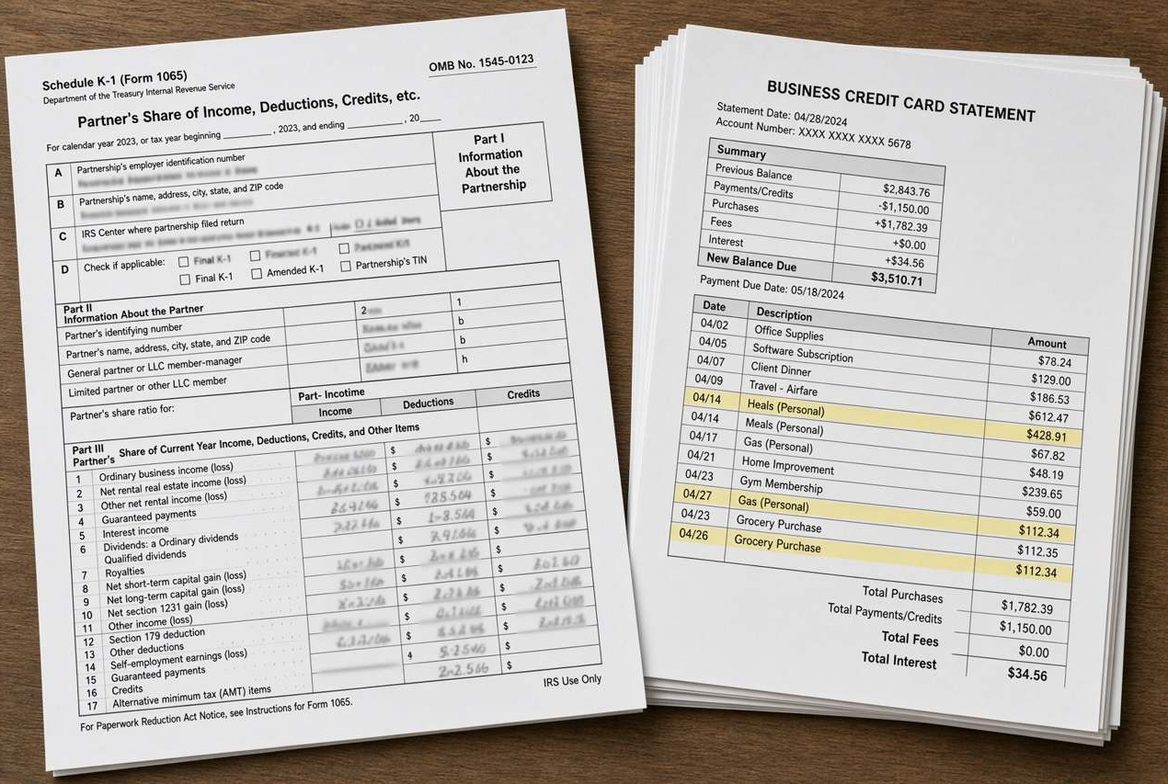
Pass-through owners face the K-1 question: income was allocated, but was it received? Colorado’s statutes draw a meaningful line — a passive investor holding a minority interest with no managerial input may have income recognized only to the extent of actual cash distributions. A controlling owner enjoys no such shelter, because a controlling owner decides what gets distributed. Which side of that line a client sits on — and how convincingly the record proves it — can swing support by an order of magnitude.
Bonuses, equity, and the averaging fight.
Fluctuating income invites averaging: courts have discretion to use multi-year averages of past earnings, and recent decisions have approved them. Bonuses count when the record supports them, though courts may decline to speculate about future ones. Stock options generally become income only when exercised, and only as to the spread; deferred compensation not currently accessible is generally not income yet. For an executive whose compensation arrives in four different forms on three different schedules, the averaging methodology is not an accounting detail — it is the case.
When the court assigns an income you are not earning.

A parent or spouse who is voluntarily unemployed or underemployed can be attributed potential income, with statutory safe harbors for incapacity, care of a very young child, good-faith career changes, and qualifying education. The statute now directs courts to labor-market evidence — hours actually available in the person’s sector, prevailing earnings — and defaults, absent reliable data, to a 32-hour, 50-week benchmark rather than the old full-time assumption. Where imputation is genuinely contested, a vocational evaluation supplies the record the statute demands; deployed early, it protects either side of the argument.
What I tell every client about the income number.
Five things, before anyone runs a worksheet.

- The worksheet takes any number you give it.
The number is the case. Get it right before the calculator, not after the order enters.
- Normalize over years, not a peak.
Three to five years of returns. A record year is not capacity, and a bad year during the case is looked at hard.
- Add back what the company paid for.
The car, the travel, the phone, the meals, the family on payroll. Perks are income for support, whatever the tax return says.
- Retained earnings are argued.
Money left in the company for real working capital is one thing; money parked to shrink the owner’s income is another. The business records decide.
- Potential income cuts both ways.
A spouse who could earn more can be assigned the income they could earn, on the evidence of a vocational assessment. That includes the payor.
For an owner or executive, income is the most contested number in the case. The record decides it.
Start with a confidential conversation: tell me what is at stake →
The questions people ask about the income number.
What counts as income for child support and maintenance in Colorado?
Income from any source, construed broadly: salaries, bonuses, commissions, dividends, rents, trust income, capital gains, severance, annuities, monetary gifts, and moneys drawn by a self-employed person for personal use that were deducted as business expenses. Tax treatment does not control; a dollar the IRS lets you deduct can still be income for support. The exclusions are narrow: child support received, means-tested benefits, income from hours beyond full-time, and retirement growth not actually taken.
My spouse owns a business and shows almost no salary. How is income determined?
By rebuilding it. Business income is gross receipts minus the ordinary and necessary expenses required to produce it, excluding accelerated depreciation and any expense the court finds inappropriate. In practice it is an add-back exercise: owner draws, personal expenses run through the company, vehicles, phones, travel, meals, family on the payroll and other in-kind benefits that reduce living expenses. The support ledger is not the tax return.
The K-1 shows income my spouse never received. Does it count?
It depends on control. A passive investor holding a minority interest with no managerial input may have K-1 income counted only to the extent of actual distributions. A controlling owner has no such shelter, because a controlling owner decides what gets distributed. Which side of that line the record puts a party on can swing support by an order of magnitude.
What about retained earnings left in the company?
They are argued. Money left in the company for real working capital is one thing; money parked to shrink the owner’s income during the case is another. The business records decide: historical retention levels, the reason for the change, what the company actually needed. For a controlling owner the court can look past the salary to the economic income the owner controls.
My income changes every year. Which year does the court use?
Fluctuating income invites averaging, and courts have discretion to use multi-year averages of past earnings; recent decisions have approved them. Three to five years of returns is the usual base. A record year is not capacity, and a bad year that happens to fall during the case is looked at hard.
Do bonuses, stock options and deferred compensation count?
Bonuses count when the record supports them, though courts may decline to speculate about future ones. Stock options generally become income when exercised, and only as to the spread. Deferred compensation not currently accessible is generally not income yet. For an executive whose pay arrives in four forms on three schedules, the methodology is the case.
Can the court assign my spouse an income they aren't earning?
Yes. A parent or spouse who is voluntarily unemployed or underemployed can be attributed potential income, with safe harbors for incapacity, care of a very young child, good-faith career changes and qualifying education. The statute directs the court to labor-market evidence, the hours actually available in the person’s field and the prevailing earnings, and defaults to a 32-hour, 50-week benchmark where reliable data is missing. A vocational evaluation supplies the record, and it protects either side of the argument, including the payor.
Is the income number ever revisited after the decree?
Yes. Child support can be modified on a substantial and continuing change that moves the number by ten percent or more, and maintenance on a change that makes the order unfair, so the income analysis is rerun whenever an owner’s earnings move. Getting it right the first time, on the records rather than the return, is what keeps the modification fights short.
Where to go next.
The next page in this chapter, the pages that belong with it, and the blog posts on the same question.
- Modifying Child SupportAfter the decreeWhen an owner’s income changes
- Ending or Reducing MaintenanceAfter the decreeIncome, retirement, cohabitation
- Vocational AssessmentAfter the decreeProving what a parent could earn
- QDROs & Dividing Retirement Plans401(k)s, pensions, PERA, federal and military plans: how each is actually divided
From the blog, on this topic
The appraiser's value for your company and the court's number for your income are built from the same cash flows. When nobody reconciles them, you pay for the…
Sept 2, 2026A Balance Sheet Made of Promises: Executive Compensation in DivorceBonuses not yet paid, awards not yet vested, deferred comp not yet distributable: property to divide, or income to share? For executives, the grant documents…
Sept 16, 2026RSUs, Bonuses, and Deferred Comp in a Colorado DivorceExecutive pay does not fit neatly into "property" or "income." Colorado law apportions unvested equity, allocates bonuses to when they were earned, and expects…
Before anyone runs the calculator, let’s establish what the income actually is.
A consultation is a working session, in person in Greenwood Village or by video: we go through your situation and I tell you what I would do. Your note reaches my office directly; during business hours we call you back within the hour, run the conflicts check, and set the meeting.
Talk to us about your case.
303-507-5529One call. A real person picks up, hears you out, and tells you how we would handle what you are facing and what to do first. No phone tree, no sales pitch, no obligation. Your first conversation is with our intake paralegal, who will get you to Aaron fast.
Rather write? Send a short note and during business hours we call you back within the hour.