
Married to the business owner.
If your spouse ran the company and the finances, you start the case with less information and the same deadlines. The law gives you the tools to level that: mandatory disclosure, discovery, your own expert, and a court that can order the other side to fund the work.
- 01Three things that level the field
- 02Not owning it doesn't mean not sharing in it
- 03You start outgunned. You don't finish that…
- 04One dollar of cash flow, counted once — in…
- 05Finding the real number under the K-1
- 06The same lawyer the owners hire — on your…
- →What people ask first
Talk to us about your case.
303-507-5529One call. A real person picks up, hears you out, and tells you how we would handle what you are facing and what to do first. No phone tree, no sales pitch, no obligation. Your first conversation is with our intake paralegal, who will get you to Aaron fast.
Rather write? Send a short note and during business hours we call you back within the hour.
Not owning it does not mean not sharing in it.
Half the people in a business-owner divorce do not own the business. If your name is not on the operating agreement, this page is yours. In Colorado, the increase in value of even a separately owned business during the marriage is generally marital property, and a business built or grown during the marriage is on the table regardless of whose name is on the documents. The years you ran the household, moved for the company, or worked inside it for family wages are the context in which the enterprise grew. The law sees the marriage as an economic partnership. So do I.

Three things that level the field.
C.R.C.P. 16.2 obligates the owner to reveal the full financial picture without being asked. My answer to what is missing is procedural: subpoenas, forensic accountants, valuation experts, and a discovery process that treats gaps as findings. Within weeks the asymmetry inverts.
Owners’ counsel loves the double-dip argument. Applied rigorously from your side it forces honest numbers: if the income used for maintenance is real, the valuation reflecting it is too. Owners do not get a thriving company for support and a struggling one for division.
For support, courts can look past reported salary to the owner’s actual economic income: distributions, retained earnings within the owner’s control, personal expenses run through the business. The tax return is the beginning of that analysis, not the end.
Not owning it doesn't mean not sharing in it.
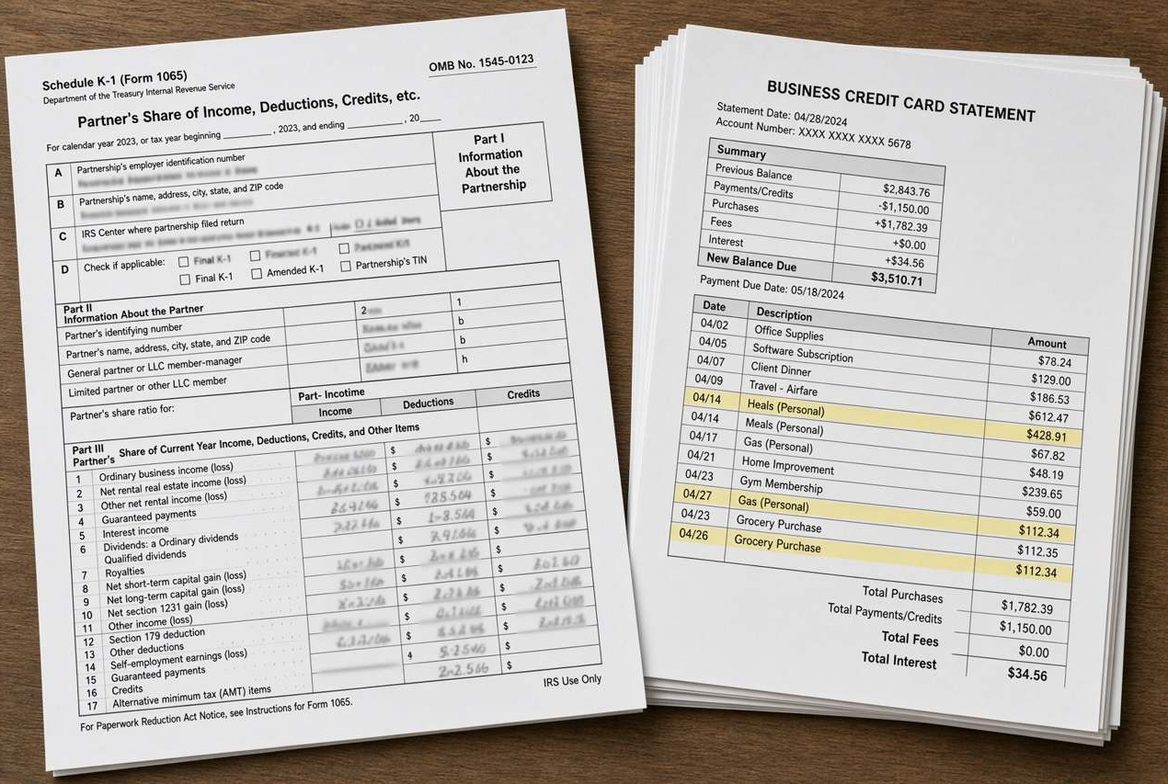
In Colorado, the increase in value of even a separately owned business during the marriage is generally marital property subject to division — and a business built or grown during the marriage is on the table regardless of whose name is on the documents. The years you ran the household, moved for the company, or worked inside it for family wages are not sentiment; they're the context in which the enterprise grew. The law sees the marriage as an economic partnership. So do I.
You start outgunned. You don't finish that way.
The owner-spouse knows the revenue, the debt, the deferred deals, the real perks. You know what appeared in the joint account. Colorado's answer is structural: Rule 16.2's sworn disclosure duty obligates the owner to reveal the full financial picture without being asked — and my answer is procedural: subpoenas, forensic accountants, valuation experts, and a forensic discovery process that treats gaps as findings. Within weeks, the asymmetry inverts: we often understand the business's divorce posture better than the owner does.
One dollar of cash flow, counted once — in your favor.

Owners' counsel loves the double-dip argument — that the same cash flow can't fund both the valuation and support. The principle is neutral; the application isn't. Applied rigorously from your side, it forces honest numbers: if the income used for maintenance is real, the valuation reflecting it is too. Owners don't get to run a thriving company for support purposes and a struggling one for division purposes. Consistency is your friend; I enforce it.
Finding the real number under the K-1.
For support purposes, Colorado courts can look past reported salary to the owner's actual economic income — distributions, retained earnings within the owner's control, and personal expenses run through the business. The tax return is the beginning of that analysis, not the end. Getting maintenance right for a non-owner spouse is fundamentally a forensic-income exercise, and it's one of the places senior attention changes outcomes most.
The same lawyer the owners hire — on your side.

I've spent a career representing business owners, and I've built and sold companies myself. That's precisely why I'm effective across the table from one: I know the playbook because I've written parts of it. When I represent the non-owner spouse, everything on this site — the valuation depth, the tax lens, the forensic bench — points in your direction. The engagement is the same either way: one lawyer, your entire case.
What I tell the spouse who did not run the business.
Five things, before you accept the first number.

- You are entitled to the records.
Tax returns, financial statements, bank and card statements, the operating agreement. Disclosure is mandatory; discovery gets the rest.
- Get your own expert.
The owner’s appraiser works from the owner’s assumptions. Yours reads the same books and asks different questions.
- Ask the court to fund the fight.
Colorado lets the court order one spouse to advance the other’s fees and costs so both sides are represented. Ask early.
- Income is rebuilt, not reported.
Distributions, perks, retained earnings and the family expenses run through the company are added back before support is set.
- A buyout has to be secured.
If you are paid for your share over time, the payments are secured by the company, the stock, insurance or a lien. A promise is not a payment.
You start outgunned. You do not finish that way.
Start with a confidential conversation: tell me what is at stake →
The questions the non-owner spouse asks first.
The business is in my spouse's name. Do I have any claim to it?
Yes. A business built or grown during the marriage is marital property regardless of whose name is on the documents, and the increase in value of even a separately owned business during the marriage is generally marital and subject to division. The years you ran the household, moved for the company or worked inside it for family wages are the context in which the enterprise grew. The law sees the marriage as an economic partnership.
My spouse knows everything about the finances and I know nothing. How do I catch up?
Through the rules. The mandatory-disclosure rule obligates the owner to reveal the full financial picture, sworn, without being asked, and discovery gets the rest: subpoenas, forensic accountants, valuation experts, and a process that treats gaps as findings. Within weeks the asymmetry inverts; we often understand the business’s divorce posture better than the owner does.
Which records am I entitled to?
The tax returns, personal and business; the financial statements; the general ledger; bank, credit-card and brokerage statements; the operating or shareholder agreement; loan applications, which state income and value under penalty of fraud; and the compensation records. Disclosure is mandatory; discovery reaches whatever disclosure missed.
Do I need my own valuation expert?
Yes, where the value is large enough to matter. The owner’s appraiser works from the owner’s assumptions; yours reads the same books and asks different questions about normalized earnings, the perks run through the company, the discounts claimed and the method chosen. The court can order the owner to advance the cost of your expert so both sides litigate on something like equal footing.
How will maintenance be set when my spouse's tax return shows a small salary?
On the real income, not the reported one. For support the court can look past salary to the owner’s actual economic income: distributions, retained earnings within the owner’s control, and the personal expenses run through the business. The tax return is the beginning of that analysis, not the end, and getting maintenance right for a non-owner spouse is fundamentally a forensic-income exercise.
The owner's lawyer says the same money can't be used for both the valuation and support. Is that right?
The principle is neutral; the application is not. Applied rigorously from your side, the double-dip argument forces honest numbers: if the income used for maintenance is real, the valuation reflecting it is real too. Owners do not get to run a thriving company for support purposes and a struggling one for division purposes. Consistency is your friend, and I enforce it.
If I'm paid for my share over time, how do I know I'll actually get it?
Because the payments are secured. A buyout paid over years is secured by the company, the stock, a life-insurance policy or a lien, with acceleration on default, and the decree says what happens if the business is sold or the owner dies. A promise is not a payment.
Can the court make my spouse pay for my lawyer?
Yes. Colorado lets the court order one spouse to pay a reasonable amount of the other’s attorney fees and costs, including expert costs and including prospectively, after considering both parties’ financial resources, so that both sides are represented. Ask early, in the first motion, with the sworn financial statements that show the disparity.
Where to go next.
The next page in this chapter, the pages that belong with it, and the blog posts on the same question.
From the blog, on this topic
The appraiser's value for your company and the court's number for your income are built from the same cash flows. When nobody reconciles them, you pay for the…
Sept 15, 2026Divorcing With a Business in Colorado: The Valuation Fight Inside Your CaseWhen a business owner divorces in Colorado, the valuation is often the largest and most contested number in the case. Goodwill counts, the buy-sell agreement is…
Sept 16, 2026Value Depends on Definition: The Standard-of-Value Fight in Colorado Business ValuationColorado leaves the standard of value in divorce undefined, and that choice, not the percentage debate, is what decides whether marketability and control…
You didn’t run the books. Let’s make sure you don’t pay for that.
A consultation is a working session, in person in Greenwood Village or by video: we go through your situation and I tell you what I would do. Your note reaches my office directly; during business hours we call you back within the hour, run the conflicts check, and set the meeting.
Talk to us about your case.
303-507-5529One call. A real person picks up, hears you out, and tells you how we would handle what you are facing and what to do first. No phone tree, no sales pitch, no obligation. Your first conversation is with our intake paralegal, who will get you to Aaron fast.
Rather write? Send a short note and during business hours we call you back within the hour.