Public by default.
The caption, the case number, the judge, the hearing dates and the list of filings are online. The pleadings and the decree are public at the courthouse.

Colorado court files are presumptively public, and for a business owner, a physician, an executive or anyone whose name means something locally, that fact should shape the case from the first filing. The good news is specific. The judicial branch suppresses six classes of domestic-relations documents automatically: financial statements, financial documents, memoranda of understanding, parenting plans, QDROs and separation agreements. Mediation is confidential by statute. Custody evaluations are confidential by statute. What remains public is the caption, the docket, the pleadings and the decree, and each of those can be drafted to say less. This page is what a stranger can actually see, what the courts will and will not seal, and the levers that keep a private life out of a public record.
Talk to us about your case.
303-507-5529One call. A real person picks up, hears you out, and tells you how we would handle what you are facing and what to do first. No phone tree, no sales pitch, no obligation. Your first conversation is with our intake paralegal, who will get you to Aaron fast.
Rather write? Send a short note and during business hours we call you back within the hour.
Every firm promises discretion. Almost none of them will tell you what is public, what is already protected, and what a judge will actually seal.
The promise is easy to make because the fear is vague. A client imagines a reporter, a competitor or a former partner reading the company’s valuation and the custody evaluator’s report on a court website. The reality is narrower and more manageable. The existence of the case, the names, the judge, the hearing dates and the list of documents are public and, in Colorado, online. The financial statements, the expert reports, the parenting plan, the separation agreement and the evaluations are suppressed by the judicial branch’s own access directive without anyone filing a motion. The pleadings and the decree are public, readable at a courthouse terminal, and they are the documents the lawyer controls.
So the work is drafting and sequencing, not motions. A petition that says only what the statute requires. Values settled in mediation, where the statute makes the conversation confidential, rather than proved in a hearing where testimony is given in open court. A separation agreement drafted so that the decree identifies it in one sentence rather than restating it. An arbitration where the process has to be private, with an award written for a public file. A protective order for the specific exhibits that need one, requested with the findings the courts require, because a request to seal the whole file will be denied and will draw attention to it. And, for a survivor of domestic violence, a substitute address on the caption from the first document. What follows is each of those, with the rule that makes it work.

Public by default.
The caption, the case number, the judge, the hearing dates and the list of filings are online. The pleadings and the decree are public at the courthouse.
Six kinds of documents are suppressed automatically.
Financial statements, financial documents, memoranda of understanding, parenting plans, QDROs and separation agreements, under the judicial branch’s access directive. Mediation is closed by statute.
Sealing takes specific findings.
Document by document, with the harm to privacy found to outweigh the public interest. No blanket sealing, and being well known is not a ground.
The judicial branch’s access directive, amended effective November 10, 2025, sorts every record in a divorce file into one of three bins.
| The record | Status | Who can see it | Authority |
|---|---|---|---|
| The caption, case number, judge, hearing schedule, list of documents filed | Public, remotely | Anyone, online, and through vendors who resell the register of actions | CJD 05-01 § 4.20(a)(1) |
| The petition, response, motions, minute orders, temporary orders, the decree and permanent orders | Public | Anyone, at a courthouse public-access terminal; not remotely | CJD 05-01 §§ 4.00, 4.10, 4.20(b) |
| Financial data, free-text fields, addresses, phone numbers and contact information | Not remotely accessible | May be available in paper at the courthouse; not online | CJD 05-01 § 4.20(b) |
| Sworn financial statements, financial documents, memoranda of understanding, parenting plans, QDROs, separation agreements | Suppressed | The judge, court staff, the parties and their counsel; nobody else without a court order | CJD 05-01 §§ 3.08, 4.60(d)(6) |
| Child and family investigator, child’s legal representative and parental responsibilities evaluation reports | Suppressed, and confidential by statute | The parties and counsel; the evaluator may disclose the file only to them or by court order | CJD 05-01 § 4.60(d)(10); C.R.S. § 14-10-127(8); CJD 04-08, Standard 13 |
| Medical and mental-health records prepared by a provider; psychological test documents; credit reports | Suppressed | The parties and counsel | CJD 05-01 § 4.60(d)(12) and related items |
| Social Security, tax-identification, account and license numbers | Redacted | Nobody, in the public copy | CJD 05-01 § 4.60(g) |
| Sealed records | Sealed, by order | Judges and court staff only; not even the parties without an order | CJD 05-01 § 3.07 |
“Suppressed” and “sealed” are different words in the directive and it pays to use them precisely. Suppressed records are closed to the public but open to the parties; sealed records are closed to everyone but the court. Nearly everything a divorcing client worries about is in the suppressed classes already. The exposure is in the public bin: the pleadings and the decree.
What a stranger with a laptop sees, what a stranger who drives to Bannock Street or the Arapahoe County Justice Center sees, and what neither sees.

Online, a stranger sees that the case exists and what the filings are called. At the courthouse they can read the pleadings and the decree. The financial statements, expert reports, agreements, parenting plan and evaluations are closed to them without a court order.
The judicial branch’s docket search and the commercial services that license its data show that a case exists, the parties’ names, the case number, the assigned judge, the scheduled hearings and a listing of the documents filed, by title. A document titled “Motion for Temporary Orders” or “Response to Motion to Restrict Parenting Time” is visible as a title. Its contents are not. Financial data, free-text fields and contact information are excluded from remote access by the directive’s own terms.
At a public-access terminal in the courthouse the public may read the non-suppressed documents: the petition, the response, motions and responses, orders, minute orders and the decree. That is where a diligent reporter or a motivated former partner would go, and it is why the pleadings are drafted to say only what they must. The suppressed classes are not on the terminal. A request to see them is a motion, decided by the judge, on notice to the parties.
The sworn financial statement, the mandatory disclosures, the expert reports, the memorandum of understanding, the separation agreement, the parenting plan, the QDRO, the evaluator’s report, medical records and the redacted identifiers. Nobody outside the case reads those without an order, and the standard for such an order, discussed below, is demanding.
The battlefield is smaller than clients fear and more specific than clients expect. The names cannot be hidden. The docket cannot be hidden. The contents of the file are largely protected already. The documents that are public are the ones the lawyers write, and the hearing, if there is one, is in open court. So the case is planned around those two facts: write less into the public documents, and try less in open court.
Eight levers, in the order they come up in a case. None of them is a motion to seal the file.
| The lever | How it works | The rule behind it |
|---|---|---|
| A bare petition | The petition states the facts the statute requires and nothing else: the parties’ residence, the date of marriage, the separation, the children, that the marriage is irretrievably broken, and the relief requested. No narrative, no allegations, no numbers. The response is the same. Public documents that say nothing cannot be quoted. | The petition’s required contents are set by C.R.S. § 14-10-107(2); everything else is optional. |
| Children by initials | The petition lists the children as the statute requires; in motions, responses and proposed orders they are referred to by initials, and their schools, providers and activities are named only in the suppressed parenting plan. | Practice; the petition’s required contents are in C.R.S. § 14-10-107(2). |
| Values in the suppressed record | The sworn financial statement, the disclosures and the expert reports carry the numbers, and those records are suppressed. Motions and responses refer to the documents rather than restating their contents, and exhibits with values are filed under the suppressed classes or a protective order. | CJD 05-01 § 4.60(d)(6) |
| Mediation for the values | The company, the income and the estate are settled in mediation, where the statute closes the conversation and makes it inadmissible, rather than proved in open court. | C.R.S. § 13-22-307 |
| The agreement identified, not restated | The separation agreement provides that its terms are not to be set out in the decree; the decree identifies it and states the court found it not unconscionable. The agreement is suppressed; the decree carries a sentence. | C.R.S. § 14-10-112(4)(b) |
| A protective order for specific exhibits | For the documents that must be in the file but should not be read by the public, a motion under the access rule, document by document, with the findings the courts require. | C.R.C.P. 121 § 1-5, as applied in Anderson v. Home Insurance Co., 924 P.2d 1123 (Colo. App. 1996) |
| Arbitration for the hearing | Where a hearing cannot be avoided and the testimony would be damaging in a courtroom, an arbitrator by consent, in a conference room, with the award drafted for a public file. | C.R.S. § 14-10-128.5 for the children; the arbitration act by agreement for the money |
| No lis pendens unless needed | A notice of lis pendens is a public land record naming the parties and announcing the case; it is recorded only where a spouse has shown they will deal with the property anyway. | C.R.S. § 38-35-110(1); Kerns v. Kerns, 53 P.3d 1157 (Colo. 2002) |
The automatic temporary injunction restrains both spouses from disposing of property and from harassing each other; it does not make anything confidential. Privacy comes from the directive, the statutes above and the drafting, not from the injunction.
Write less into the public documents, and try less in open court. Everything else on this page is a way of doing one of those two things.
The single most effective privacy decision in a settled case is one sentence in the separation agreement.

By statute the separation agreement’s terms go into the public decree unless the agreement says otherwise; if it does, the decree identifies the agreement in one sentence and the agreement itself remains a suppressed record.
Unless the separation agreement provides to the contrary, its terms are set forth in the decree and the parties are ordered to perform them. If the agreement provides that its terms are not to be set forth in the decree, the decree identifies the agreement and states that the court has found the terms not unconscionable. The decree is a public record. The separation agreement, filed as its own document, is a suppressed record under the access directive. The choice between those two sentences decides whether the public decree carries the property division, the maintenance figure and the buyout, or the words “the parties’ separation agreement dated September 20, 2026, which the court has reviewed and finds not unconscionable.”
The decree itself: that the marriage is dissolved, the date, the parties’ names, jurisdiction, and the orders the court enters on the children. Child support is entered as an order with the worksheet in the suppressed record. Maintenance is entered as an order; the amount is part of the order, and for a client who wants that figure out of the public decree the answer is a lump-sum or property-based structure negotiated with that in mind, or an agreement drafted so the decree orders performance of the agreement’s maintenance term by reference. Whether a particular judicial district’s clerk will treat an agreement attached to the decree as part of the decree is a question I confirm with the clerk before filing, not after.
The parenting plan is a suppressed record. The decree allocates parental responsibilities by reference to it. The children’s schools, providers, therapists and schedules stay in the plan and out of the public order.
An agreement incorporated by reference is enforced exactly as one restated in full: by contempt, by judgment, by the remedies in the dissolution statute. Privacy costs the client nothing in enforceability. It costs the lawyer one sentence and the discipline to keep it there through every draft.
Three statutes that close the room, and the one thing each of them still leaves open.
| The room | What the statute closes | What is still public | Authority |
|---|---|---|---|
| Mediation | Everything said, written or offered. The mediator may close the meeting. No party or mediator may voluntarily disclose or be compelled to disclose any mediation communication, with four narrow exceptions (written consent of all and the mediator; intent to commit a felony, inflict bodily harm or threaten a child’s safety; a statute requiring disclosure; a claim against the mediator). A communication disclosed in violation is inadmissible. | The signed agreement that comes out of it, which is a real document and, once approved, an order. Draft it to be identified in the decree rather than restated. | C.R.S. § 13-22-307(1)–(3) |
| Arbitration | The hearing itself: no gallery, no court reporter unless the parties want one, exhibits and testimony held by the arbitrator. The children’s issues may be arbitrated with the consent of all parties. | The award, once confirmed, becomes the decree or an order and is public. A children’s award is reviewable de novo in open court on a motion within thirty-five days. The award is therefore drafted for a public file, with the findings in a separate confidential memorandum where the arbitrator agrees. | C.R.S. § 14-10-128.5(1)–(2); the arbitration act by agreement for property |
| Custody evaluations | All evaluations and reports submitted to the court under the parental-responsibilities-evaluation statute are confidential without any motion to seal, and may not be made available for public inspection without a court order. Child and family investigator reports are suppressed under the directive, and the investigator may disclose the file and report only to the parties and counsel or by court order. | The court’s findings in its own order, which may summarize the evidence. Counsel asks the court to make its findings without quoting the report, and to file any detailed findings under the suppressed classes. | C.R.S. § 14-10-127(8); CJD 05-01 § 4.60(d)(10); CJD 04-08, Standard 13 |
| Discovery from third parties | Tax returns and financial records of a third party (a business partner, a new spouse, a parent) are discoverable only on a showing of relevance and a compelling need because the information is not otherwise readily obtainable, with review in chambers and disclosure limited to what is needed. | Whatever the court orders produced, under whatever protective order accompanies it. Spouses must disclose their own returns and records regardless; the protection is for the people around them. | Stone v. State Farm, No. 07SA321 (Colo. June 2, 2008) |
The Mediation & Litigation page covers the rooms in full. For privacy the rule is simple: settle the values where the statute closes the door, and draft what leaves the room for the public file it will land in.
A motion to seal the file is the request most clients want to make and the one least likely to work. Here is why, and what works instead.
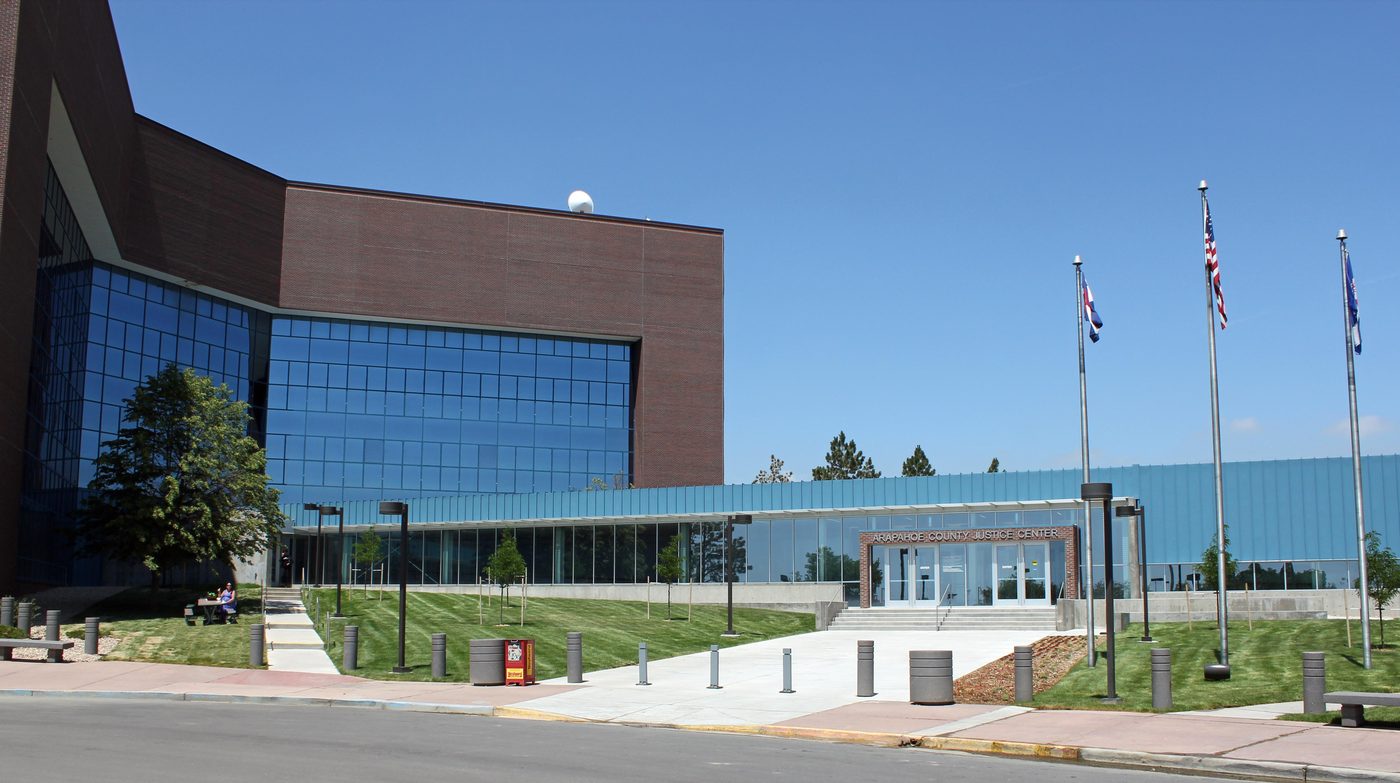
To limit access the movant must show, document by document, that the harm to privacy outweighs the public interest, and the court must make specific findings; blanket sealing, sealing by agreement and sealing for prominence are denied. Narrow protective orders over identified exhibits are granted.
The access rule places the burden on the party seeking to limit access to demonstrate that the harm to the privacy of a person in interest outweighs the public interest in access, and requires the court to make specific findings identifying at least the general nature of the privacy interest. In the leading Court of Appeals case, entire civil files had been sealed under a confidential settlement; a non-party sought access; the court vacated the blanket order, held that sealing to encourage settlement is not a proper ground, and required document-by-document findings. The public interest the rule protects is the public’s interest in knowing what its courts do, and a divorce is a proceeding of its courts.
A motion to seal the file because the client is prominent, because the case is embarrassing, because the other side agrees, or because sealing was a term of the settlement. Each of those has been rejected in the civil context and none of them supplies the finding the rule requires. A motion like that also draws attention: it is itself a public document, and it tells anyone reading the docket that there is something in the file worth finding.
A narrow motion, on notice, for a protective order over identified documents: the company’s customer list attached to a valuation, a medical record that had to be filed in a parenting dispute, a third party’s financial records produced under a compelling-need order, trade secrets, a security assessment for a client with a genuine safety concern. The motion identifies each document, states the specific privacy interest, proposes the least restrictive limit (suppression rather than sealing, redaction rather than suppression), and gives the court the findings to make. Filed that way, these motions are routinely granted, because the judge can grant them without deciding anything about the public’s right to know what the court did.
No Colorado statute or directive permits a dissolution to be captioned by initials or a pseudonym, and the access directive makes party names remotely accessible. Children are referred to by initials; the parties are not. A client who is asked by a firm to expect otherwise should ask for the authority.
The courtroom is open. What that means in practice, and how the case is tried with it in mind.
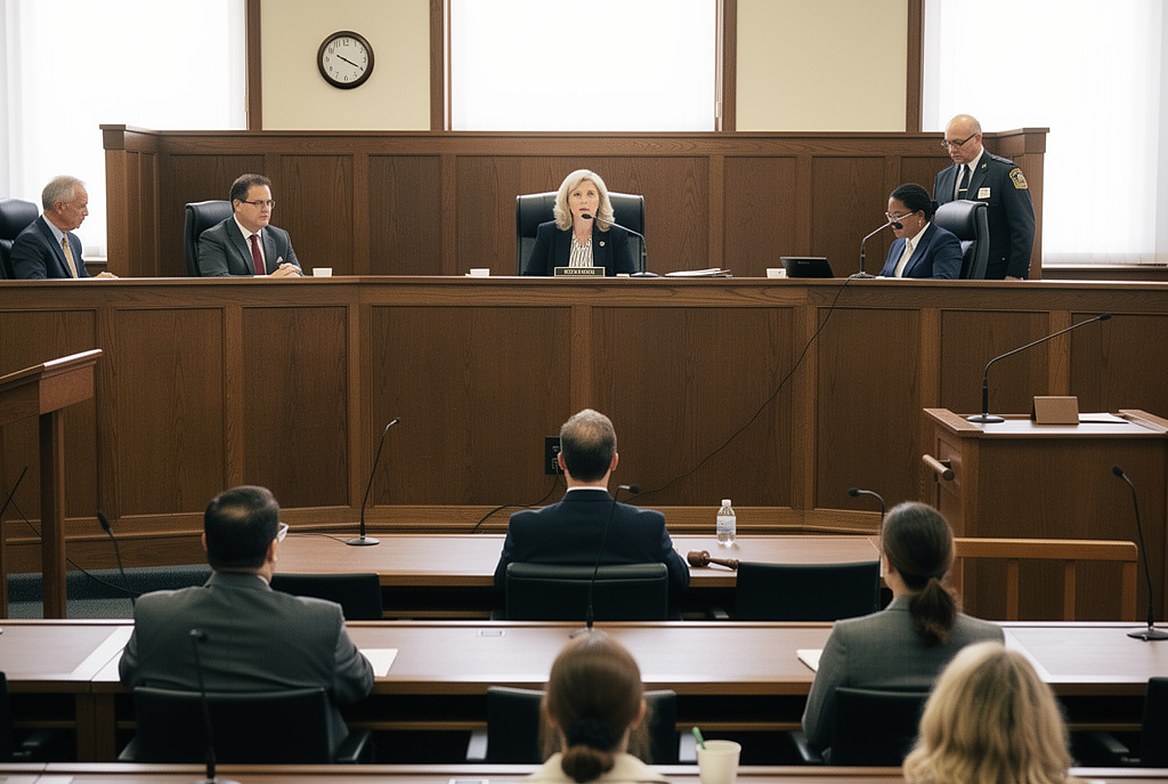
Hearings are open and testimony is given aloud. The private side settles the private issues in mediation, tries only what must be tried, gets protective orders over specific exhibits beforehand, and arbitrates when a public hearing is not an option.
A permanent orders hearing in a Colorado district court is a public proceeding. Anyone may sit in the gallery, and in practice the gallery holds the parties, counsel, the witnesses waiting to testify and the people waiting for the next case. Testimony is given aloud; the company’s revenue, the executive’s compensation and the reasons a parent wants a restriction are said in a room with a door that does not lock. Exhibits admitted become part of the court record, in the suppressed classes where they fit and otherwise under whatever protective order counsel obtained beforehand.
The strongest privacy tool for a hearing is not having one about the sensitive issue. A case that settles the property and the maintenance in mediation and tries only a narrow parenting dispute has kept the balance sheet out of the courtroom. A case that stipulates to the valuation and tries only the income has kept the customer list out. The prepared side settles from strength, and the private side settles the private issues first.
A motion in advance for a protective order over the exhibits that need one, decided before the hearing; witnesses prepared to answer with figures rather than narratives; an agreement with opposing counsel, where one can be had, on what will be proved by stipulation rather than testimony; a request that the court make its findings by reference to the exhibits rather than reciting them; and, for a client with a genuine safety concern, a request for courtroom security arrangements, which the court controls. And for the client who cannot have a public hearing at all, arbitration by consent, with the award written for the public file.
A transcript is a court record obtained from the court reporter and, on appeal, part of the appellate record; an appellate opinion is published or unpublished at the Court of Appeals’ election and, if published, is public in full with the parties’ names in the caption. That is one more reason privacy planning belongs at the start of the case rather than the end: the further a case goes, the more public it becomes. The Appeals page covers the rest.
For a client who has relocated to get away from an abuser, the address is the whole question, and Colorado has a statute for it.

Colorado’s Address Confidentiality Program gives a relocated survivor a substitute address for the court file; the actual address cannot be compelled without specific statutory findings, and the court may seal the portion of any record that contains it.
The Address Confidentiality Program, administered by the Secretary of State, provides a relocated victim of domestic violence, a sexual offense or stalking with a substitute address for use on public records, and forwards mail. A participant uses the substitute address on the petition, the response and every document filed, and the actual address stays out of the file.
A person shall not be compelled to disclose a program participant’s actual address or any unique identifying information unless the court finds that disclosure is required in the interests of justice, that the harm to the participant is substantially outweighed by the public interest in disclosure, and that no reasonable alternative exists; and the court may seal the portion of any record that contains the participant’s actual address. That is a sealing, in the directive’s strict sense, available on a statutory showing rather than the general balancing test.
Parenting time has to be exchanged somewhere. The parenting plan, itself a suppressed record, provides for exchanges at a neutral location, for communication through a monitored platform, and for the other parent to receive the information the plan requires without the address; where the court has entered a protection order the plan is drafted to be consistent with it. The Emergency & Protection Orders page covers the orders themselves.
Enrollment is done through an application assistant before the petition is filed wherever possible, so that the substitute address is the only one that ever appears on the caption. An address already in the public file is harder to remove than one that was never there.
The court file is one place a divorce becomes public. Six others, and what to do about each.
| The leak | What happens | What to do |
|---|---|---|
| The land records | A lis pendens, a deed under the decree and a release of a mortgage are all recorded and indexed by name in the county clerk and recorder’s office, and are searchable by the public. | Record a lis pendens only when it is needed. The deeds are unavoidable; they say who owns the property, not what was paid. |
| The business | Partners, lenders and key employees learn of a divorce when the disclosures require the company’s records, when a valuation expert arrives, when the operating agreement requires spousal consent, or when the decree affects the ownership. | The expert works from records produced under a protective order; partners are told what the operating agreement requires and no more; the buyout is structured so the cap table changes as little as possible. The Business Owner page covers it. |
| Social media and the press | A spouse’s posts, a friend’s comments, a reporter who reads the docket. | Mutual non-disparagement and social-media clauses are routinely negotiated into separation agreements and, once in the decree, are enforced as its other terms are; no Colorado appellate decision has tested one, so they are drafted narrowly, with the children’s interests as the stated purpose. Neither party says anything to a reporter; the docket says nothing worth printing. |
| The children’s school and providers | Both parents are entitled to records and information about the children, and the school will speak to both. | The parenting plan says who the school communicates with and how; the plan is suppressed; the school gets the page it needs, not the decree. |
| Email, phones and shared devices | Shared accounts, family plans, cloud backups and a spouse who still knows the passwords. | Separate accounts and devices before the petition is filed; nothing about the case on a shared device; and no self-help access to the other spouse’s accounts, which is both a crime and a way to lose the case. |
| Your own lawyer’s office | A large firm’s file passes through many hands: associates, paralegals, assistants, a marketing department that would like a testimonial. | A small docket run by one lawyer. Nothing about a client’s matter appears anywhere, ever, without the client’s written request; the people who see the file can be counted on one hand. |
Privacy in a divorce is a set of habits kept for the length of the case, not a motion filed once. The habits are cheap and the motion rarely works.
Six things, before the petition is filed. Not legal advice for your case; the mistakes I have watched for thirty years.
Plan around what cannot be changed and spend the effort on what can.
The statute requires a few facts. A public document that contains only those facts cannot be quoted against you.
The statute closes the room. Numbers proved in open court are said aloud and written into public orders.
One sentence in the separation agreement keeps the balance sheet in a suppressed record.
It will be denied, and the motion itself tells the world there is something to find. Ask for protective orders over specific exhibits, with the findings in hand.
The substitute address goes on the first document, and the real one never enters the file.
My financial statement will be on the internet.
Sworn financial statements and financial documents are suppressed records: the judge, court staff and the parties only. Financial data is excluded from remote access altogether.
Nobody can find out I'm getting divorced.
The caption, case number, judge and hearing dates are online, and vendors resell them. Existence is public; contents largely are not.
A good lawyer can get the file sealed.
The courts require document-specific findings that privacy harm outweighs the public interest; blanket sealing has been vacated on appeal. A good lawyer keeps the sensitive material out of the public documents instead.
We can file under initials.
No Colorado authority allows a divorce to be captioned that way. Children are identified by initials; the parties are not.
Arbitration keeps everything private.
The hearing, yes. The award is confirmed as a public decree, and a children’s award can be reviewed de novo in open court.
The automatic injunction is a gag order.
It restrains disposing of property and harassment. It does not make anything confidential; the directive and the statutes on this page do.

The names will be public. Whether anything else is, is a set of decisions made before the petition is filed.
Start with a confidential conversation: tell me what has to stay private →
Yes. The judicial branch’s access policy makes party names, case numbers, the assigned judge, hearing dates and the list of documents filed available remotely, and the branch’s docket search covers domestic relations cases by party name. Commercial vendors resell that register data. What a stranger cannot get online is the content: financial data, free-text fields, addresses and phone numbers are not remotely accessible, and the pleadings themselves are read, if at all, at a courthouse terminal. The existence of the case is public; most of what is in it is not, and the rest can be managed.
No, not without a court order. The access directive lists domestic-relations financial statements and financial documents among the records suppressed from public access, meaning accessible only to the judge, court staff and the parties and their counsel. Expert reports filed with the court are financial documents. The exposure is not the sworn statement; it is the decree and the orders, which are public, so the values are kept out of them by drafting, and the company is valued in mediation rather than in a hearing where possible.
Not as filed: separation agreements, memoranda of understanding, parenting plans and QDROs are suppressed records under the directive. The risk is the decree. By statute the agreement’s terms are set out in the decree unless the agreement provides otherwise; if it says its terms are not to be set out, the decree simply identifies the agreement and states that the court found it not unconscionable. That one drafting choice decides whether the public decree carries your balance sheet or a single sentence.
No. The party seeking to limit access has to show, document by document, that the harm to the privacy of a person in interest outweighs the public interest in access, and the court has to make specific findings identifying the privacy interest; a blanket order sealing an entire file was vacated by the Court of Appeals, which added that sealing to encourage settlement is not a proper ground. Prominence is not a ground either. What works is narrower: a protective order over specific exhibits, suppression the directive already grants, and keeping the sensitive material out of the file in the first place.
Not in a Colorado divorce on any authority I can cite. No statute or directive allows a domestic-relations case to be captioned by initials, and the access policy makes party names remotely accessible. Cases involving children are captioned with the parties’ full names; in motions and orders the children are commonly referred to by initials, and their evaluations are confidential by statute.
No. Mediation communications cannot be disclosed voluntarily or compelled through discovery or process, unless all parties and the mediator consent in writing, the communication reveals an intent to commit a felony, inflict bodily harm or threaten a child’s safety, a statute requires disclosure, or the claim is against the mediator; and a communication disclosed in violation cannot be admitted into evidence. The mediator may close the session. The signed agreement at the end is a real document; the conversation that produced it is not.
Yes. The hearing is private, the exhibits and testimony stay with the arbitrator, and nobody sits in a gallery. But the award is confirmed by the court and its terms become the decree or an order, which are public records, and a children’s award can be reviewed de novo in open court within thirty-five days. Arbitration keeps the process private; the drafting of the award and the decree is what keeps the result private.
Colorado’s Address Confidentiality Program, run by the Secretary of State, gives a relocated victim of domestic violence, a sexual offense or stalking a substitute address for public records. A participant cannot be compelled to disclose the actual address absent specific findings that disclosure is required in the interests of justice and no alternative exists, and the court may seal the portion of any record containing it. Enroll before the petition is filed if you can; the substitute address goes on the caption from the first document.
The next page in this chapter, the pages that belong with it, and the blog posts on the same question.
Nearly every Denver-area court sends divorcing spouses to mediation before a contested hearing. How a session actually runs, what makes it work, what it cannot…
Sept 17, 2026Can You File for Divorce in Another State If You Live in Colorado?Where a divorce can be filed, where the money can be decided, and where the children's case belongs are three different questions. Colorado's 91-day domicile…
Sept 16, 2026Colorado's New Child Support Law: What Changed on March 1, 2026Colorado rebuilt child support on March 1, 2026: a schedule that now runs to $40,000 a month, a credit for every overnight in place of the 93-night cliff, a…
A consultation is a working session, in person in Greenwood Village or by video: we go through what in your case would hurt if it were read, who might read it, and which of the levers on this page apply, and I tell you what I would file and what I would keep out. Your note reaches my office directly; during business hours we call you back within the hour, run the conflicts check, and set the meeting.
Talk to us about your case.
303-507-5529One call. A real person picks up, hears you out, and tells you how we would handle what you are facing and what to do first. No phone tree, no sales pitch, no obligation. Your first conversation is with our intake paralegal, who will get you to Aaron fast.
Rather write? Send a short note and during business hours we call you back within the hour.