

A wedding ring resting on a hundred-dollar bill
Chapter I · The Money

Practice Area  ·  Marital Estate

Property division in Colorado.

Colorado divides the marital estate equitably — a standard that gives judges broad discretion, and therefore rewards the side whose documentation, valuation, and tax analysis are actually complete.

Consultation
In person in Greenwood Village, or by video
A paid working session, not a free call. Fee quoted when you schedule
Schedule a consultation
Call
My assistant reviews new inquiries and runs the conflicts check before we talk
Write
Read by a person, usually the same business day. No chatbot, no call center

Marital vs. Separate

The classification fight comes first.

Marital property generally includes what either spouse acquires during the marriage, regardless of whose name it's in, unless a statutory exception or a valid agreement says otherwise. Separate property is what you brought in, inherited, or received as a gift — but with a rule that surprises nearly everyone: the appreciation of separate property during the marriage is generally marital. The stock you owned at the wedding may be yours; its growth since is on the table.

And here is where cases are quietly won or lost: the tracing burden. The spouse claiming an asset is separate must prove it — often years later, through account statements, closing documents, and transaction histories. Commingle an inheritance into a joint account and the paper trail, not the principle, decides whether it survives. I build tracing files the way I build trial exhibits, because that's what they are.

What Equitable Means

Fair under the circumstances — not automatic halves.

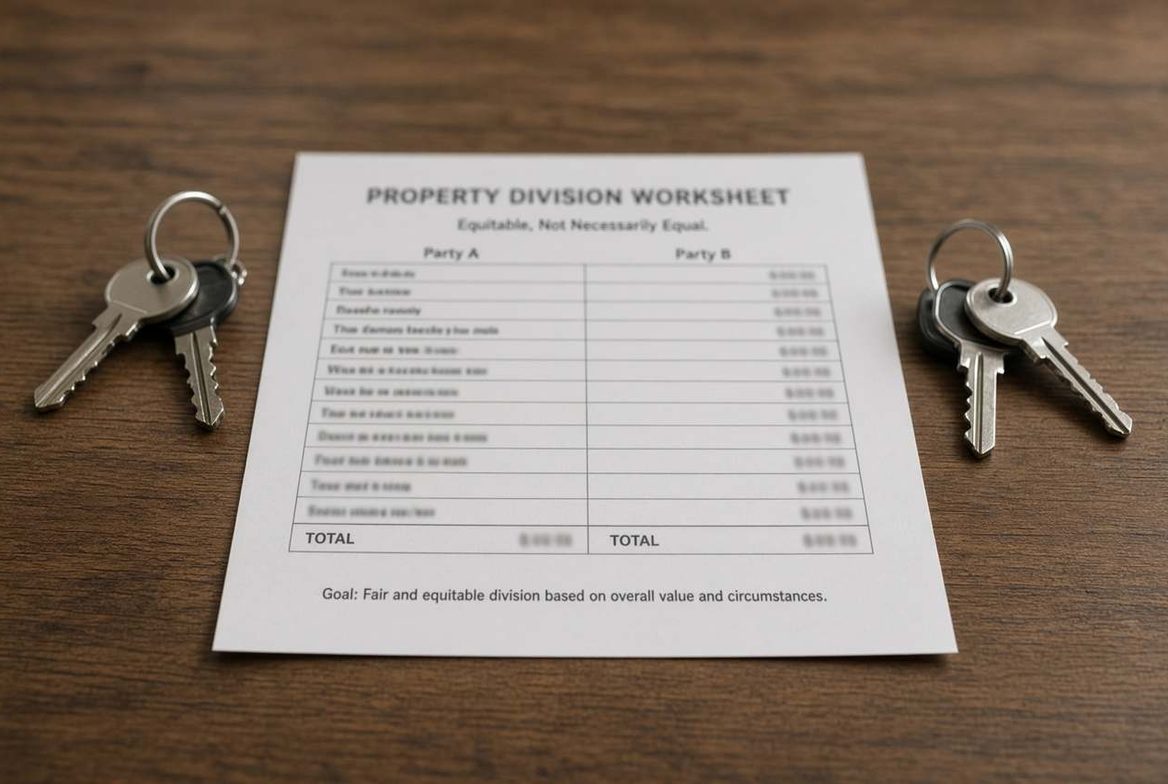
Under C.R.S. § 14-10-113, courts weigh each spouse's contributions (including as homemaker), the value of property set apart to each, the parties' economic circumstances, and depletion or dissipation of assets. Equal division happens often; it is never guaranteed — which is precisely why preparation and presentation matter.

The Tax Layer

The division isn't real until it's tax-effected.

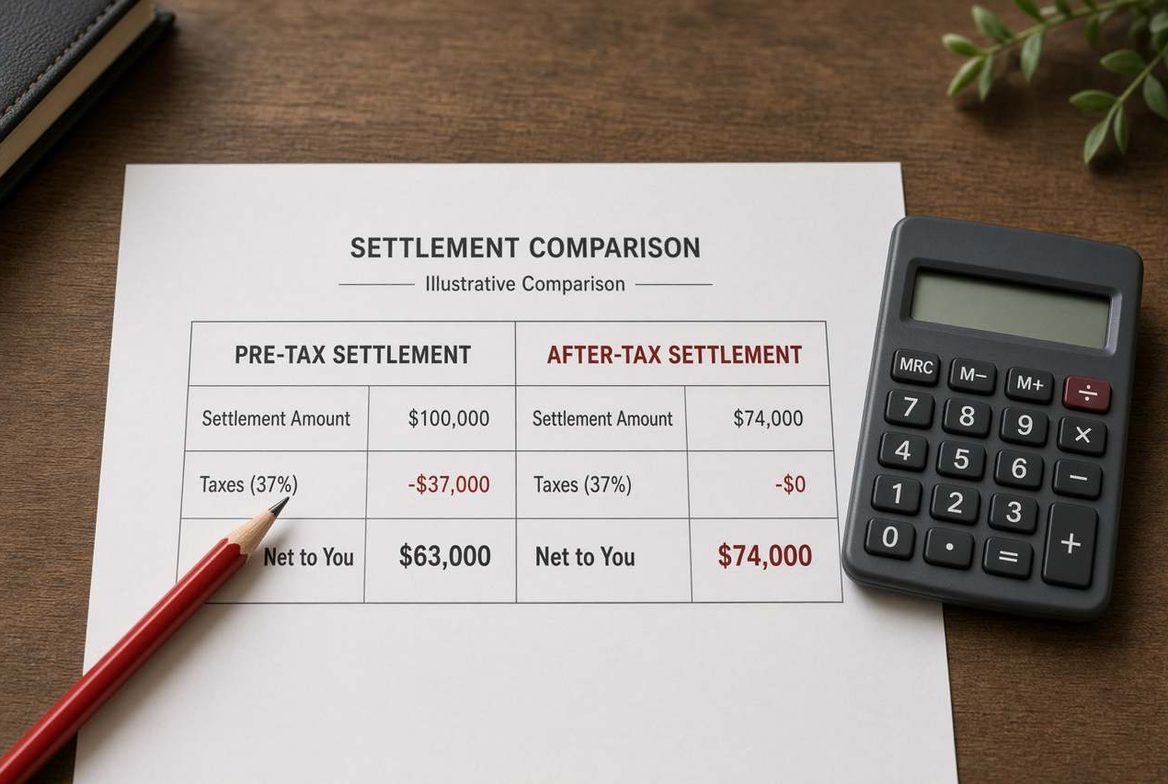
Most transfers between spouses incident to divorce are nonrecognition events for federal income tax — no gain triggered at the transfer — but the basis and built-in gain travel with the asset. Keep the low-basis brokerage account while your spouse keeps cash, and you've accepted a tax bill the settlement never priced. Retirement assets carry their own rules and require properly drafted orders to divide without triggering tax. This layer — basis, character, timing — is where my tax training changes outcomes, and it's the layer most divisions ignore.

Common Questions

The questions every property case starts with.

Is Colorado a community property state?

No. Colorado is an equitable division state: the court divides marital property fairly under the circumstances, with broad discretion. Fair is frequently equal — but it's an outcome, not a rule.

Who keeps the house?

Whoever the overall structure says should — considering children, liquidity, ability to refinance, and what offsets the equity. The house is an asset like any other, except that it's also the one people fight about for non-financial reasons. Good counsel keeps those two conversations separate.

Is my inheritance protected?

If it stayed separate and you can prove it, generally yes — though its appreciation during the marriage is marital. If it was commingled, the answer depends on the records. Bring every statement you have; the tracing file decides this.

Engagement

Bring me the balance sheet. I'll tell you what the fight is actually about.

A consultation is a scheduled working session — in person in Greenwood Village or by video — in which we go through your situation and I tell you what I would do. It is a paid meeting, not a free call and not a sales pitch; my assistant quotes the consultation fee when you schedule. There is no chatbot here: the contact form and the phone both reach my office, my assistant reviews every inquiry personally, and the meeting goes on my calendar. Please hold the confidential details until we have run a conflicts check.

Write to me

A brief, non-confidential note. Read by a person, usually the same business day.

  1. My assistant reads your note and runs a conflicts check, usually the same business day.
  2. She calls to schedule the consultation and quotes the fee.
  3. We meet, in Greenwood Village or by video, and you leave knowing what I would do first.