
Protection orders in Colorado.
A civil protection order is decided in fourteen days: a temporary order on a sworn complaint, then a hearing on whether it becomes permanent. Whether you need one or have been served with one, the evidence is assembled now, and the stakes reach housing, employment, licensing and firearms.
- 01Three things that decide these cases
- 02If you have been served
- 03The five grounds
- 04Same day, without the other side
- 05Far more than distance
- 06Two findings, more likely than not
- 07Twenty-four hours
- →What people ask first
Talk to us about your case.
303-507-5529One call. A real person picks up, hears you out, and tells you how we would handle what you are facing and what to do first. No phone tree, no sales pitch, no obligation. Your first conversation is with our intake paralegal, who will get you to Aaron fast.
Rather write? Send a short note and during business hours we call you back within the hour.
Civil and criminal. Different courts, different rules.
A civil protection order is one you ask for yourself, under Title 13 of the Colorado statutes, in county court or inside your divorce case. A criminal mandatory protection order (C.R.S. § 18-1-1001) is entered automatically in every criminal case at the defendant’s first appearance, whether or not anyone asks; in a domestic-violence case it typically bars all contact and can bar a return to the home, and it lasts until the case is over — dismissal, acquittal, or the end of the sentence. The two often exist at the same time, and they are changed in different ways.
A protection order, most people say restraining order, is the fastest order a Colorado court issues and one of the most consequential: granted the same morning on one side’s sworn story, it can put a spouse out of the home and away from the children before anyone has heard the other side.
| Civil protection order | Criminal mandatory order | |
|---|---|---|
| Who asks | The protected person | Nobody — it enters automatically when charges are filed |
| Where | County court, or the district court in a pending divorce or custody case | The criminal court |
| How it starts | Same-day temporary order on a sworn complaint; permanent order after a hearing within 14 days | At the defendant’s first appearance |
| How long | Temporary until the hearing; permanent orders last indefinitely | Until the case is dismissed or the sentence is complete |
| How it is changed | Protected person: any time. Restrained person: not for two years | Either side may ask the criminal court, which must set a hearing in a domestic-violence case |
| Violation | A misdemeanor with mandatory arrest | A class 1 misdemeanor with mandatory arrest, and bond revocation |
Three things that decide these cases.
The petitioner files a sworn complaint (JDF 402) and a judge reads it that day. Since January 1, 2025 the standard is “a risk or threat of physical harm or the threat of psychological or emotional harm,” not “imminent danger.” The order takes effect on service and sets a hearing within fourteen days.
At the hearing the petitioner must prove, more likely than not (C.R.S. § 13-14-106), that the acts happened and that they would continue without an order. Miss the hearing and the order becomes permanent by default, and the restrained person cannot ask to change it for two years.
Under C.R.S. § 13-14-105 the order can exclude a spouse from the home, award care and control of the children for up to a year with a parenting schedule, freeze payments and property, and, on a domestic-violence finding, require every firearm to be given up within twenty-four hours (§ 13-14-105.5).
If you have been served.

Comply completely, starting now: do not reply if the petitioner texts you first, do not go to the house for your things, do not send messages through the children. Do not miss the hearing; fourteen days is the whole window. Then attack both elements. The second is where many petitions fail: a single argument months ago, followed by ordinary co-parenting, does not show a likelihood of continuing. The first fails when the evidence contradicts the story: the complete message thread rather than the screenshot, location and calendar data, the witnesses who were actually there, and the timing, because a petition that arrives the week of a custody motion has a timeline, and the timeline is evidence.
Where a contested hearing is a coin flip, an agreed order without findings, no harassment and contact through a parenting app, gives the petitioner distance and gives you no domestic-violence finding in the custody case and no firearms relinquishment.
The five grounds.
A civil protection order can be issued for five purposes (C.R.S. § 13-14-104.5(1)): to prevent assaults and threatened bodily harm; to prevent domestic abuse; to prevent emotional abuse of the elderly or an at-risk adult; to prevent sexual violence; and to prevent stalking. “Domestic abuse” is defined broadly — any act, attempted act, or threatened act of violence, stalking, harassment, or coercion between intimate partners, relatives, or people who live together, including acts against a child or an animal intended to coerce, control, punish, intimidate, or exact revenge. The petitioner does not have to have reported anything to the police, and the court may not deny an order because of the time that passed between the incident and the filing.
Same day, without the other side.

The petitioner files a verified complaint — the court’s form is JDF 402, signed under penalty of perjury, and it must describe the most recent incident, the most serious incident, and any prior incidents — and a judge or magistrate reads it that day. If there are children, an affidavit about them (JDF 404) goes with it. The filing fee is about $95 and is waived for petitioners alleging domestic violence, stalking, or sexual violence. In a pending divorce or custody case the request can be made in that case to the district court; otherwise it goes to county court. In Denver the civil protection-order desk is at the City and County Building, 1437 Bannock Street, Room 159, and takes filings from 7:30 to 9:00 in the morning; in Arapahoe and Douglas the county courts sit in the same justice centers as the divorce courts.
The standard changed on January 1, 2025. A temporary order may issue if the judge finds “a risk or threat of physical harm or the threat of psychological or emotional harm” to the person seeking protection; the old “imminent danger” standard was replaced in January 2025. The other side is not there. The order takes effect when the respondent is served with it, and the same paper orders the respondent to appear and show cause why the order should not be made permanent.
Far more than distance.
Under C.R.S. § 13-14-105 the order can prohibit threatening, molesting, injuring, or contacting the protected person or the children; exclude the restrained party from the family home, or from the other party’s home, on a showing that physical or emotional harm would otherwise result; keep the restrained party away from the protected person’s workplace or school; protect animals and decide who keeps them; and, for up to a year, bar either party from cancelling mortgage, rent, insurance, or utility payments or from transferring, encumbering, or concealing property. It can also award temporary care and control of the children for up to one year, including a parenting-time schedule, supervised parenting time, and interim decision-making related to preventing abuse — which is why a protection order so often becomes the opening move of a custody case.
Two findings, more likely than not.
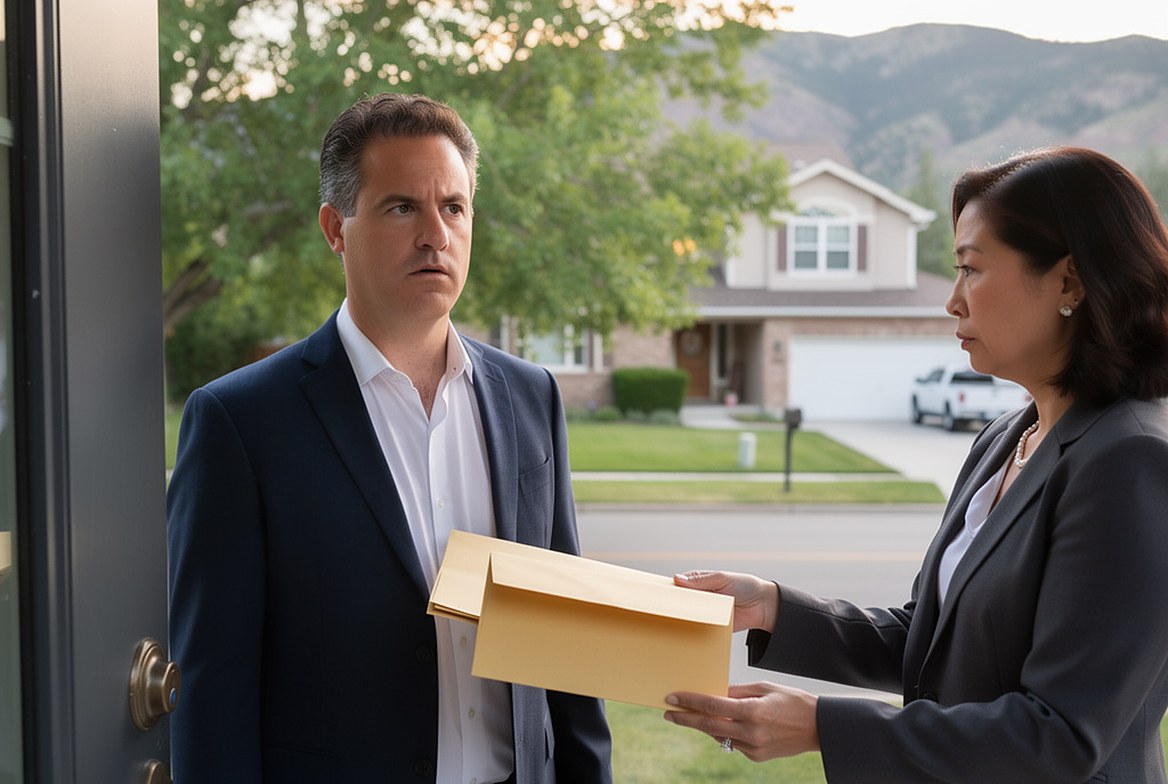
The return date must be set no more than fourteen days after the temporary order issues. At the hearing the petitioner must prove two things by a preponderance of the evidence — more likely than not (C.R.S. § 13-14-106): that the respondent committed acts constituting grounds for an order, and that unless restrained the respondent will continue to commit those acts or acts designed to intimidate or retaliate. (In sexual-violence cases the second finding is instead that a risk or threat of harm exists.) If both are found, the court makes the order permanent, or enters a permanent order with different terms. If the respondent was served and does not appear, a permanent order enters by default, without further evidence.
There are other outcomes. The parties can agree to continue the temporary order and the hearing for up to a year, or in a divorce case until the final decree, which is often the right resolution when both sides want distance without a permanent finding. Each side may ask for one continuance of up to fourteen days for good cause. And the court can enter a narrower order — no harassment, contact limited to a co-parenting app about the children — which is frequently the negotiated result in a case with children.
Twenty-four hours.
When the court finds that the order involves an act of domestic violence with the threat or use of physical force, the restrained person must give up all firearms and ammunition (C.R.S. § 13-14-105.5): within twenty-four hours of being served in court, or forty-eight hours if served elsewhere, by selling or transferring them to a licensed dealer, storing them with a law-enforcement agency, or transferring them to a private person who may lawfully possess them and passes a background check — never to someone in the same household. Within seven business days the restrained person must file a sworn affidavit (JDF 687) listing what was relinquished and where. Missing either deadline is itself a violation of the order and results in an arrest warrant. Federal law (18 U.S.C. § 922(g)(8)) independently bars possession while a qualifying order is in effect.
The order is temporary. The record is not.

The care-and-control provisions of a protection order are a stopgap — up to a year — and the divorce or custody court takes over the parenting decisions. But what happens in the protection-order case follows you there. A finding of domestic violence or child abuse carries a specific consequence under C.R.S. § 14-10-124(1.5)(c), rewritten in May 2026: joint decision-making is not in the child’s best interests over the other parent’s objection unless the court makes specific findings that it can occur without coercion, intimidation, retaliation, or risk of harm, and the court can impose safety conditions on parenting time — supervision, protected exchanges, no overnights. Two months out of the house also becomes the status quo the temporary-orders magistrate sees. The practical work in a case with children is keeping co-parenting communication lawful: a carve-out in the civil order for a parenting app, and, where a criminal order exists, a request to the criminal court to modify it for parenting contact — which it must set for hearing in a domestic-violence case. More on the custody side: False Allegations and Supervised Parenting Time.
How I defend a false or exaggerated petition.
Comply completely, starting now. Do not reply if the petitioner texts you first — the protected person’s consent is not a defense, and the contact is a crime with mandatory arrest. Do not go to the house for your things; I will arrange a civil standby. Do not send messages through the children or friends.
Do not miss the hearing. If you were served and do not appear, the order becomes permanent by default, and you cannot ask to change it for two years. Fourteen days is the whole window.
Attack both elements. The petitioner has to prove the acts happened and that they would continue without an order. The second element is where many petitions fail: a single argument months ago, followed by ordinary co-parenting, does not show a likelihood of continuing. The first element fails when the evidence contradicts the story — the complete message thread rather than the screenshot, location and calendar data, medical records or their absence, the witnesses who were actually there, and the petitioner’s own words in the weeks before the filing. A petition that arrives the week of a custody motion or the day after a settlement proposal was refused has a timeline, and the timeline is evidence.
Consider a narrower agreed order. In some cases the right result is an agreed order without findings or admissions — no harassment, contact limited to a parenting app — that gives the petitioner distance and gives you no domestic-violence finding in the custody case and no firearms relinquishment. I negotiate for that outcome when the facts make a contested hearing a coin flip.
Know the limits. If a criminal case is pending, testifying at the civil hearing can hand the prosecutor your statement, and the decision whether to testify is made with your criminal-defense lawyer. Fees against a petitioner are hard to get — the statute shields petitioners except for a claim that is substantially frivolous, groundless, or vexatious — so the goal is winning the hearing, not punishing the filer. And the stakes are larger than the order itself: a permanent order appears in background checks and affects housing, employment, licensing, and firearms.
For either side.
- The temporary order and proof of service.
- A dated timeline of every incident and every contact since service.
- Complete message threads — texts, email, social media, call logs — exported with dates and phone numbers visible, not cropped screenshots.
- Photographs of injuries or damage, with dates, and the medical records if any.
- Police reports and case numbers, and the names of responding officers.
- Witnesses who saw the events, subpoenaed through the clerk if they will not come voluntarily.
- Anything that shows motive or timing: custody filings, settlement letters, prior friendly messages from the other side.
- For a respondent: proof of no contact since service, and evidence of where you were when the alleged acts happened.
- Three copies of every exhibit — one for the judge, one for the other side, one for you.
A crime, whoever started the conversation.
Violating a protection order (C.R.S. § 18-6-803.5) means contacting, harassing, or coming within the prohibited distance of the protected person, entering the premises, or keeping firearms or failing to file the relinquishment declaration. It is a class 2 misdemeanor — up to 120 days and $750 — and a class 1 misdemeanor, up to 364 days and $1,000, when the parties were in an intimate relationship, the order was based on stalking, the order is a criminal mandatory order, or there is a prior violation. Arrest is mandatory when an officer has probable cause, a violation while on bond triggers a motion to revoke it, and the protected person can also pursue contempt. The protected person cannot consent to a violation.
The two-year rule.

The protected person may ask to modify or dismiss the order at any time (C.R.S. § 13-14-108). The restrained person may not file for two years after the permanent order — and two years after each motion that is denied — and must first obtain a fingerprint-based criminal-history check within ninety days of filing, at his own cost. The court weighs compliance with the order, completion of treatment, the time that has passed, the date of the last threat or abuse, any later convictions or other orders, the parties’ circumstances — shared children, proximity of homes, schools, and workplaces — and whether the protected person’s safety still depends on the order. A conviction for any later offense against the protected person makes the order permanent for good unless the protected person asks to end it. The forms are JDF 397 and 410.
What I tell every client about protection orders.
Five things, whichever side of the order you are on.

- Fourteen days, starting now.
The permanent-order hearing is fast. Timeline, messages, photographs, witnesses and the police report are gathered this week.
- Comply completely.
If you were served, no contact means none: no texts, no messages through friends, no drive-bys. A violation is a crime and it ends the hearing before it starts.
- Bring the full threads, not screenshots.
Exported messages with dates and numbers visible. Cropped screenshots are attacked; complete records are believed.
- A permanent order follows you.
Background checks, housing, licensing, firearms. Contest what the evidence does not support, and understand what you are agreeing to if you stipulate.
- The divorce and the protection order are different cases.
They affect each other, in parenting time and in the home, and they are handled together.
Served with a protection order? The hearing is in fourteen days, and it decides the custody case too.
Start with a confidential conversation: tell me what is at stake →
The short answers.
Will a protection order show up on a background check?
A permanent civil order is a public court record and is entered in the state registry; it appears in the checks that landlords, employers, and licensing boards run. A temporary order that is dismissed at the hearing does far less lasting damage, which is one more reason to win the hearing.
Can we both get orders against each other?
Only if each person proves a case. Colorado prohibits mutual protection orders unless each party meets the burden of proof and the court makes separate findings for each — and that requirement cannot be waived.
Can the protected person just drop it?
The protected person can ask the court to dismiss or modify a civil order at any time, and the court usually agrees. A criminal mandatory order belongs to the criminal court, and the alleged victim’s wish to drop it is considered but not controlling.
Can I get one inside my divorce without a separate case?
Yes. The district court in a pending divorce or custody case has authority to issue temporary and permanent protection orders, and a party can simply request one in that case. The court is also required to ask about existing protection orders at the temporary-orders stage.
What is an emergency order after hours?
A peace officer can obtain an emergency protection order by phone from the on-call judge when there is immediate and present danger. It expires at the close of the next business day; the protected person must then file for a temporary order.
Do I need a lawyer at the temporary-order stage?
For the petitioner, the temporary order is usually obtained without one. For either side, the fourteen-day hearing is a real evidentiary contest under the rules of evidence, and the judge holds self-represented parties to the same standard as lawyers. That is the hearing to bring counsel to.
Where to go next.
The next page in this chapter, the pages that belong with it, and the blog posts on the same question.
From the blog, on this topic
A 2025 amendment lets Colorado courts weigh domestic violence, coercive control, and economic abuse when setting maintenance, beside a statute that still says…
Sept 17, 2026Can You File for Divorce in Another State If You Live in Colorado?Where a divorce can be filed, where the money can be decided, and where the children's case belongs are three different questions. Colorado's 91-day domicile…
Sept 16, 2026Colorado's New Child Support Law: What Changed on March 1, 2026Colorado rebuilt child support on March 1, 2026: a schedule that now runs to $40,000 a month, a credit for every overnight in place of the 93-night cliff, a…
Whether you need an order or have been served with one, the fourteen days start now.
A consultation is a working session, in person in Greenwood Village or by video: we go through your situation and I tell you what I would do. Your note reaches my office directly; during business hours we call you back within the hour, run the conflicts check, and set the meeting.
Talk to us about your case.
303-507-5529One call. A real person picks up, hears you out, and tells you how we would handle what you are facing and what to do first. No phone tree, no sales pitch, no obligation. Your first conversation is with our intake paralegal, who will get you to Aaron fast.
Rather write? Send a short note and during business hours we call you back within the hour.