0
Presumptions for or against the move
Both parents share equally the burden of showing how the child’s best interests will be served. The 1996 presumption for the custodial parent is gone.

A job in Austin, a new spouse in Phoenix, a mother in Grand Junction who can help. Colorado does not decide whether a parent may move; it decides where the child lives when a parent does. Before the decree the court takes each parent’s intended home as a given. After it, the majority-time parent gives written notice, the court applies nine factors with no presumption for or against the move, and both parents carry the burden of showing what serves the child. This page is the whole of it: the rule, the cases, the plan, the money, and which state decides afterward.
Talk to us about your case.
303-507-5529One call. A real person picks up, hears you out, and tells you how we would handle what you are facing and what to do first. No phone tree, no sales pitch, no obligation. Your first conversation is with our intake paralegal, who will get you to Aaron fast.
Rather write? Send a short note and during business hours we call you back within the hour.
The court will not tell you where to live. It will tell you where your child lives.
Relocation is the custody case with the least room for compromise. One parent’s life gets better in Texas; the other parent’s Tuesday overnight cannot survive the distance. Colorado’s answer, rebuilt by the legislature in 2001 and settled by the Supreme Court in 2005, refuses to put a thumb on either scale. There is no presumption that a child is better off with the parent who has been the primary caregiver wherever that parent goes, and no presumption that a child is harmed by leaving the other parent. There are nine statutory factors, every best-interests factor, and a court that has to decide, assuming the move happens, which arrangement serves this child.
I have tried these cases for parents who wanted to go and for parents who needed the children to stay, and the two sides are built the same way: a concrete plan, proof of the child’s actual life with each parent since the last order, and honesty about the reasons. The mover who gives late notice, or none, and the objector who cannot propose a schedule of their own, have both lost the case before the hearing. What follows is the law as it stands in September 2026, including the 2026 decisions.

Both parents share equally the burden of showing how the child’s best interests will be served. The 1996 presumption for the custodial parent is gone.
Intent to relocate, where, why, and a proposed revised parenting-time plan, as soon as practicable. No mileage rule, no day count.
Reasons for and against, each parent’s relationship with the child, schools, extended family, the primary caregiver, the impact, a workable schedule. Heard with priority on the docket.
While a divorce or custody case is pending, the automatic temporary injunction restrains both parties from removing the minor children from the state without the consent of the other party or an order of the court. A parent who wants to move before permanent orders asks the court; a parent who moves without asking has violated the injunction and handed the other side its best exhibit. At permanent orders the question is decided under the rule the Supreme Court set in Spahmer v. Gullette, 113 P.3d 158 (Colo. 2005).
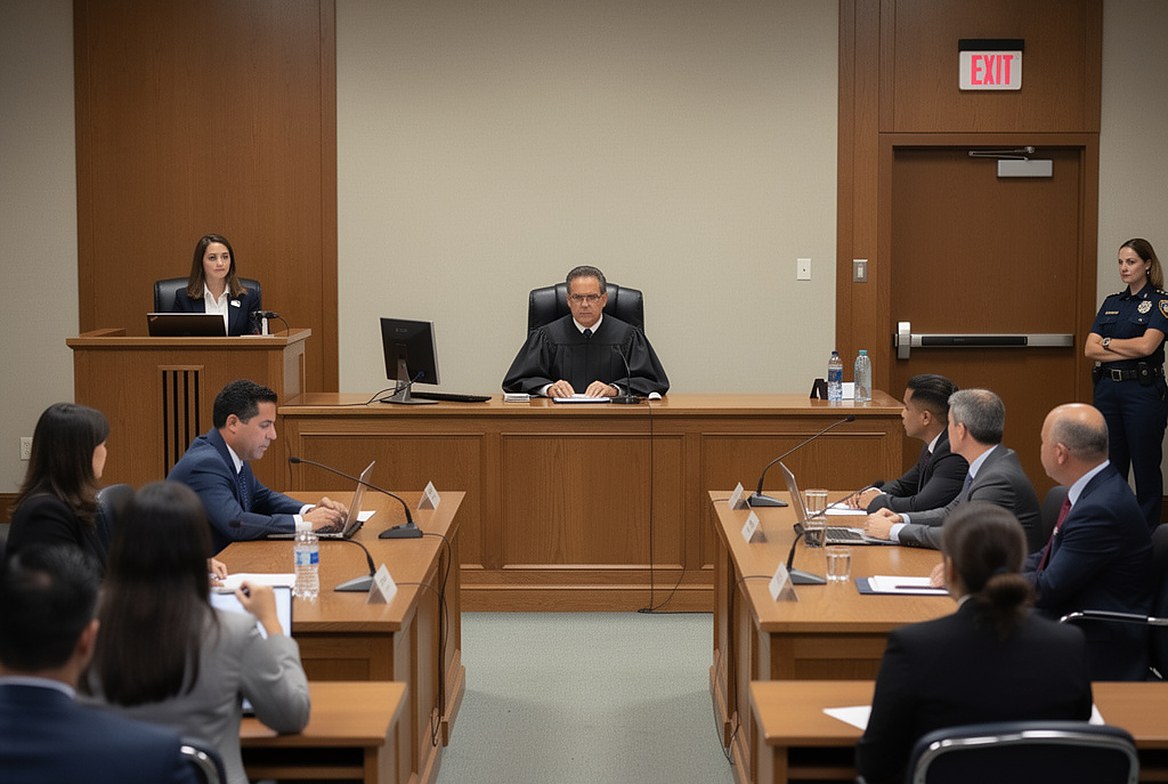
Before the decree the court takes each parent’s intended home as a given, decides the child’s schedule from there, and cannot use the schedule to coerce a parent into staying.
A court has no statutory authority to order a parent to live in a specific location. In an initial allocation the court must accept the location in which each party intends to live, and allocate parental responsibilities accordingly, on the child’s best interests. The relocation factors in the modification statute do not govern a pre-decree move, though courts consider the same practical questions inside the best-interests analysis. The parent who intends to move to Arizona is treated as living in Arizona; the court then decides where the child should live and how the other parent’s time is arranged.
No coercive plans. In Morgan (2018) the trial court entered a 5-2-2-5 schedule that could not work if the mother moved to California, after she admitted she would not go without the children. The Court of Appeals reversed: the court must accept the stated destination, may not use the parent’s admission to avoid deciding, and has no authority to issue an order that effectively coerces a parent into abandoning relocation plans. It may, once it has decided assuming the move, add an alternative plan in case the parent stays.
The “would you stay?” question. Every relocating parent is asked it, by the other side and sometimes by the court. The honest answer is the only one to give, and the court must decide the case assuming you go either way. A parent who says “I will not leave without them” has not conceded anything the law allows the court to use.
The court will not tell you where to live. It will tell you where your child lives.
Once there is a parenting order, a move by the majority-time parent that substantially changes the geographical ties between the child and the other parent is a modification with its own rules.

Four elements, in writing, as soon as practicable, from the majority-time parent. No mileage rule; the test is the effect on the child’s time with the other parent.
The party who is intending to relocate with the child to a residence that substantially changes the geographical ties between the child and the other party shall provide the other party with written notice as soon as practicable of his or her intent to relocate, the location where the party intends to reside, the reason for the relocation, and a proposed revised parenting time plan. Four elements, in writing, as soon as practicable. There is no day count and no mileage threshold; the duty runs to the majority-time parent.
How far is far enough. “Substantially changes the geographical ties” is decided on the effect on the child’s time with the other parent, not on miles. A move from Centennial to Broomfield that keeps the same school and the same exchanges is usually not a relocation in the statutory sense; a move to Fort Collins that ends the midweek overnight and the after-school pickups usually is. When it is close, give notice anyway: the cost of an unnecessary notice is nothing, and the cost of a missing one is the credibility of the case.
What the notice starts. Either parent may then file. The relocating parent files a motion to relocate with the proposed plan; the objecting parent responds within twenty-one days with an objection and, ideally, a plan of their own; an agreed move is a stipulation on the same state form. The statute gives the hearing priority on the court’s docket.

Relocation is one of the four doors to a majority-time change, decided on the nine factors and best interests with no presumption either way. The result is a new plan, not a yes or no.
A relocation by the majority-time parent is one of the four doors through which the court may change the schedule in a way that changes the majority-time parent. The court must find a change in the circumstances of the child or the majority-time parent and that the modification is necessary for the child’s best interests, and then, in deciding what schedule serves the child, it takes into account all relevant factors: any domestic violence, whether it occurred before or after the prior decree; every best-interests factor; and the nine relocation factors in the table below.
Two rules that favor a fair hearing. The endangerment standard that ordinarily protects a parent from having time restricted does not apply where the majority-time parent is relocating; the court can re-shape the other parent’s time to fit the distance on best interests alone. And the two-year bar on repeat majority-time motions does not apply when the majority-time parent is intending to relocate; a relocation can be heard even if the last motion was months ago.
The result is a new plan, not a yes or no. The court decides, assuming the move, which parent the child lives with during the school year and how the other parent’s time is arranged. A relocating parent can win the right to move and lose the child’s school-year residence; an objecting parent can lose the objection and gain the summers, the holidays and a travel-cost order.
The statute’s relocation factors, verbatim in the middle column, with what actually carries them in a Denver courtroom on the right.
| The factor, as the statute states it | What proves it | |
|---|---|---|
| (I) | The reasons why the party wishes to relocate with the child | The offer letter and the pay comparison; the new spouse’s job; the family support at the destination; the cost of living. Indirect benefits to the child through the parent’s stability count. |
| (II) | The reasons why the opposing party is objecting to the proposed relocation | The actual overnights lost; the school and activities the child would leave; the parent’s inability to follow; the history of the parent’s involvement. Objection for its own sake weighs nothing. |
| (III) | The history and quality of each party’s relationship with the child since any previous parenting time order | The calendar as lived; who did the school runs, the doctors, the coaching; the child’s own account through an evaluator. |
| (IV) | The educational opportunities for the child at the existing location and at the proposed new location | School ratings and programs, but more persuasively the specific school, the specific program the child needs, and whether the child has already been enrolled or accepted. |
| (V) | The presence or absence of extended family at the existing location and at the proposed new location | Grandparents, siblings, cousins: who is actually involved in the child’s life at each end, not who lives nearby. |
| (VI) | Any advantages of the child remaining with the primary caregiver | Where one parent has plainly been the primary caregiver, the disruption of separating the child from that parent; the Supreme Court has reversed a court that skipped this factor. |
| (VII) | The anticipated impact of the move on the child | The child’s age, attachments, temperament and special needs; an evaluator’s view; the child’s own reasoned wishes if mature enough. |
| (VIII) | Whether the court will be able to fashion a reasonable parenting time schedule if the change requested is permitted | The factor that decides cases. A concrete long-distance plan with summer blocks, holidays, travel logistics, cost allocation and virtual contact, proposed by the mover and answered by the objector. |
| (IX) | Any other relevant factors bearing on the best interests of the child | Together with every best-interests factor, and with any domestic violence, which the court must consider whether it occurred before or after the prior decree. |
Every best-interests factor applies alongside these, including the child’s reasoned wishes, the child’s adjustment to home, school and community, and each parent’s ability to encourage the child’s relationship with the other parent. Since May 2026 a finding of domestic violence, including coercive control and economic abuse, must be made on the record and acted on.
Factor (VIII) decides cases. The parent who proposes a workable schedule is the parent the court believes.
Relocation law in Colorado is three Supreme Court decisions and a handful of Court of Appeals opinions, the most recent from 2026.
| Case | What it held | Why it matters to you |
|---|---|---|
| In re Marriage of Francis, 919 P.2d 776 (Colo. 1996) | Under the old statute a custodial parent with a sensible reason for the move got a presumption in favor of relocation; the other parent had to prove endangerment or that the disadvantages outweighed the benefit of staying with the custodial parent. | The rule most people still assume is the law. The legislature abolished it in 2001. |
| Spahmer v. Gullette, 113 P.3d 158 (Colo. 2005) | In an initial allocation the court must accept each parent’s intended location and allocate responsibilities on the child’s best interests; it has no authority to order a parent where to live. | Before the decree, your intended home is a given. The fight is over the child’s schedule, not your right to go. |
| In re Marriage of Ciesluk, 113 P.3d 135 (Colo. 2005) | The 2001 amendment eliminated the Francis presumption and burden shifting. Both parents share equally the burden of demonstrating how the child’s best interests will be served; the court may not presume the child is better off or worse off relocating; it must consider every statutory factor, including indirect benefits to the child from the parent’s financial stability, and may not demand proof that the move will “enhance” the child’s life or presume harm from generic literature. A legal rule that chills the parent’s right to travel is as impermissible as one that bans it. | The governing case. Neither side wins on a presumption; both win or lose on the factors and the plan. |
| In re Marriage of Morgan, 2018 COA 116M | A court may not enter a plan that is impractical if the parent moves in order to coerce the parent to stay, and may not use the parent’s admission that she would not leave without the children to avoid deciding relocation. It may add an alternative plan in case the parent stays. | The “I won’t go without them” answer does not lose the case, and a schedule designed to trap you is reversible. |
| In re Marriage of Dale, 2026 CO 35 | A reduction in the number of overnights, however large, is a modification decided on best interests, not a restriction requiring endangerment; a restriction means stopping time or imposing conditions on its manner, place or supervision. | Re-shaping the non-moving parent’s time to fit the distance is a best-interests decision. Neither side has to prove or disprove danger. |
| Unpublished 2025–2026 decisions | An equal-time parent’s move was treated like an initial allocation, with the court accepting her intended location, because neither parent was the majority-time parent (Fry, Apr. 2026); where time is equal the majority-time modification gate does not apply (R.J.A.D., 2025); a relocation was affirmed against a parent with a domestic-violence history and an unauthorized out-of-state removal (Rensch, 2025). | Persuasive, not binding. The equal-time question is open in the published cases, and I plead both frameworks when it arises. |
No published Colorado decision addresses a majority-time parent who moves before the court rules, or draws a mileage line for “substantially changes the geographical ties.” Both are decided case by case, on the facts, which is why the record matters more here than in any other custody motion.
The relocation provisions are written for the party with whom the child resides a majority of the time. Two common situations fall outside them.

The relocation provisions are written for the majority-time parent. The minority-time parent needs no permission to move, and taking the child is a different motion.
A parent who has the minority of overnights needs no permission to move and gives no statutory notice, though the plan may require it. That parent’s own schedule is then re-shaped on the child’s best interests, like any other parenting-time change: long weekends become summer blocks, the midweek dinner becomes a video call. Nothing in the statute penalizes the parent for moving, and nothing rewards it.
Taking the child is a different motion. A minority-time parent who wants the child to move with them is asking to become the majority-time parent, and the relocation door is not available to them. The doors are agreement, integration with consent, or endangerment in the present home, with the affidavit screen and the two-year bar that go with them. The full treatment is on the Modifying Custody page.
Where the parents have equal overnights, neither is the majority-time parent, and the statute’s relocation machinery does not fit cleanly. The Court of Appeals, in a 2026 unpublished decision, treated an equal-time mother’s move with a military-officer husband as an initial allocation: the court accepted her intended location, weighed the factors, and made her the majority-time parent with the father receiving school-break time. Because the decision is unpublished, other divisions are free to disagree, and some trial judges still run equal-time relocations through the modification gate. In an equal-time case I plead both frameworks and prove the factors either way; the plan and the record decide it under both.
Factor (VIII) asks whether the court can fashion a reasonable schedule if the move is allowed. The parent who proposes one, in detail, is the parent the court believes. The parent who leaves it to the judge has told the court the move cannot work.

| The term | What a workable plan says |
|---|---|
| The school year | Which parent the child lives with during the school year, the school, and how the other parent’s long weekends work: which Fridays, who flies, where the exchange happens. |
| Summer | Most of it to the distant parent, with fixed dates keyed to the school calendar, and a week or two back with the school-year parent for camps or a family event. |
| Holidays and breaks | Alternating Thanksgiving and winter break by year, spring break every year to the distant parent, the three-day weekends allocated, and the child’s birthday handled by year. |
| Travel | Who accompanies a child under twelve; airport, airline and booking deadlines; unaccompanied-minor rules once the child is old enough; who pays for what, and how the cost is documented. |
| Contact between visits | Fixed video-call days and times that fit the child’s schedule, not a vague right to reasonable contact; how the school-year parent supports the calls. |
| In-state visits | The distant parent’s right to time in the child’s new city on notice, including school events and activities, and access to school and medical records and portals. |
| Decision-making | Whether joint decision-making survives the distance, and a dispute-resolution clause with a parenting coordinator or decision-maker for the inevitable scheduling fights. |
The mover proposes it with the notice; the objector answers with a plan of their own as majority-time parent. A court that has two workable plans decides the case on the factors; a court that has one decides it on the plan.

Support follows the new overnights, and travel is divided by income unless the court orders otherwise. Run both numbers before you trade a week in July.
Support follows the overnights. A long-distance plan changes the overnight count for both parents, and since March 1, 2026 every overnight moves the guideline. The support worksheet is filed with the relocation motion, and the court enters a new support order with the new plan. A parent who gains the school year usually gains support; a parent who gains the summer usually pays less. Run the numbers before you decide how hard to fight over a week in July.
Travel is shared by income, not by fault. The child support statute provides that, by agreement or court order, expenses for transportation of the child, or the child and an accompanying parent if the child is less than twelve years of age, between the homes of the parents shall be divided between the parents in proportion to their adjusted gross income. The default is not “the mover pays,” though a court can order it, and parties often agree to it as part of the price of the move.
What changes for maintenance. Nothing automatic. A move that changes a party’s income or expenses can be a changed circumstance for maintenance under its own standard, on the Ending or Reducing Maintenance page.
A relocation is also a jurisdiction question, and the answer surprises people on both sides.

The court that entered the order keeps exclusive, continuing jurisdiction while one parent still lives here; the mover cannot refile elsewhere after 182 days.
Under the Uniform Child-Custody Jurisdiction and Enforcement Act, the court that entered the custody order has exclusive, continuing jurisdiction over it until a Colorado court determines that the child, the child’s parents and any person acting as a parent no longer have a significant connection with Colorado and substantial evidence is no longer available here, or a court determines that none of them presently resides in Colorado. The parent who stays behind keeps the case in Colorado. The parent who moved to Texas cannot simply wait out Colorado’s 182-day home-state period and refile there; Texas may not modify a Colorado order while Colorado’s jurisdiction continues.
Inconvenient forum. Colorado may decline to exercise its jurisdiction if it decides it has become an inconvenient forum, weighing where the child has lived and for how long, the distance, the parties’ finances, where the evidence is, including the child’s own testimony, and any domestic violence. Years after a move, with the child’s school, doctors and friends all in the new state, that motion is often granted. Early on, it is not. The full treatment is on the Interstate Custody page.
An order from another state. The mirror image applies: a parent who moves to Colorado with an order from another state cannot modify it here while the other parent remains in the issuing state and that state’s jurisdiction continues. Enforcement here is available; modification is not, until the issuing court lets go.

The same rule and factors, with the workable-schedule factor doing most of the work; the Hague Convention decides return, not custody, and a child under sixteen needs both parents for a passport.
The same statute, higher stakes. An international relocation is decided under the same notice rule and factors, with factor (VIII) doing most of the work: whether a reasonable schedule can be fashioned across an ocean, at what cost, and whether the destination country will honor the Colorado order. Courts look at whether the country is a party to the Hague Convention on the Civil Aspects of International Child Abduction, which provides for the prompt return of a child under sixteen wrongfully removed from or retained outside the country of habitual residence. The Convention decides return, not custody, and its defenses (grave risk, a mature child’s objection, a year of settled residence, consent) are litigated in the country where the child is.
Passports. A child under sixteen needs both parents to appear, or a notarized consent from the absent parent, to obtain a U.S. passport; a parent with sole authority applies with the order. Any parent can enroll the child in the State Department’s Children’s Passport Issuance Alert Program, which notifies the enrolling parent if someone applies for a passport, though it cannot block a foreign passport or stop travel on an existing one. A parenting plan can require written consent for foreign travel, deposit of the passport with counsel, and an itinerary in advance. A parent with real abduction concerns raises them in the plan, not after the flight.
Priority on the docket, no deadline, and a calendar that starts the day notice is given.

Written notice with the four elements the day the move becomes real; the proposed long-distance plan attached; the offer letter, housing and school information gathered. An objecting parent responds in writing, with a plan of their own, and calendars the twenty-one days.

The state’s form (JDF 1407) is a motion to relocate, with the plan (JDF 1113) and a response (JDF 1315) due twenty-one days after service. The filing fee is about $105. A contested case gets a drafted motion with exhibits. An agreed move is a stipulation on the same form.

Metro judges commonly appoint a child and family investigator in a contested relocation involving a school-age child, under a presumptive private-pay fee cap of $3,309 plus $500 for testimony (Chief Justice Directive 04-08, as amended August 26, 2026), with the report due at least thirty-five days before the hearing. A parental responsibilities evaluation is the larger tool where the facts call for it.

The metro districts require mediation before a contested post-decree hearing, and relocation cases do settle there, usually on a plan with the summers, the travel costs and the school-year residence traded against each other. The status conference sets the hearing with the statute’s priority.

A half-day to a full day: both parents, the evaluator, the collaterals, the plans. The court makes findings on the factors and enters the plan, the support order and the travel-cost allocation. Fees can shift under the family-law fee statute where the incomes differ.

Three to six months to a hearing, no temporary-relocation procedure, and a unilateral move is the single most damaging fact under the factors.
Three to six months. In the metro districts a contested relocation reaches a hearing in roughly three to six months from filing, longer with an evaluator, priority notwithstanding. A parent planning a move for the next school year files by late winter. A parent with a job offer gives notice and files the same week, and negotiates the start date; employers are used to it.
No temporary relocation statute. Colorado has no procedure for a temporary move over the other parent’s objection. Before the decree the injunction governs; after it, the existing order governs until modified. A temporary order allowing a move pending the hearing is rare, and a parent who moves the child without one has violated the order.
What a unilateral move costs. The parenting-time enforcement statute supplies make-up time, fees and a hearing on modification for the parent left behind. More than that, judges treat a unilateral move as strong evidence under the factor about each parent’s ability to encourage the child’s relationship with the other parent, and it often costs the mover the school-year residence. The parent who files first and moves second wins more of these cases than the parent who does it the other way around.
File, then go. The parent who moves first has handed the other side its best exhibit.
Six things, in the order they come up. Not legal advice for your case; the mistakes I have watched for thirty years.

The four elements, as soon as practicable. A late or missing notice is the first thing the other side argues, and the factor about supporting the child’s relationship with the other parent is where it lands.
No order can require you to stay, and the court cannot use your answer to the “would you stay?” question against you. The case is about which arrangement serves the child once one parent lives somewhere else.
Factor (VIII) decides cases. A mover with a generous, specific long-distance plan is believed; an objector with a school-year plan of their own is taken seriously. A parent with no plan has told the court the move cannot work.
The offer letter and the pay comparison, the lease, the school acceptance, the family who will help. Or, on the other side, the calendar of the overnights you actually had and the activities you actually attended.
A unilateral move violates the order or the injunction, hands the other parent enforcement remedies, and is the single most damaging fact under the best-interests factors. File, then go.
Every overnight moves the number since 2026, and travel is split by income unless the court orders otherwise. Know what each plan costs before you trade the summer for a week in December.
The primary parent can move wherever there's a good reason.
That was the law until 2001. There is now no presumption for the primary parent; both parents carry the burden on the factors.
The judge can order me not to move.
The court cannot dictate where a parent lives. It decides where the child lives and on what schedule, assuming the move.
If I say I'd stay when I lose, I'll lose.
The court must decide the case assuming you go, and may not use that answer to avoid deciding or to coerce you into staying.
Moving out of state needs permission; moving within Colorado doesn't.
The test is whether the move substantially changes the child’s geographic ties to the other parent, not the state line. Denver to Grand Junction is a relocation; Denver to Aurora usually is not.
The mover pays all the travel.
Travel costs are divided in proportion to the parents’ incomes unless they agree or the court orders otherwise. Courts can order the mover to pay; the statute does not.
After six months in the new state, that state takes over.
Colorado keeps exclusive, continuing jurisdiction over its own order while one parent still lives here and the child keeps a significant connection. The other state cannot modify it until Colorado lets go.
The court will not tell you where to live. It will tell you where your child lives. Build the case for that question, not the other one.
Start with a confidential conversation: tell me about the move →
Colorado has a statute built for withheld parenting time: a verified motion under C.R.S. § 14-10-129.5, decided on the papers within thirty-five days, with make-up time of the same kind and length as the time lost, attorney fees the court must award against the parent who withheld or failed to exercise the time, and contempt as one remedy among several. Make-up time, not jail, is usually the point. A single withheld weekend supports make-up time and fees under this statute even where it would not support contempt.
The parenting-time enforcement motion →Enforcement of Orders →Contempt of Court →
The statute has no mileage rule. The notice and the relocation factors apply when the majority-time parent intends to move to a residence that substantially changes the geographical ties between the child and the other parent. A move across the metro that keeps the schedule workable usually does not; a move that makes the midweek exchange impossible or takes the child out of the school and away from the other parent’s ordinary time usually does. Courts decide it case by case, on the effect on the child’s time with the other parent.
No. The Colorado Supreme Court has held that a court has no authority to order a parent to live in a specific location. What the court decides is where the child lives, and on what schedule, assuming each parent lives where they say they will. It also cannot use an impractical schedule to coerce you into staying, or use your statement that you would stay if you lost to avoid deciding the question.
Neither parent, alone. After the 2001 amendment there is no presumption for or against the move; both parents share equally the burden of showing how the child’s best interests will be served. The relocating parent has to give the reasons and a workable plan; the objecting parent has to show why the child’s interests are better served by staying, with a plan of their own.
Written notice, as soon as practicable, of the intent to relocate, the location where you intend to reside, the reason for the relocation, and a proposed revised parenting time plan. The state’s form asks whether the notice was given. Late or missing notice is the first thing the other side argues, and the factor about supporting the child’s relationship with the other parent is where it lands.
Relocation hearings have priority on the court’s docket by statute, but there is no deadline. In the metro districts a contested relocation reaches a half- to full-day hearing in roughly three to six months, longer if an evaluator is appointed. A parent with a job offer should give notice and file immediately, and negotiate a start date; a parent planning a school-year move should file by late winter.
Before the decree, the automatic injunction bars removing a child from the state without consent or an order. After the decree, the parenting order still governs, and the parenting-time enforcement statute provides make-up time, fees and a hearing on modification. Enforce immediately, and file the modification: judges treat a unilateral move as strong evidence under the factor about the child’s relationship with the other parent, and it often costs the mover majority time.
Unsettled, and it matters. Where neither parent is the majority-time parent, a 2026 Court of Appeals decision treated the relocating parent’s move like an initial allocation, accepting her intended location as a given and deciding the child’s best interests from there, rather than putting her through the majority-time modification gate. The decision is unpublished, so other divisions are not bound by it. I plead both frameworks.
You need no permission to move yourself, and your schedule can be re-shaped on the child’s best interests. Taking the children would change the majority-time parent, which requires one of the modification statute’s doors: agreement, integration with consent, or endangerment. The relocation door is written for the majority-time parent and is not available to you.
Child support follows the new overnights, and since March 2026 every overnight moves the number, so a long-distance plan almost always changes support. Transportation costs for the child, and for an accompanying parent if the child is under twelve, are divided between the parents in proportion to their adjusted gross incomes unless the parties agree or the court orders otherwise. The default is not ’the mover pays,’ though a court can order it.
Colorado keeps exclusive, continuing jurisdiction over its own custody order as long as one parent still lives here and the child keeps a significant connection with the state, so the mover cannot simply refile in Texas after six months. For international travel, a child under sixteen needs both parents’ consent for a U.S. passport, you can enroll the child in the State Department’s passport alert program, and the parenting order can require written consent for travel abroad. The Hague Convention governs return of a child wrongfully kept in a treaty country; it decides return, not custody.
The next page in this chapter, the pages that belong with it, and the blog posts on the same question.
Where a divorce can be filed, where the money can be decided, and where the children's case belongs are three different questions. Colorado's 91-day domicile…
Sept 18, 2026Child's Legal Representative in Colorado: A Lawyer for Your ChildIn a hard-fought Colorado custody case the judge can appoint an attorney whose only client is the child's best interests. What a CLR does, how it differs from a…
Sept 16, 2026Colorado's New Child Support Law: What Changed on March 1, 2026Colorado rebuilt child support on March 1, 2026: a schedule that now runs to $40,000 a month, a credit for every overnight in place of the 93-night cliff, a…
A consultation is a working session, in person in Greenwood Village or by video: we go through the move, the schedule and the factors, and I tell you what the court will need to see and what I would file, on either side of the case. Your note reaches my office directly; during business hours we call you back within the hour, run the conflicts check, and set the meeting.
Talk to us about your case.
303-507-5529One call. A real person picks up, hears you out, and tells you how we would handle what you are facing and what to do first. No phone tree, no sales pitch, no obligation. Your first conversation is with our intake paralegal, who will get you to Aaron fast.
Rather write? Send a short note and during business hours we call you back within the hour.