The growth is marital.
A premarital balance is separate property; its increase in value during the marriage is marital. The statement closest to the wedding date proves where the line is.
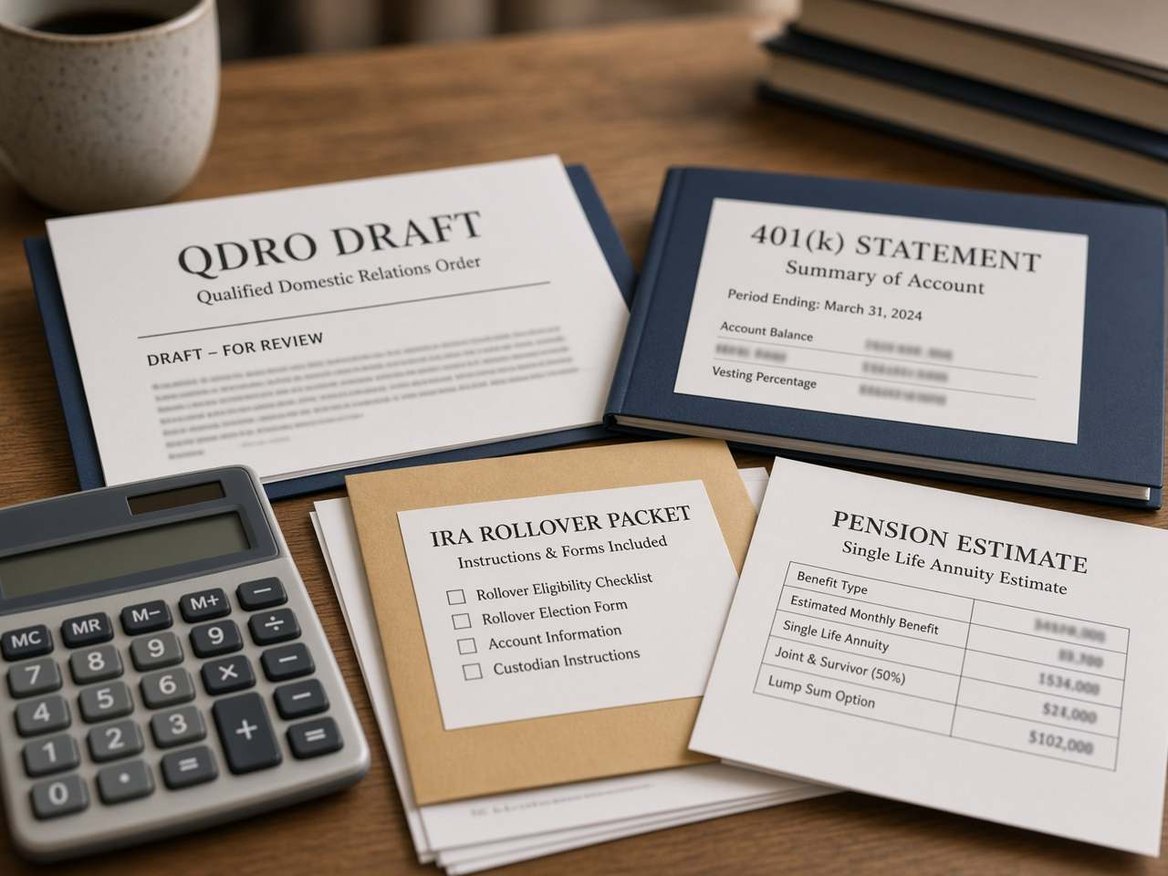
Retirement is usually the second-largest asset in a Colorado estate and the one with the most ways to get wrong. A pension is divided by a time rule or bought out at present value; a 401(k) by a QDRO with gains and losses; an IRA or HSA by a sentence in the decree; Colorado PERA only by the parties’ written agreement, delivered within ninety days; military pay under a federal frozen-benefit rule that overrides the state cases. Each dollar is a different currency after tax. This page is the whole of it, plan by plan.
Talk to us about your case.
303-507-5529One call. A real person picks up, hears you out, and tells you how we would handle what you are facing and what to do first. No phone tree, no sales pitch, no obligation. Your first conversation is with our intake paralegal, who will get you to Aaron fast.
Rather write? Send a short note and during business hours we call you back within the hour.
A pension is a promise. The order has to be written in the language the promisor understands.
Every retirement plan is a contract between an employee and someone who will pay later: an employer, a plan trustee, the State of Colorado, the Department of Defense, the Office of Personnel Management. A divorce court can divide the marital share of that promise, but it cannot change the promise, and it cannot make the promisor do anything the plan does not allow. That is why retirement division is a drafting discipline. The right split written in the wrong form is paid to the wrong person, or to no one: a QDRO entered after the participant dies, a PERA agreement delivered on day ninety-one, a military order that omits the figures the government requires, a federal survivor annuity added after the employee retired. Each of those has happened to someone who thought the decree took care of it.
The Colorado rules are old and stable. A vested but unmatured pension has been marital property since 1987; the time rule since 1995; the growth of a premarital account has been marital since the statute said so. What has changed is federal law, especially for service members, and what has never changed is that the plan administrator, not the judge, decides whether the order works. I write the orders with the decree and get them to the plan before anyone leaves the courthouse. What follows is the law, plan by plan, and the deadlines that decide whether it is applied.
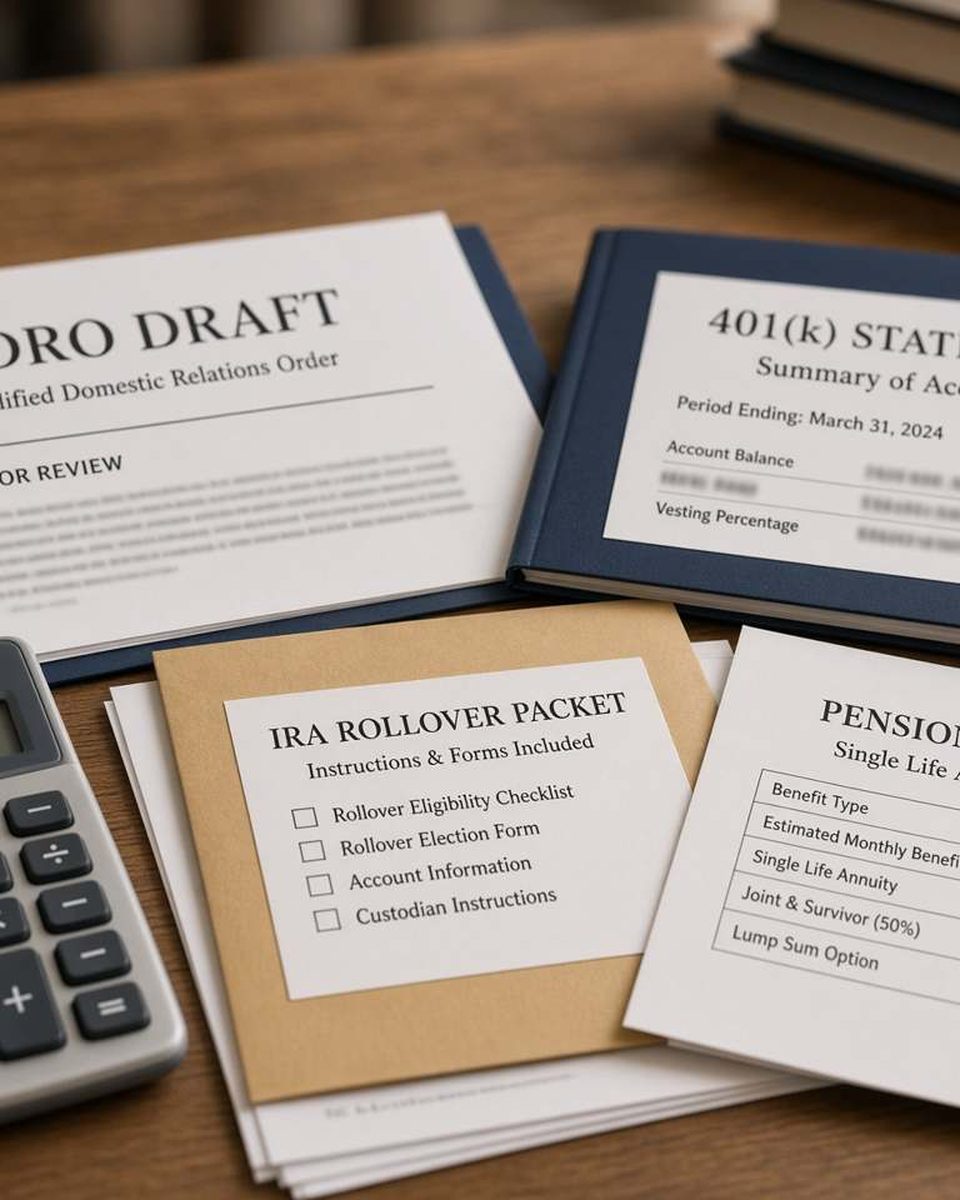
The growth is marital.
A premarital balance is separate property; its increase in value during the marriage is marital. The statement closest to the wedding date proves where the line is.
A pension is shared by the time rule.
Marital service months over total service months at retirement, times the benefit as it is paid, with the post-decree increases shared in the same fraction.
PERA and the military have their own clocks.
A PERA benefit is divided only by the parties’ written agreement, delivered to the plan within ninety days of the decree. For a service member not yet retired, divisible pay has been frozen at the decree-date rank and years since 2016.
The statute has no special rule for retirement; the general rules do the work, and the appellate courts have applied them to every kind of plan.
| The rule | What it says | Applied to retirement |
|---|---|---|
| Acquired during the marriage | All property acquired by either spouse after the marriage and before a decree of legal separation is presumed marital, regardless of whose name it is in. | Contributions, matches and accruals during the marriage are marital, in either spouse’s plan. A vested but unmatured pension is marital property, and so is an unvested one, divided as it is paid. |
| Acquired before, or by gift or inheritance | Property acquired before the marriage, or by gift, bequest, devise or descent, is separate; so is property acquired in exchange for it. | The balance on the wedding date, and an inherited IRA, are the spouse’s own. |
| But its growth is marital | A premarital or gifted asset is marital to the extent its present value exceeds its value at the time of the marriage or at acquisition; the increase is measured asset by asset, without netting declines in other separate assets. | The premarital 401(k) balance stays separate; every dollar of growth on it during the marriage, whether from contributions or the market, is marital. The Court of Appeals approved measuring the marital share by the total increase in the account. |
| Valued at the decree | Property is valued as of the date of the decree or the property hearing, whichever comes first. | The statement nearest the decree, with gains and losses from that date to the segregation of the former spouse’s share allocated by the order. |
| Not tax-effected without evidence | A court need not reduce a retirement account for the tax on a withdrawal that is hypothetical and within one spouse’s control, and a reduction without evidence of the rate is error. | In an agreement, price pre-tax and Roth dollars differently; in a hearing, prove the rate or expect gross values. |
| Final, once entered | The property division may not be modified except on grounds that justify reopening a judgment. | A survivor benefit, a gains-and-losses clause or a loan adjustment left out of the decree cannot be added later over objection. The order is drafted right the first time. |
The one document that decides most premarital claims is the statement on or nearest the wedding date. Plans purge old statements; a spouse with a premarital balance should request the historical statement in the first month of the case, before the plan’s retention period runs.
Three Colorado Supreme Court decisions set the choices for a defined-benefit plan, and the choice is the negotiation.
| Deferred distribution by the time rule | Present-value offset | |
|---|---|---|
| What happens | The former spouse receives a fraction of each benefit payment when the employee retires: marital service months over total service months at retirement, times the percentage awarded, times the benefit as actually paid. | An actuary values the marital share today; the employee keeps the whole pension and the former spouse takes equal value in other assets at the decree. |
| Post-decree increases | Shared. The Supreme Court held in Hunt (1995) that a former spouse who bears the risk of waiting shares in later promotions, cost-of-living adjustments and plan changes through the marital fraction, and that the fraction cannot be altered. | None. The offset is final; the employee keeps every later increase, and every later risk. |
| The denominator | Total service at actual retirement, not a number fixed at the decree; in Kelm (1996) fixing it at thirty years was error. | Not applicable. |
| Risk | Both share the risk of the employee’s death, disability or a plan failure, unless survivor coverage is elected. | The former spouse takes assets now and none of the plan’s risk; the employee takes all of it. |
| Fits | Large pensions; an employee years from retirement; an estate without enough other assets to fund an offset. | Small pensions; an employee close to retirement; a spouse who wants a clean break; an estate with liquid assets to trade. |
| The order | A QDRO (private plans), a PERA written agreement, a military retired-pay order or a federal court order, each in the form its administrator requires. | No plan order at all; the offset is paid in other assets, priced after tax. |
Different pensions in the same estate may be divided by different methods; the Supreme Court said so in Kelm, where the husband had federal civil service retirement and the wife had PERA. What a court may not do is alter the time-rule fraction once it uses it, or pretend the employee retired on the decree date for a civilian plan.
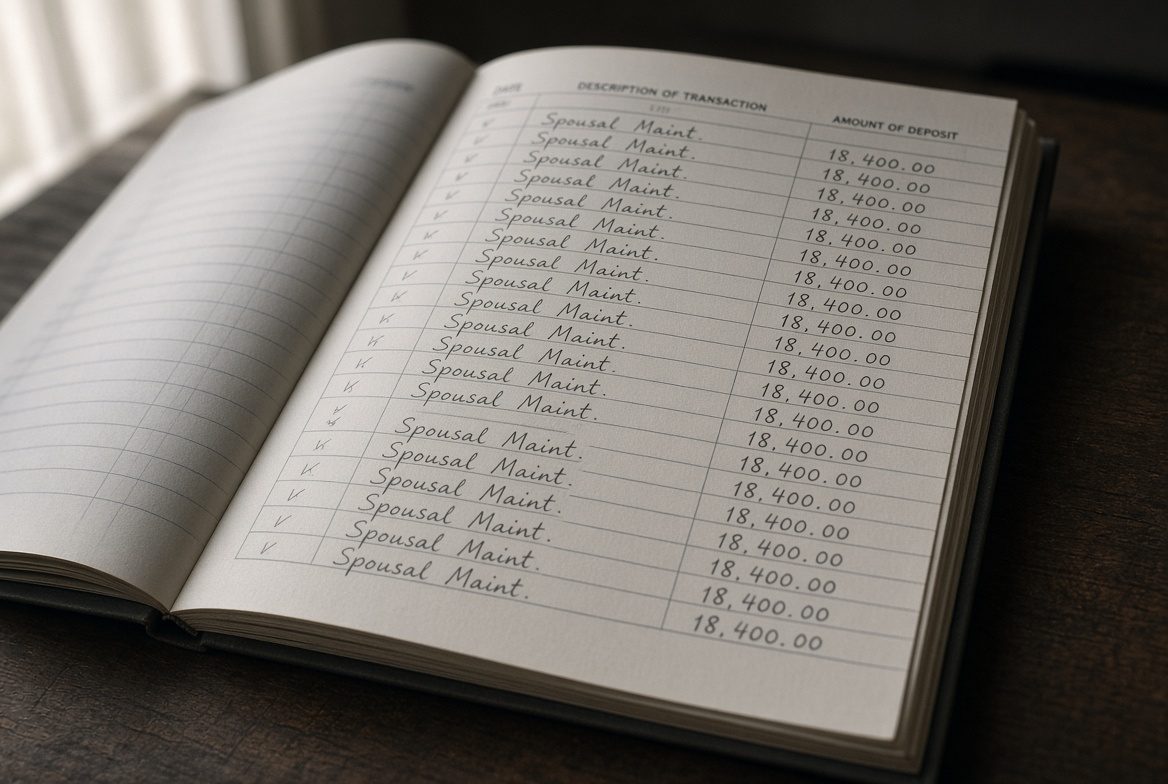
A pension order has to say not only how much the former spouse receives but what happens when the employee dies, and survivor coverage is elected, priced and allocated in the decree or it does not exist.
Shared payment. The former spouse receives a share of each payment made to the employee, when the employee retires and for as long as the employee lives. If the employee dies first, the payments stop unless the order also names the former spouse as surviving spouse for the plan’s survivor annuity, which the federal pension law allows a qualified order to do.
Separate interest. The former spouse’s share is carved out as a benefit of its own, payable on the former spouse’s own life expectancy, starting as early as the employee’s earliest retirement age under the plan, and surviving the employee’s death. Private plans allow it; Colorado PERA and the federal civil service plans do not have a true separate interest.
The survivor cost. Survivor coverage reduces the benefit or carries a premium, and the order has to say who bears it. A pre-retirement death benefit, the qualified pre-retirement survivor annuity in a private plan, is awarded separately or it is lost. This paragraph is where retirement orders most often fail: the split is right, the employee dies, and the former spouse’s share dies too.
A defined-contribution plan is divided by a qualified domestic relations order under federal pension law, and the plan administrator, not the court, decides whether the order qualifies.
| What the order must do | The rule | The drafting |
|---|---|---|
| Name everyone and everything | The order must clearly specify the name and last known mailing address of the participant and each alternate payee, the amount or percentage of benefits, the number of payments or the period, and each plan to which it applies. | The plan’s exact legal name from the summary plan description; a spouse, former spouse, child or other dependent as alternate payee. |
| Stay inside the plan | It may not require any type or form of benefit, or any option, not otherwise provided under the plan, or increased benefits. | Read the plan’s QDRO procedures first; most large plans publish a model order and reject anything else. |
| Fix the amount | A dollar amount or a percentage of the account as of a stated valuation date. | The marital share as of the decree, adjusted for gains and losses from the valuation date to the date the plan segregates the alternate payee’s account; whether loans are included in the balance; whether post-valuation contributions are excluded. |
| Be entered, and delivered | The administrator must promptly notify the parties and decide whether the order qualifies within a reasonable period, separately accounting for the alternate payee’s share in the meantime for up to eighteen months. | Submit the draft to the plan for pre-approval before the decree; enter the QDRO with the decree; send the certified copy the same week. |
| Survive the participant | If the participant dies before an order is qualified, the segregated amounts go to whoever takes without the order; a later order applies only prospectively. A former spouse is treated as surviving spouse only to the extent the order provides. | The reason the QDRO is entered at the decree and not six months later. A participant who retires, dies, cashes out or remarries first can defeat the award. |
| Pay the alternate payee | A distribution to a spouse or former spouse alternate payee is taxed to the alternate payee, who may roll it over; a distribution for a child is taxed to the participant. | The alternate payee chooses: a rollover to an IRA, a cash distribution, or leaving the funds in the plan where allowed. |
A QDRO may be part of the decree or a separate order, and defined-contribution plans may charge the review cost to the participant’s account. A specialist or counsel drafts it; the fee is small against what is at stake, and it is not the place to economize.
Four kinds of account that are divided by the decree itself, or not at all.
| The account | How it is divided | The tax | What goes wrong |
|---|---|---|---|
| Traditional IRA | A transfer to a former spouse under a divorce or separation instrument; the custodian moves the funds on the decree language, and the transferred amount becomes the recipient’s IRA. | No tax on the transfer. Ordinary income tax on withdrawal, and the ten percent additional tax before 59½ applies to IRAs; the QDRO exception does not. | The owner withdraws cash and hands it over: taxable to the owner, with the penalty. Never divide an IRA by check. |
| Roth IRA | The same transfer language. | Qualified withdrawals are tax-free; a Roth dollar is worth more than a traditional dollar, and the division should say so. | Dividing a Roth and a traditional IRA dollar for dollar as if they were the same currency. |
| Health savings account | A transfer under a divorce or separation instrument is not a taxable transfer. | Tax-free for qualified medical expenses. | Forgetting it exists. |
| Nonqualified deferred compensation | Cannot be divided by a QDRO and most plans bar assignment. Divided by offset, or by a clause under which the employee pays the former spouse’s share, net of tax, when the plan pays. | The IRS has ruled that vested deferred compensation transferred incident to divorce is taxed to the former spouse when paid; unvested rights are excluded. The employee’s Social Security and Medicare tax stays with the employee. | A plan that pays in a lump sum on separation from service, to the employee alone, with a former spouse holding an unsecured promise. The Executive Compensation page covers the structure. |
| Annuities and cash-value life insurance | Transferred or split under the contract’s own rules, on the decree. | Transfers incident to divorce carry no gain; surrender charges and the tax on gain inside an annuity are priced. | Valuing the contract at face rather than at its surrender or after-tax value. |
A retirement dollar is one of at least three currencies: pre-tax, Roth, and cash. An estate divided at face value hands one spouse the other’s tax bill. The Tax Strategy page covers pricing the settlement after tax.
Teachers, state employees, judges, troopers and most local-government employees are in PERA or a similar public plan, and Colorado’s statute treats their benefits unlike any private plan.

A Colorado court cannot divide PERA without both parties’ written agreement on PERA’s forms, delivered within ninety days of the decree; without it, the only remedies are an offset or an order the member pay directly.
No agreement, no division. Public employee retirement benefits under PERA, the fire and police plan and the other Colorado public plans are divisible directly by the plan only upon the written agreement of the parties. A court shall have no jurisdiction to enter an order dividing a public employee retirement benefit except upon written agreement of the parties, and may not modify the division later unless the parties agree in writing. The court may retain jurisdiction only to supervise the implementation.
Ninety days. The parties shall submit the written agreement to the plan administrator within ninety days after entry of the decree and the permanent orders regarding property distribution. PERA uses standardized forms, signed without changes and notarized, and needs certified copies at least thirty days before the first payment. A late agreement is not cured by a later order; PERA’s own guidance says the alternatives are an order that the member pay the former spouse directly, binding on the parties only, or vacating and re-entering the decree.
What the agreement must choose. One method only: a fixed monetary amount; a fixed percentage of the payment to the participant; the time-rule formula (months of service credit during the marriage over months at retirement, times a stated percentage, times the payment at retirement); a date-of-decree formula that treats the participant as retiring on the decree date; or another agreed formula. For a defined-contribution account, a lump sum or percentage as of a specified date, paid within 120 days.
| The PERA rule | What it means for the former spouse |
|---|---|
| When payment starts | No payment to the alternate payee until an amount is payable to the participant or the alternate retirement age is reached; the default is 65, and the parties may set it higher. A former spouse of a member who keeps working past 65 may begin monthly payments at the alternate retirement age, monthly only. |
| No separate interest | The former spouse’s share is paid from the member’s benefit as it is paid; there is no benefit carved out on the former spouse’s own life. |
| Death | The death of either the participant or the alternate payee stops all payment or possible future payments to the alternate payee, and being named an alternate payee may produce no payment at all if the participant dies before retiring. Protection exists only through a cobeneficiary option elected at retirement that names the former spouse. |
| Changing the cobeneficiary | In a dissolution the court may order or allow a retiree to change the cobeneficiary or remove the former spouse; the Colorado Supreme Court held in Mack (2022) that the authority to trigger that change lies with the court, not the retiree, so a retired member cannot unilaterally drop a former spouse the decree protected. |
| A refund | If the member takes a refund or rollover instead of a benefit, the alternate payee receives the agreed share of the lump sum; if monthly payments had begun, they cease and prior payments are deducted from the refund share. |
| Increases | A percentage award includes all subsequent annual increases, and even a fixed-dollar award is increased by PERA’s annual increases afterward. |
| PERAPlus 401(k), 457 and the DC plan | Paid immediately once the order is final, as a dollar amount or percentage as of a date, with or without pro-rata earnings and losses, capped at the balance reduced by any outstanding loan; reported to the IRS as the alternate payee’s income. |
The fire and police pension association likewise divides only on the parties’ agreement, on its own model forms. The practical rule for a spouse of a public employee: the PERA agreement is negotiated with the decree, signed at the decree, and delivered that week, and the decree says what happens if it is not.
Colorado treats military retired pay as marital property, and has since 1988. Federal law decides how much of it a state court may reach, who pays it, and what survives the member.
| The rule | What it says | What it means |
|---|---|---|
| Divisible as property | A court may treat disposable retired pay as property of the member and the spouse under the law of the jurisdiction; jurisdiction requires the member’s residence other than because of military assignment, domicile, or consent. | Colorado divides it as marital property under Gallo (1988); the fifty-percent cap on direct payment is a payment rule, not a division rule. |
| The frozen-benefit rule | For a decree final before the member’s retirement, the divisible pay is the amount the member would have been entitled to using the member’s retired pay base and years of service on the date of the decree, plus cost-of-living adjustments. DFAS applies it to orders after December 23, 2016. | The state time-rule sharing of post-decree promotions does not apply to a service member not yet retired. The order must state the member’s high-three pay base (or pay grade) and years of creditable service (or reserve points) on the decree date, or DFAS will not approve it. |
| The 10/10 rule | Direct payment from DFAS requires ten years of marriage during which the member performed at least ten years of creditable service; the award must be a fixed dollar amount or a percentage of disposable retired pay; direct payments are capped at fifty percent, and end at the death of the member or the former spouse. | Under ten years the award is still valid; the member pays it. DFAS pays within about ninety days of a complete application. |
| The 20/20/20 rule | An unremarried former spouse married twenty years overlapping twenty years of creditable service, without an employer health plan, keeps TRICARE; twenty years overlapping fifteen gets one year. | A benefit worth real money, decided by dates the parties may be able to control. |
| Survivor Benefit Plan | An annuity of fifty-five percent of the base amount, for a premium of six and a half percent of the base amount; the member’s former-spouse election within one year after the decree; the former spouse’s deemed election within one year of the order. | Missed by a year, gone. The order awards SBP expressly, allocates the premium, and the former spouse files the deemed election herself. |
| Disability pay | Retired pay waived to receive VA disability is not disposable retired pay; the Supreme Court of the United States held in Howell (2017) that a state court cannot order the member to indemnify the former spouse for a post-decree waiver, and the Colorado Court of Appeals applied it in Tozer even where the decree reserved jurisdiction. | The risk of a later disability waiver is priced into the division or the maintenance at the decree; it cannot be fixed afterward. |
The Custody for Executives page and the Modifying Custody page cover deployment and the deployed-parents act; this page is the money.
Three more systems with their own rules, and one that cannot be divided at all.
| The plan | How it is divided | The trap |
|---|---|---|
| CSRS and FERS annuities | By a court order acceptable for processing sent to the Office of Personnel Management: a share of the employee annuity, and, only if expressly awarded, a former-spouse survivor annuity. | A former spouse receives a survivor annuity only if and to the extent expressly provided in the decree, order or approved agreement, and a modification is not effective if made after the employee’s retirement or death. It ends if the former spouse remarries before fifty-five. Award it at the decree, in the words the regulations require, or never. |
| Thrift Savings Plan | By a separate retirement benefits court order that names the plan, awards a dollar amount or percentage as of a date, and cannot require installments; the TSP freezes the account and pays about sixty days after its decision. | The order states whether to include earnings and losses; a loan is included in the balance unless the order says otherwise; the payment is not subject to the early-withdrawal penalty. It is separate from OPM: two orders for one employee. |
| Social Security | Not divisible. The Court of Appeals held in James (1997) that anticipated Social Security benefits cannot be distributed or used as an offset in the property division, because federal law forbids it; a court that reduced a PERA value by a Social Security equivalency was reversed. | A former spouse married ten years may claim benefits on the worker’s record at 62 without reducing the worker’s benefit; the marriage must have lasted ten years immediately before the divorce became final. |
| Railroad, church and other plans | Each under its own statute and procedures; some are divisible only in part. | Ask the plan for its divorce procedures before the decree, not after. |
A tenth anniversary matters twice: ten years of marriage for a former spouse’s Social Security benefit, and ten years overlapping ten years of service for direct payment of military retired pay. Where a filing is within months of either, the timing of the decree is a legitimate subject of negotiation.
Two things decide whether a retirement division delivers what the decree says: the tax on the way out, and the date the order reaches the plan.
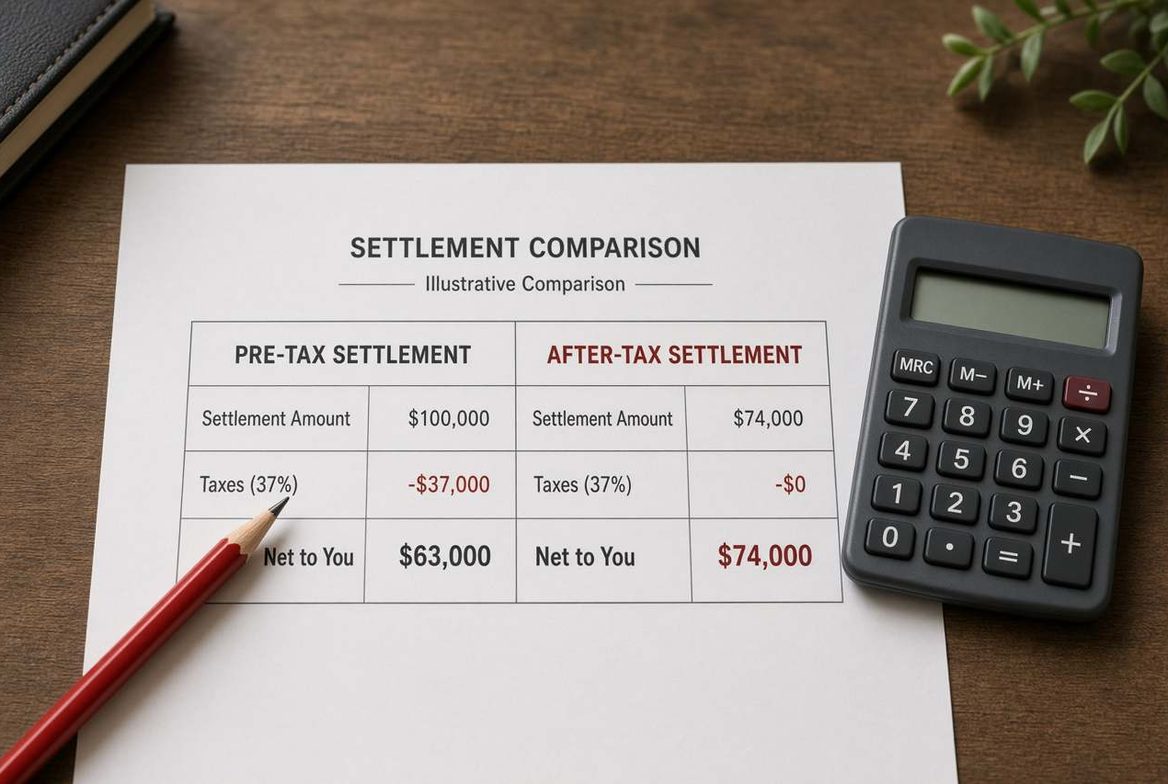
Cash taken from a 401(k) share under the QDRO avoids the ten percent penalty; the same cash taken after a rollover to an IRA does not. Take first, roll second.
From the plan, under the QDRO. A distribution to an alternate payee under a qualified domestic relations order is exempt from the ten percent additional tax on early distributions. A former spouse who needs cash at the divorce takes it from the plan under the order, pays ordinary income tax, and pays no penalty.
After a rollover. The exemption does not apply to distributions from an individual retirement plan. Once the QDRO money is rolled into an IRA, a withdrawal before 59½ carries the penalty again. The sequence is: take what is needed from the plan, roll the rest.
Pricing the currencies. A court values a retirement account gross unless a withdrawal is imminent and the rate is proved; an agreement can and should price a pre-tax dollar, a Roth dollar and a cash dollar differently. A spouse who takes the house and leaves the 401(k) has taken a different amount than the numbers on the page.
| The deadline | The rule | What is lost if it is missed |
|---|---|---|
| The QDRO, at the decree | A later order applies only prospectively; a participant who retires, dies or cashes out before an order is qualified can defeat the award. | The former spouse’s share, in the worst case entirely. |
| PERA: ninety days | The written agreement must reach the plan within ninety days of the decree and the permanent orders. | Direct payment from PERA; only an offset or an order against the member remains. |
| Military SBP: one year | The member’s former-spouse election within one year after the decree; the former spouse’s deemed election within one year of the order. | Survivor coverage, permanently. |
| CSRS/FERS survivor annuity: before retirement | Must be expressly awarded; no effective modification after the employee retires or dies. | The survivor annuity, permanently. |
| The property division: final | Not modifiable except on grounds that justify reopening a judgment. | Any term left out of the decree: gains and losses, loans, survivor coverage, the premium allocation. |
Every one of these has been missed by a lawyer who assumed the decree was the end of the work. The order is drafted with the decree, pre-approved by the plan where the plan offers it, entered the same day, and delivered the same week, with the delivery calendared.
Six things, in the order they come up. Not legal advice for your case; the mistakes I have watched for thirty years.

The premarital balance is yours; its growth is marital. The statement that proves the line is purged by most plans within a few years, and without it the whole account is presumed marital.
Pre-tax, Roth and cash are three different things. A division that ignores the tax hands one spouse the other’s bill.
A shared-payment pension dies with the employee unless the order says otherwise. Survivor coverage is elected, priced and allocated in the decree, on each plan’s own deadline.
The court cannot divide it over a spouse’s objection. Negotiate the PERA form with the decree, sign it at the decree, deliver it that week.
A member not yet retired divides pay fixed at the rank and years on the decree date, plus cost-of-living increases. The order must recite the figures or DFAS rejects it.
Not after. A participant who retires, dies or cashes out first has defeated an award that only existed on paper.
It's my 401(k); it came from my job.
Everything contributed during the marriage, and the growth on what you had before, is marital. Only the premarital balance is yours, and only if you can prove it.
A QDRO can divide any retirement account.
Not an IRA, an HSA or deferred compensation, which move by decree language or by offset; not PERA, which moves only by written agreement; not military pay, which moves under federal rules.
We'll do the QDRO later.
A later order works only prospectively, and a participant who retires, dies or cashes out first can defeat the award. It is entered with the decree.
I'll just cash out and pay my ex their share.
A withdrawal is taxed to you, with the penalty, and hands your former spouse after-tax dollars from your pre-tax account. The plan pays the alternate payee directly under the order, without the penalty.
The judge can split PERA like anything else.
A Colorado court has no jurisdiction to divide a public-employee benefit without the parties’ written agreement, delivered within ninety days of the decree.
Social Security gets divided too.
It cannot be divided or offset; federal law forbids it. A ten-year marriage earns the former spouse a benefit on the worker’s record without reducing the worker’s.
A pension is a promise. The order has to be written in the language the promisor understands, and delivered before the promise changes.
Start with a confidential conversation: tell me what the plans are →
No. Everything contributed during the marriage, and all growth on it, is marital property regardless of whose name is on the account. What you had before the wedding is separate, but the increase in that balance during the marriage is marital too. The statement nearest the wedding date is the document that carves out your premarital share; without it, the whole account is presumed marital.
Not directly. A Colorado court has no jurisdiction to enter an order dividing a public employee retirement benefit except upon the parties’ written agreement, which must reach PERA within ninety days of the decree. Without the agreement the court’s tools are an offset in other assets or an order that the member pay the former spouse directly when benefits are received, which binds the parties but not PERA. A spouse who wants a share paid by PERA itself has to get the signature at the decree, not after.
Not until the member’s benefit is payable, unless the agreement sets an alternate retirement age (65 by default, negotiable upward) at which the former spouse may begin monthly payments if the member is still working. There is no separate-interest benefit; if the member takes a refund, the former spouse gets the agreed share of the refund; if either party dies, payments to the former spouse stop unless the member elected a cobeneficiary option that names the former spouse, and only the court, not the retiree, can change that election.
For a civilian pension divided by the time rule, yes: the Colorado Supreme Court held that a former spouse who waits for the benefit shares in post-decree increases, promotions and cost-of-living adjustments in the marital fraction, and that the fraction cannot be altered. For a service member not yet retired when the decree enters, federal law since 2016 freezes the divisible pay at the rank and years of service on the decree date, plus cost-of-living adjustments only; the state rule does not apply.
For direct payment from the government it does: DFAS pays a former spouse directly only after ten years of marriage overlapping ten years of creditable service. Under ten years the award is still enforceable, but the member pays it. Twenty years of marriage overlapping twenty years of service keeps TRICARE for an unremarried former spouse. Ten years of marriage is also the threshold for Social Security benefits on a former spouse’s record. Timing a decree around a tenth anniversary is legitimate, and I have done it.
Survivor coverage costs money in every plan: a reduced benefit for a joint-and-survivor annuity, six and a half percent of the base amount for the military Survivor Benefit Plan. The decree says who bears it. The deadlines are unforgiving: a former spouse’s deemed election for military SBP must be filed within one year of the order; a CSRS or FERS survivor annuity must be expressly awarded in the order and cannot be added or changed after the employee retires or dies; PERA protection exists only through a cobeneficiary option elected at retirement.
Yes, if it is paid to you from the plan under the QDRO: the tax code exempts distributions to an alternate payee under a qualified order from the ten percent additional tax. The exemption does not apply to IRAs, so once you roll the money into an IRA and then withdraw, the penalty applies. Ordinary income tax is due either way. Take what you need from the plan before you roll the rest.
No, no, no and no, for different reasons. IRAs and HSAs move between former spouses without tax under transfer-incident-to-divorce language in the decree; the custodian needs the decree, not a QDRO. Nonqualified deferred compensation cannot be divided by a QDRO at all; it is divided by offset or by a clause under which the employee pays the former spouse’s share when the plan pays, and the IRS taxes the former spouse on what they receive.
The next page in this chapter, the pages that belong with it, and the blog posts on the same question.
Retirement accounts are often the largest marital asset and the most commonly mishandled. QDROs, Colorado PERA, the time-rule formula, and survivor benefits each…
Sept 18, 2026The SLAT Trap: When the Estate Plan Meets the DivorceSpousal Lifetime Access Trusts move wealth out of the taxable estate, with the marriage as the access mechanism. In a divorce, the donor loses the access,…
Sept 16, 2026Value Depends on Definition: The Standard-of-Value Fight in Colorado Business ValuationColorado leaves the standard of value in divorce undefined, and that choice, not the percentage debate, is what decides whether marketability and control…
A consultation is a working session, in person in Greenwood Village or by video: bring the statements and the plan documents, and I will tell you what is marital, what each dollar is worth after tax, which order each plan needs, and the deadlines that cannot be missed. Your note reaches my office directly; during business hours we call you back within the hour, run the conflicts check, and set the meeting.
Talk to us about your case.
303-507-5529One call. A real person picks up, hears you out, and tells you how we would handle what you are facing and what to do first. No phone tree, no sales pitch, no obligation. Your first conversation is with our intake paralegal, who will get you to Aaron fast.
Rather write? Send a short note and during business hours we call you back within the hour.