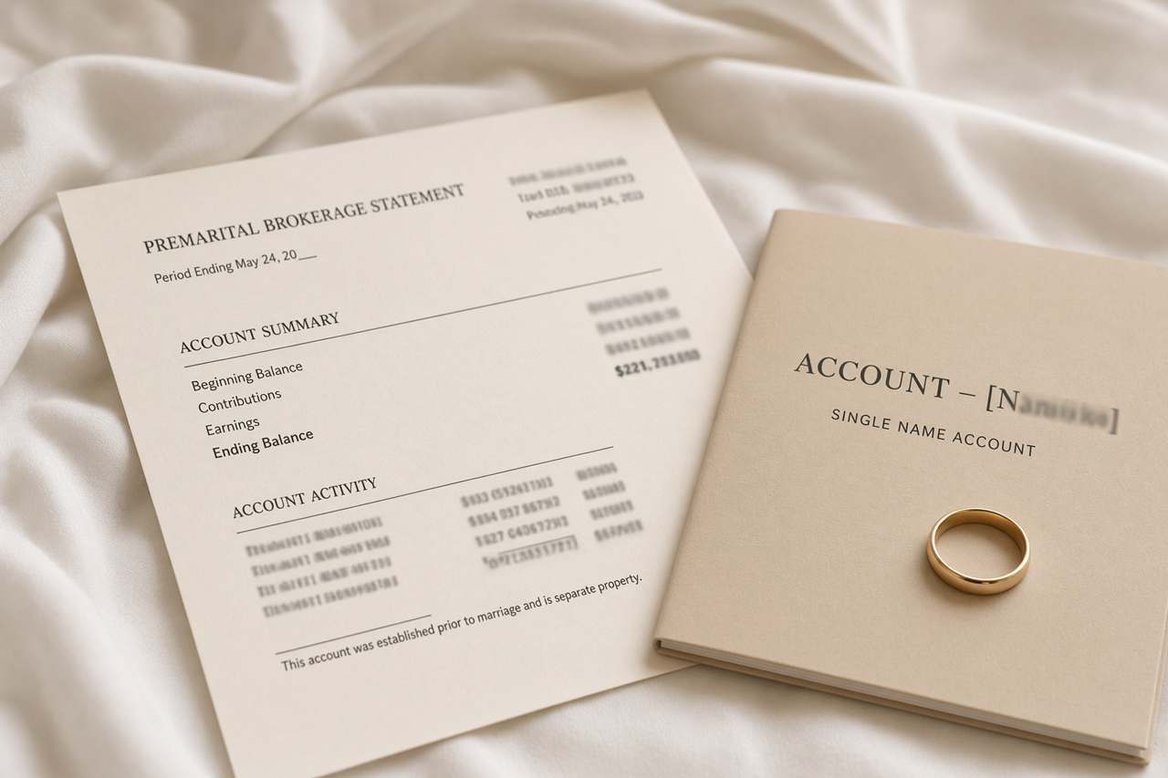
Separate property in Colorado.
What you owned at the wedding, inherited, or were given can stay yours. Its growth during the marriage is marital, and the claim is won or lost on records: the statement from the month you married, and the trail from there to today.
- 01Three habits that decide the claim
- 02When the records are what they are
- 03Discipline now, or litigation later
- →What people ask first
- →Property Division
- →Prenuptial Agreements
Talk to us about your case.
303-507-5529One call. A real person picks up, hears you out, and tells you how we would handle what you are facing and what to do first. No phone tree, no sales pitch, no obligation. Your first conversation is with our intake paralegal, who will get you to Aaron fast.
Rather write? Send a short note and during business hours we call you back within the hour.
Three ways in, many ways out.
Premarital assets, inheritances, and gifts to one spouse start as separate property. Two forces erode that status. First, Colorado's appreciation rule: the increase in a separate asset's value during the marriage is generally marital — the underlying asset can remain yours if proven and traced, but its growth since the wedding is on the table. Second, commingling: deposit the inheritance into the joint account, retitle the condo into both names, run marital dollars through the separate LLC, and the separate character blurs — not always fatally, but the tracing gets harder, more expensive, and sometimes impossible.
The claimant bears the burden. Years later, you will need the paper: statements from the date of marriage, the inheritance distribution records, every transfer in between. I build tracing files the way I build trial exhibits, because that is exactly what they become.
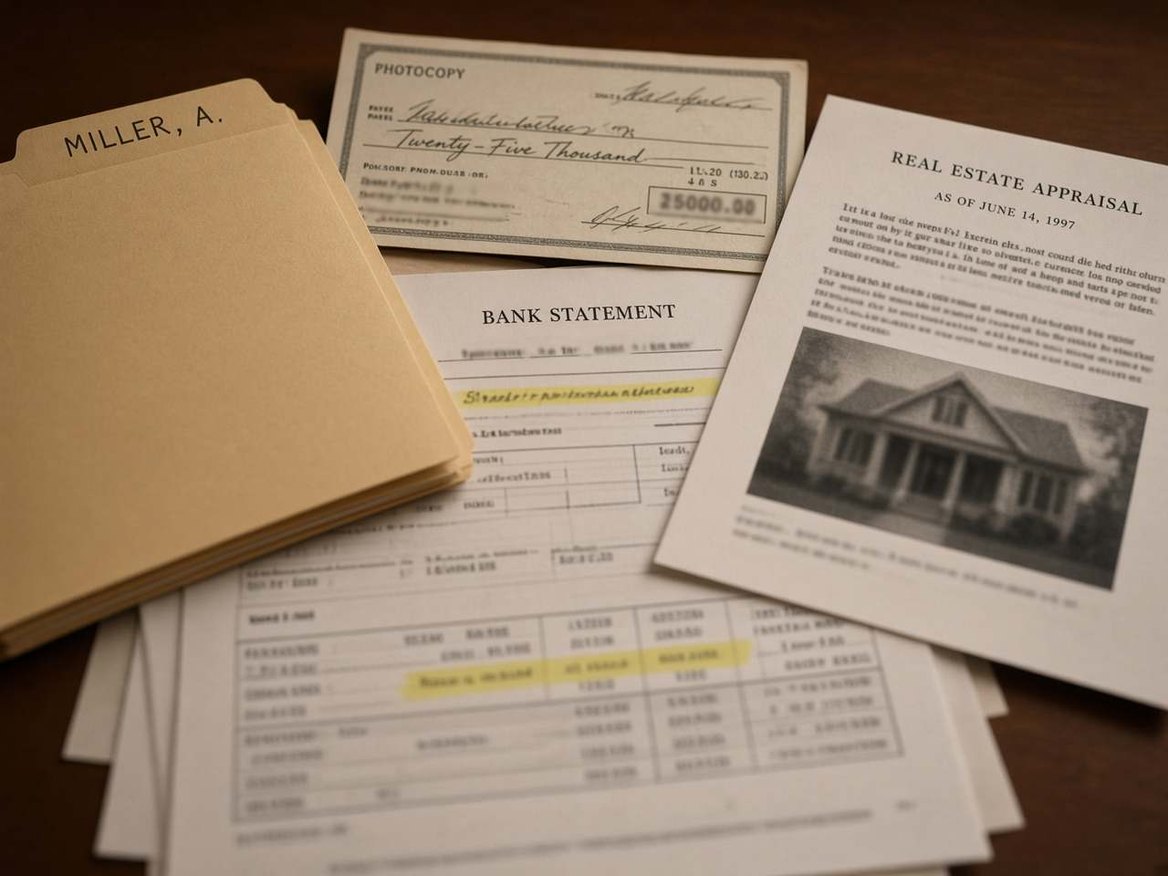
Three habits that decide the claim.
Keep separate assets in separate, single-name accounts, and never deposit marital earnings into them. Most separate-property claims are lost at the bank, not in court.
Contemporaneous records of value at marriage, statements, appraisals, the closing file, are what the tracing is built from years later. Without them the claim is an assertion.
Where the stakes justify it, a prenuptial or postnuptial agreement remains the only genuinely reliable way to keep future appreciation separate. A morning of good drafting saves a year of litigation.
When the records are what they are.
If the inheritance stayed in your name, untouched by marital funds, and you can document it, it is generally yours, though its growth during the marriage is marital. If it went into the joint account, the answer now lives in the records. Bring me everything; the paper decides, and a forensic tracing can still recover what the habits obscured.
Discipline now, or litigation later.

For clients still married — or marrying — the playbook is simple and almost never followed: keep separate assets in separate, single-name accounts; never deposit marital earnings into them; keep contemporaneous records of value at marriage; and where the stakes justify it, put the characterization in writing through a prenuptial or postnuptial agreement, which remains the only genuinely reliable way to keep future appreciation separate. A morning of good titling prevents a year of forensic accounting.
What I tell every client claiming separate property.
Five things, before the other side asks for the records.
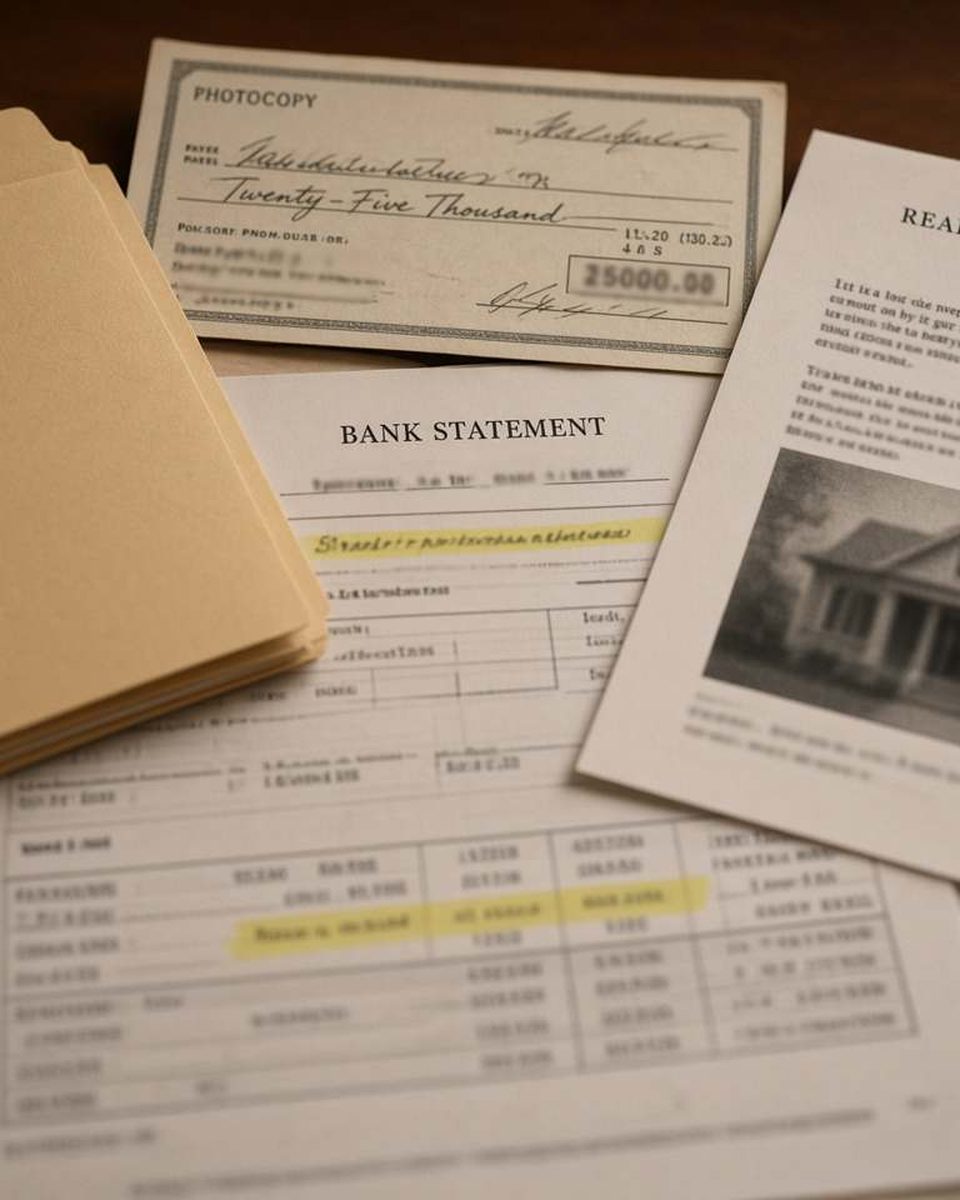
- Find the wedding-day statement.
For every account and asset you brought in. Get it from the institution now, while they still have it.
- Follow every dollar.
From the inheritance to the account to the asset it bought. Closing statements, deposit records, transaction histories.
- Commingling is a records problem.
Mixing does not automatically convert separate property, but it converts the question into one of proof, and the spouse without the paper loses.
- The growth is marital.
The stock you owned at the wedding may be yours; its increase since is on the table. Know the starting number before you argue about the ending one.
- Say it early.
A separate-property claim raised at the end of the case looks like an afterthought. Raised at disclosure, it looks like the truth.
Separate property is a records discipline, not a permanent label. Most claims are lost through habits.
Start with a confidential conversation: tell me what is at stake →
The characterization questions I hear most.
Is my inheritance safe if we divorce?
If it stayed in your name, untouched by marital funds, and you can document it — generally yes, though its growth during the marriage is marital. If it went into the joint account, the answer now lives in the records. Bring me everything; the paper decides.
We used my premarital savings for the house down payment. Do I get it back?
Possibly — contribution of separate funds to a marital asset can be recognized in the division, but it must be traced and it isn’t automatic. This is one of the most commonly litigated patterns in Colorado divorce, and documentation quality usually decides it.
Can we agree on what's separate?
Yes — in writing, properly. A marital agreement can define what stays separate, including future appreciation. A conversation, an assumption, or a spreadsheet at the kitchen table cannot.
Where to go next.
The next page in this chapter, the pages that belong with it, and the blog posts on the same question.
From the blog, on this topic
What you owned before the marriage, inherited, or were given can stay yours. Most claims to it are lost through ordinary household habits rather than through…
Sept 10, 2026Marital vs. Separate Property in Colorado: The Appreciation TrapColorado protects the assets you brought into the marriage, but not their growth. The increase in value of separate property during the marriage is marital, and…
Sept 4, 2026Common Law Marriage in Colorado: You May Be Married, and Not Know ItColorado still recognizes common law marriage, no ceremony required. For high-net-worth couples, a found marriage can put years of asset appreciation,…
If you brought it into the marriage, let’s prove it before the other side asks.
A consultation is a working session, in person in Greenwood Village or by video: we go through your situation and I tell you what I would do. Your note reaches my office directly; during business hours we call you back within the hour, run the conflicts check, and set the meeting.
Talk to us about your case.
303-507-5529One call. A real person picks up, hears you out, and tells you how we would handle what you are facing and what to do first. No phone tree, no sales pitch, no obligation. Your first conversation is with our intake paralegal, who will get you to Aaron fast.
Rather write? Send a short note and during business hours we call you back within the hour.