
Tax strategy in divorce.
A divorce settlement is rarely taxed when it is signed. The tax arrives later, and it lands on whoever took the low-basis assets. Basis, character and timing are the layer most divisions ignore, and the layer where a Georgetown LL.M. in Taxation earns its keep.
- 01Three rules that move real money
- 02The § 1041 rules — and the trap inside them
- 03Support changed character in 2019 —…
- 04Three currencies, and one narrow escape…
- 05Filing status, the house, and the details…
- →What people ask first
Talk to us about your case.
303-507-5529One call. A real person picks up, hears you out, and tells you how we would handle what you are facing and what to do first. No phone tree, no sales pitch, no obligation. Your first conversation is with our intake paralegal, who will get you to Aaron fast.
Rather write? Send a short note and during business hours we call you back within the hour.
Two equal columns that aren’t.
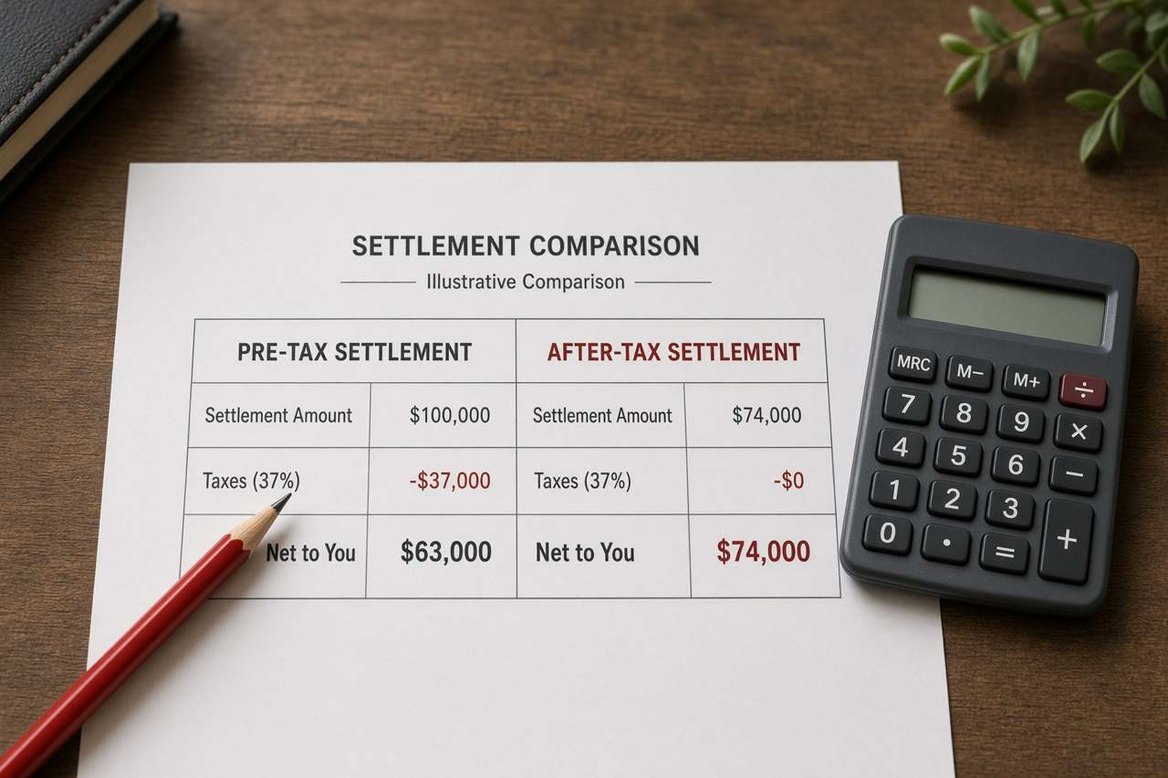
Picture a settlement spreadsheet with two columns of equal totals. One column holds cash and the house; the other holds a retirement account and low-basis stock. On paper the division is even. After tax, pre-tax retirement dollars are worth roughly a quarter to a third less than cash when withdrawn, and appreciated stock carries a capital-gains bill the cash never will — the columns can differ by six figures while looking identical. Running every proposed division through an after-tax model isn't sophistication for its own sake; it's the only honest way to compare offers.
I hold an LL.M. in Taxation from Georgetown, and I run every proposed division through an after-tax model before anyone signs.
Three rules that move real money.
Transfers between spouses incident to divorce are generally nonrecognition events, no gain at the moment of transfer. But the receiving spouse takes carryover basis and inherits the built-in gain. A $500,000 account with a $100,000 basis is not a $500,000 asset.
For divorces after 2018, maintenance is neither deductible by the payor nor taxable to the recipient. Colorado’s advisory formula builds in a 75% or 80% adjustment for the lost deduction, and in the right cases dividing income-producing property or structuring a buyout accomplishes what deductible alimony used to.
Pre-tax, Roth and taxable are not equal dollar for dollar. Division under a qualified domestic relations order is not a taxable event, and a distribution taken by the alternate-payee spouse directly from a qualified plan is exempt from the 10% early-withdrawal penalty, one of the few times the penalty steps aside.
The § 1041 rules — and the trap inside them.

Under Internal Revenue Code § 1041, transfers of property between spouses incident to divorce are generally nonrecognition events — no gain or loss at the moment of transfer. That sounds like mercy. The trap: the receiving spouse generally takes the property with carryover basis, inheriting the built-in gain and the tax bill that comes due on a later sale. A $500,000 brokerage account with a $100,000 basis is not a $500,000 asset — and the spouse who understands that negotiates differently than the one who doesn't.
Support changed character in 2019 — strategy has to follow.
For divorces after 2018, spousal maintenance is neither deductible by the payor nor taxable income to the recipient for federal purposes — a reversal of decades of practice, and the reason Colorado's advisory maintenance formula builds in a percentage adjustment (80% or 75% of the calculated amount, by income level) to account for the lost deduction. The planning follows from the rule: in the right cases, dividing income-producing property or structuring buyouts can accomplish what deductible alimony used to, at a better combined tax cost.
Three currencies, and one narrow escape hatch.

Retirement assets come in three tax currencies — pre-tax, Roth, and taxable — and equalizing them dollar-for-dollar mistakes the exchange rate. Division itself is tax-safe when done right: transfers under a qualified domestic relations order are not taxable events, and a distribution taken by an alternate-payee spouse directly from a qualified plan under a QDRO is exempt from the 10% early-withdrawal penalty — one of the few moments in life the penalty politely steps aside. IRAs follow different transfer mechanics than 401(k)s, and getting the paperwork wrong converts a tax-free division into ordinary income.
Filing status, the house, and the details that expire.
Federal filing status is fixed by marital status on December 31 — a divorce final on the 30th makes both spouses unmarried filers for the entire year, which can move real money in either direction and is worth timing deliberately when possible. The family home carries its own clock: the § 121 exclusion shelters up to $250,000 of gain per qualifying owner — up to $500,000 for spouses meeting the use tests — and how long one spouse stays after the decree affects who can still claim it. Dependency credits, estimated payments, and basis records round out a year-of-divorce checklist I run with your CPA — the same forensic and tax professionals my cases keep busy.
Dependency credits, estimated payments and carryforwards are allocated in the decree, or fought over every April.
What I tell every client about the tax inside the settlement.
Five rules, before anyone agrees to who keeps what.
- Price every proposal after tax.
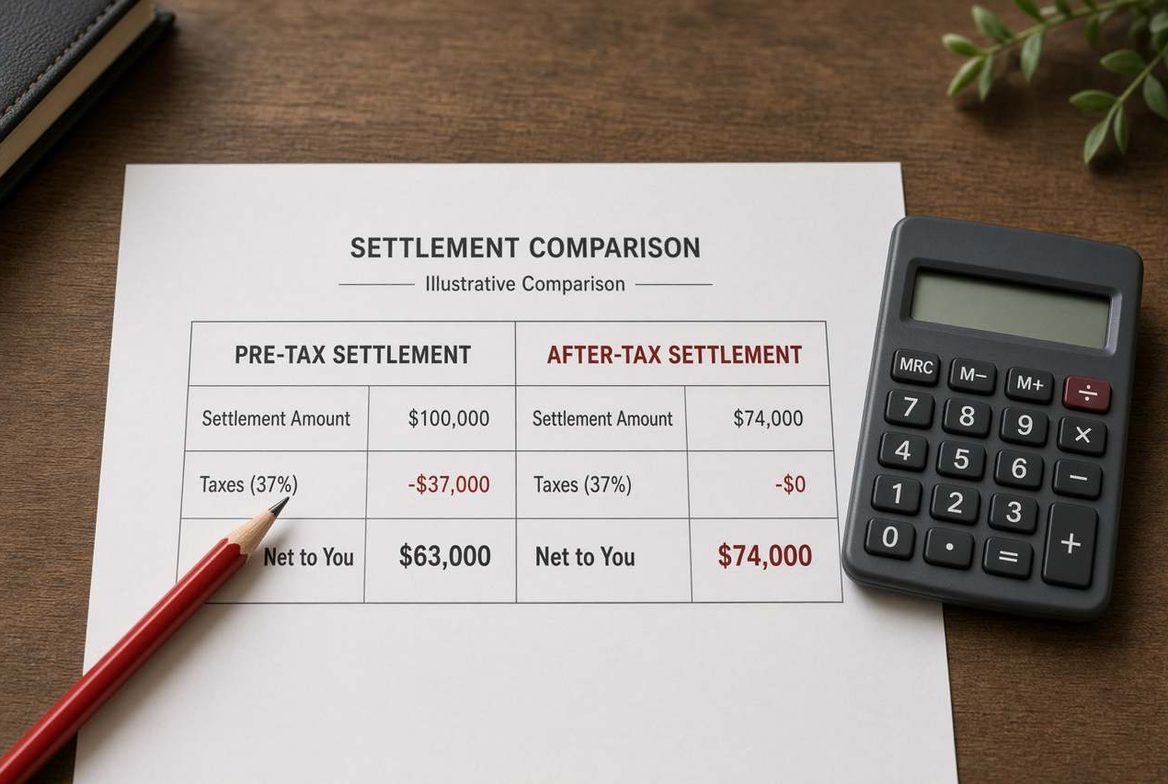
On both sides. The number you keep is the number that matters, and it is rarely the number on the schedule.
- Basis travels with the asset.
Transfers between spouses in a divorce trigger no tax at the transfer. The built-in gain comes with the asset, and someone pays it later.
- Maintenance is after-tax money now.
For orders since 2019, the payor gets no deduction and the recipient reports no income. Every maintenance proposal, and every property trade in place of it, is priced accordingly.
- Retirement dollars are a separate currency.
A pre-tax balance is worth less than the same number in a taxable account. Divide the after-tax value, not the statement balance.
- Time the sale, the filing status and the exemptions.
The year the house sells, who claims the children, and whether you file jointly for the last year are decisions with dollar values attached.
Every asset carries an embedded tax future. I negotiate the after-tax number.
Start with a confidential conversation: tell me what is at stake →
The questions people ask about the tax inside the settlement.
Do I pay tax when assets are transferred to me in the divorce?
Generally not at the transfer. Transfers between spouses incident to divorce are nonrecognition events under Section 1041 of the tax code: no gain or loss when the asset changes hands. The trap is what comes with it. The receiving spouse takes the transferor’s basis and inherits the built-in gain, so a $500,000 brokerage account with a $100,000 basis is not a $500,000 asset, and the spouse who understands that negotiates differently.
Is maintenance taxable?
Not for divorces after 2018. Maintenance is neither deductible by the payor nor taxable to the recipient for federal purposes, a reversal of decades of practice, and the reason Colorado’s advisory formula builds in a percentage adjustment, 80 percent or 75 percent of the calculated amount by income level, for the lost deduction. In the right cases, dividing income-producing property or structuring a buyout accomplishes what deductible alimony used to.
Are a 401(k) and a brokerage account of the same size worth the same?
No. Retirement assets come in three tax currencies, pre-tax, Roth and taxable, and equalizing them dollar for dollar mistakes the exchange rate: pre-tax dollars are worth roughly a quarter to a third less than cash when withdrawn, and appreciated stock carries a capital-gains bill the cash never will. Two columns of equal totals can differ by six figures after tax. Every proposed division is run through an after-tax model before anyone signs.
Can I take money out of my share of the retirement plan without the penalty?
Yes, in one narrow case. Division under a qualified domestic relations order is not a taxable event, and a distribution taken by the alternate-payee spouse directly from a qualified plan under the QDRO is exempt from the ten percent early-withdrawal penalty, one of the few times the penalty steps aside. Ordinary income tax still applies, and the exemption does not carry over to an IRA.
Does the timing of the decree change my taxes?
Yes. Federal filing status is fixed by marital status on December 31, so a divorce final on the thirtieth makes both spouses unmarried filers for the entire year, which can move real money in either direction and is worth timing deliberately where possible. The last joint return, the estimated payments and the carryforwards are allocated in the decree or fought over every April.
What happens to the tax exclusion on our house?
The exclusion shelters up to $250,000 of gain per qualifying owner, up to $500,000 for spouses meeting the ownership and use tests. How long one spouse stays after the decree, and whether the decree grants that spouse the use of the home, affects who can still claim it when the house is eventually sold. The house carries its own clock, and it is planned before the papers are chosen.
Who claims the children on the tax return?
Whoever the decree says. Dependency-related credits are allocated in the decree, by year or by child, with the release form the IRS requires, or they become an annual argument. The allocation has a dollar value and is negotiated as part of the settlement, not left to April.
Are you my tax preparer?
No. I hold an LL.M. in Taxation from Georgetown and I run every proposed division through an after-tax model before anyone agrees to who keeps what, and where the facts warrant it I work with your CPA. The return is theirs; the after-tax number in the settlement is mine.
Where to go next.
The next page in this chapter, the pages that belong with it, and the blog posts on the same question.
- Income DeterminationWhat “income” means when you own the company
- The House, the Buyout & the Equalization PaymentAppraisers, costs of sale, buyouts, and the divorce balance sheet
- QDROs & Dividing Retirement Plans401(k)s, pensions, PERA, federal and military plans: how each is actually divided
- Spousal MaintenanceThe formula, published with a worked example
From the blog, on this topic
Spousal Lifetime Access Trusts move wealth out of the taxable estate, with the marriage as the access mechanism. In a divorce, the donor loses the access,…
Sept 17, 2026Dividing Retirement Accounts in a Colorado Divorce Without Blowing Them UpRetirement accounts are often the largest marital asset and the most commonly mishandled. QDROs, Colorado PERA, the time-rule formula, and survivor benefits each…
Sept 16, 2026Value Depends on Definition: The Standard-of-Value Fight in Colorado Business ValuationColorado leaves the standard of value in divorce undefined, and that choice, not the percentage debate, is what decides whether marketability and control…
Every proposal is priced after tax before anyone says yes. Let’s price yours.
A consultation is a working session, in person in Greenwood Village or by video: we go through your situation and I tell you what I would do. Your note reaches my office directly; during business hours we call you back within the hour, run the conflicts check, and set the meeting.
Talk to us about your case.
303-507-5529One call. A real person picks up, hears you out, and tells you how we would handle what you are facing and what to do first. No phone tree, no sales pitch, no obligation. Your first conversation is with our intake paralegal, who will get you to Aaron fast.
Rather write? Send a short note and during business hours we call you back within the hour.