21 days
Personal service before the first appearance
The citation, motion, affidavit and order go to the person directly. Email and substituted service do not count.
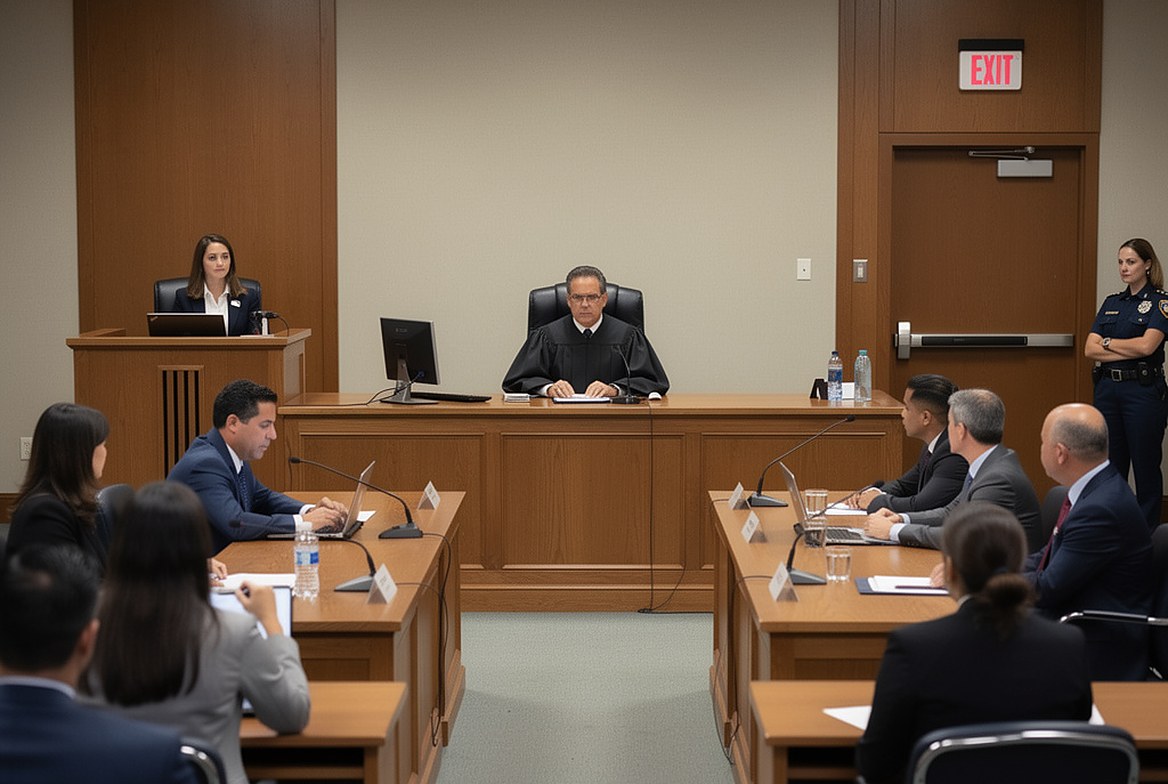
Contempt is the court’s power to make its own orders mean something. In a Colorado divorce or custody case it comes in two forms with different rules: remedial contempt, which coerces compliance and must offer a way out, and punitive contempt, which punishes and carries a criminal case’s protections. Both begin with a verified motion and a citation served by hand.
Talk to us about your case.
303-507-5529One call. A real person picks up, hears you out, and tells you how we would handle what you are facing and what to do first. No phone tree, no sales pitch, no obligation. Your first conversation is with our intake paralegal, who will get you to Aaron fast.
Rather write? Send a short note and during business hours we call you back within the hour.
Most people who ask about contempt want one of two things: the other side punished, or the order obeyed. The law treats those as different proceedings.
Colorado’s contempt rule, C.R.C.P. 107, draws the line in its definitions. Punitive sanctions punish conduct “found to be offensive to the authority and dignity of the court”: an unconditional fine, a fixed jail sentence, or both. Remedial sanctions are “imposed to force compliance with a lawful order or to compel performance of an act within the person’s power or present ability to perform.” Everything follows from which one you ask for: the standard of proof, whether willfulness matters, whether the person accused gets a lawyer and a jury, whether you can recover fees, and what the judge can order. Most family contempt cases are remedial, because most clients, once they think it through, want the money paid, the deed signed or the child delivered on Friday more than they want the other parent in jail.
The rules have also moved recently; this page is current as of September 2026. In 2024 the Colorado Supreme Court held that a contempt citation must be physically served on the person accused: not emailed, not left with a relative. For cases filed since January 2, 2026, a magistrate may hear contempt without the parties’ consent. The Court of Appeals has made clear that willfulness is not required for remedial contempt, that a one-time violation that cannot be purged will not support remedial sanctions or fees, and that an indigent parent facing contempt brought by a county, with jail possible, is entitled to appointed counsel. Below: the kinds, the elements, the process, the sanctions, the fees, the parenting-time statute that often does the job better, and what to do if you are the one served.

The citation, motion, affidavit and order go to the person directly. Email and substituted service do not count.
Remedial: a preponderance of the evidence. Punitive: beyond a reasonable doubt, with willfulness.
The maximum punitive sentence unless the person was advised of the right to a jury trial.
An order deciding contempt and sanctions is final for appeal; a magistrate’s order goes to a district judge first.
Two distinctions organize the whole rule. One asks where the contempt happened; the other asks what the sanction is for.
Direct or indirect. Direct contempt is conduct the court sees or hears that is so extreme no warning is necessary, or that is repeated despite a warning to stop. It may be punished summarily, on findings made on the record, after the person has a chance to make a statement in mitigation (C.R.C.P. 107(a)(2), (b)). Indirect contempt happens outside the court’s sight or hearing (C.R.C.P. 107(a)(3)). Nearly every contempt in a divorce or custody case is indirect: support not paid, a child not delivered, a deed not signed, a disclosure not made. Indirect contempt requires the full process below.
Remedial or punitive. The Supreme Court has held that a contempt proceeding is classified by the purpose and character of the sanctions sought. The table sets out what follows from the choice.
| Remedial | Punitive | |
|---|---|---|
| Purpose | To force compliance with a lawful order, or performance of an act within the person’s present ability | To punish conduct offensive to the authority and dignity of the court |
| Sanction | A fine or imprisonment until the act is performed, with a purge clause | An unconditional fine, a fixed jail sentence, or both |
| Standard of proof | A preponderance of the evidence | Beyond a reasonable doubt |
| Willfulness | Not required | Required: a willful refusal |
| Ability to comply | A present ability, found by the court; the person accused bears the burden of proving inability | An element the movant must prove |
| Rights of the person accused | Representation by retained counsel; appointed counsel if indigent when a government entity seeks contempt and jail is available | The rights of a criminal defendant, including appointed counsel if indigent and jail is contemplated, silence, and a jury before more than six months |
| Attorney fees | Discretionary, as part of the sanction | Not available |
| Notice | The sanctions sought must be described in the motion or the citation | A punitive fine or jail only if the citation gave notice of it |
The two may be combined in one proceeding if the procedures for each are followed and separate findings support each (C.R.C.P. 107(e)); the state’s motion form lets the filer check either box or both. A judgment for unpaid support does not use up contempt: the Supreme Court held in In re Marriage of Nussbeck, 974 P.2d 493 (Colo. 1999) that the two remedies are cumulative.
Most clients, once they think it through, want the money paid, the deed signed and the child delivered on Friday. That is remedial contempt.
The elements are short. The fight is almost always about one of them: the ability to comply.

Remedial: a lawful order, knowledge, noncompliance and a present ability to comply. Punitive adds willfulness, proof beyond a reasonable doubt, and a finding that the conduct offended the court.
Remedial. Remedial sanctions must rest on findings that the person “did not comply with a lawful order of the court,” “knew of the order,” and “has the present ability to comply with the order”: In re Marriage of Cyr & Kay, 186 P.3d 88 (Colo. App. 2008). The same decision held that proof of willfulness is not required, and that the burden of proving inability to comply rests on the person accused. The Court of Appeals has since described the movant’s initial burden as a preponderance of the evidence (A.C.B., 2022 COA 3).
Present ability means now. Past ability, or ability expected in the future, will not do; the Supreme Court has said so. A remedial order needs a second look at ability too: the court must find the person can perform the purge condition it sets, and jail without a finding of resources to purge is improper. Where the evidence shows the person truly cannot pay, there is no refusal to perform an act within his power, and the remedial proceeding fails.
Punitive. The movant must allege, and the court must find, “(1) the existence of a lawful order of the court; (2) contemnor’s knowledge of the order; (3) contemnor’s ability to comply with the order; and (4) contemnor’s willful refusal to comply with the order”: Nussbeck. Each must be proved beyond a reasonable doubt, and the court must expressly find the conduct offensive to the authority and dignity of the court (C.R.C.P. 107(d)(1)).
A head start in support cases. A copy of the Family Support Registry’s payment record, or the clerk’s certified record, is prima facie evidence of contempt of an order for child support or maintenance combined with child support (C.R.S. § 14-14-110(1)). The parent owed proves the order and the record, and the question moves to the payor’s ability.
The order has to be clear. Contempt enforces an order as written. The Court of Appeals held in In re Marriage of Teruel De Torres, 2025 COA 96 that restrictions on a parent’s speech must meet a demanding standard, with substantial harm demonstrated in detail; a vague non-disparagement clause is a weak basis for contempt.
Indirect contempt runs on a fixed sequence. Each step has a rule, and skipping one is how contempt motions fail.
The state’s form is JDF 1816, the Motion and Affidavit for Citation for Contempt of Court. It attaches the order, describes what was not done or not paid, states the facts showing a present ability to comply, and says whether remedial or punitive sanctions, or both, are sought, and which. The remedial sanctions sought must be described in the motion or the citation, and a punitive fine or jail may be imposed only if the citation gave notice of it.
If the motion and affidavit show that indirect contempt has been committed, the court may order a citation to issue, without a hearing, directing the person to appear and show cause why he or she should not be punished (C.R.C.P. 107(c)). The form is JDF 1817, the Order to Issue Citation and Citation to Show Cause; the filer completes only the caption.
The citation and copies of the motion, affidavit and order must be served directly on the person at least twenty-one days before the appearance date, by a private process server or the sheriff, with the return of service completed on the citation.
Where punitive sanctions are possible, the person is advised at the first appearance of the right to counsel, appointed if indigent and jail is contemplated; to plead guilty or not guilty; the presumption of innocence and proof beyond a reasonable doubt; to present evidence, cross-examine and subpoena witnesses; to remain silent or testify; and to appeal. If the judge started the proceeding, the person may have it heard by another judge. In some courts the first appearance is an advisement only, and the contempt hearing is set after it.
If the person was properly served and does not appear, the court may issue a warrant for arrest, stating the amount and kind of bond (C.R.C.P. 107(c); C.R.S. § 14-14-110(3)). The bond may be forfeited if the person fails to appear again.
The Judicial Branch’s instructions note that many judicial officers require an attempt at mediation before a contested hearing. The case management order says whether yours does.
The court hears the evidence for and against the person charged. A remedial order must be in writing or on the record and must describe the sanction and the means of purging it (C.R.C.P. 107(d)(2)). Before any punitive sentence, the person may make a statement in mitigation (C.R.C.P. 107(d)(1)).
An order deciding contempt and sanctions is final for purposes of appeal (C.R.C.P. 107(f)), and the notice of appeal is due within forty-nine days. A magistrate’s contempt order is reviewed by a district judge on request; in cases filed on or after January 2, 2026, a magistrate may conduct contempt proceedings without the parties’ consent (C.R.M. 5(b)).

The citation must be physically handed to the person accused. The Supreme Court held in 2024 that email and substituted service will not do.
In In re Marriage of Conners, 2024 CO 44 a mother in a Larimer County case moved for contempt over unpaid child support and medical expenses, seeking remedial and punitive sanctions. Two attempts to serve the father at his home in California failed, and the magistrate allowed service by email under the rule that permits substituted service in ordinary civil cases. The Supreme Court disagreed. Rule 107(c), it held, “unambiguously requires physical service on the specific individual accused of contempt without any intermediate intervention”; “E-mail service doesn’t satisfy Rule 107(c)’s requirements”; and “substituted service is inappropriate in contempt proceedings.” One justice urged amending the rule to allow substituted service in family cases. As of mid-2026 it had not been amended.
What it means in practice. Budget for a process server and for twenty-one days. A person who is hard to find is hard to hold in contempt, and some cases stall here. The judgment remedies do not have this problem: a verified entry of support judgment is served like any other filing, and an income assignment goes to the employer. When the other side is evading service, those tools keep working while the process server keeps trying.
What a court can order depends entirely on which kind of contempt it found.
Remedial sanctions. If the contempt is a failure to do something within the person’s power, and the court finds a present ability to do it, the person “may be fined or imprisoned until its performance” (C.R.C.P. 107(d)(2)). The order must describe the means of purging the contempt and the sanctions in effect until it is purged; a remedial order without a purge clause is improper. For unpaid support the purge is ordinarily a payment of a stated amount by a stated date; for a document, signing it; for a passport or records, delivering them. Beyond costs and fees, the Court of Appeals has held, a court may not impose as a remedial sanction money payments that do not force compliance.
Punitive sanctions. An unconditional fine, a fixed jail sentence, or both, on an express finding that the conduct offended the authority and dignity of the court. Jail may not exceed six months unless the person was advised of the right to a jury trial. The court may not suspend any part of a punitive sentence based on future conduct, and may not impose probation as a condition, though it may reconsider the sanction (C.R.C.P. 107(e)). A punitive fine is payable to the court, not to the other party.
In parenting-time cases, the enforcement statute lists contempt with a fine or jail among its remedies and separately allows a civil fine of up to $100 per incident of denied parenting time, paid to the state’s dispute resolution fund (C.R.S. § 14-10-129.5(2); C.R.S. § 14-10-129.5(3)).
What contempt cannot do. It cannot forgive the underlying debt or change the order; it enforces the order as written. A person can be jailed for contempt of a support order because the sanction is for disobeying the court, not for owing money, which is why the constitution’s bar on imprisonment for debt does not apply. But remedial jail still requires the finding that the person can meet the purge.
A remedial jail sentence is a locked door with the key on the inside. The purge clause is the key, and the court must find the person can use it.
Fees in contempt follow the kind of contempt, and a separate statute governs parenting time.
| Basis | The rule | Authority |
|---|---|---|
| Remedial contempt | Costs and reasonable attorney fees in connection with the proceeding, in the court’s discretion. The Court of Appeals has held that fees awarded with a contempt finding are not conditioned on the contemnor’s ability to pay. | C.R.C.P. 107(d)(2) |
| Punitive contempt | No fees: attorney fees can be awarded only as a component of remedial sanctions. | In re Marriage of Webb, 284 P.3d 107 (Colo. App. 2011) |
| A one-time violation that cannot be purged | No remedial sanction, and so no fees under the contempt rule. | Webb |
| Parenting time | Mandatory: the court shall order a parent who failed to provide or to exercise court-ordered time to pay the other’s fees, costs and expenses, and lost wages for attending have been held reimbursable. If no violation is found, the filer may be ordered to pay. | C.R.S. § 14-10-129.5(4) |
| Relative finances | Fees based on both parties’ resources, before or after the decree, whatever the outcome. | C.R.S. § 14-10-119 |
| A fee clause in the agreement | A valid fee-shifting clause in a separation agreement can be enforced as written. | The agreement |
A proposed set of Colorado Rules of Family Procedure, published for comment in January 2025, includes a family contempt rule that would allow fees in any contempt proceeding, even where the violation is cured before the hearing. Until a family rule is adopted, C.R.C.P. 107 and the cases above control. More on the Attorney Fees & Costs page.
For withheld parenting time, Colorado has a statute built for the problem. Contempt is one of its remedies, not the only one.

A verified motion, a decision on the papers within thirty-five days, remedies that give the time back, and fees the court must award.
Either parent may file a verified motion alleging that the other is not complying with the parenting-time order or schedule and setting out the possible sanctions. Within thirty-five days the court must decide from the motion and any response whether there has been, or is likely to be, substantial or continuing noncompliance, and then deny the motion, set a hearing as expeditiously as possible, or order mediation with a report within sixty-three days (C.R.S. § 14-10-129.5(1)). The forms are JDF 1418 and JDF 1419.
The remedies. After a hearing that finds a violation, and in the child’s best interests: additional terms consistent with the order; a modification; a parenting class or family counseling at the violating parent’s expense; a bond; make-up time of the same type and duration as the time lost, within six months or, if that is impossible, a year, at a time the aggrieved parent chooses if it serves the child; contempt with a fine or jail; a civil fine of up to $100 per incident; a hearing on modifying parental responsibilities; or any other order that serves the child (C.R.S. § 14-10-129.5(2)).
Fees are mandatory against the parent who failed to provide, or failed to exercise, court-ordered time (C.R.S. § 14-10-129.5(4)). That is the practical difference from contempt: a single withheld weekend, over and done, will not support remedial contempt or fees under the contempt rule, but it supports make-up time and mandatory fees under this statute.
Limits. The court may not condition child support on parenting time, and the Court of Appeals held in 2024 that the statute’s general remedies cannot reallocate decision-making without the findings the modification statute requires; see Modifying Custody. A parent who violates a custody order with the intent to deprive the other parent of the child commits a felony (C.R.S. § 18-3-304), a matter for the district attorney.
Contempt is powerful and slow. In many cases something else gets the result sooner.
| The situation | Why contempt is a poor fit | The better tool |
|---|---|---|
| A salaried payor behind on support | A hearing, personal service and a fight over ability, to collect money an employer could withhold | An income assignment; a verified entry and garnishment for the arrears |
| A one-time violation that is over | Nothing left to purge, so no remedial sanction and no fees under the contempt rule | For parenting time, the enforcement statute’s make-up time and mandatory fees; otherwise punitive contempt, or nothing |
| A payor who truly cannot pay | No present ability, no remedial contempt | The judgment, which keeps its value; for the payor, a motion to modify |
| A person who cannot be found | No personal service, no contempt | Judgment remedies, the income assignment and the county’s administrative tools |
| A vague order | An order too vague to obey is too vague to enforce | A motion to clarify or modify the order first |
| A deed or title not signed | Slower than the alternative | The clerk signs under C.R.C.P. 70 (JDF 1814, 1815) |
| A protection order violated | The violation is a separate crime | Law enforcement and the district attorney (C.R.S. § 18-6-803.5) |
“Clean hands” is not a defense. Support and parenting time are separate by statute: the court may not condition support on parenting time, and support enforcement is unaffected by parenting-time disputes (C.R.S. § 14-10-129.5(2)(a); C.R.S. § 14-14-104(4)). A payor’s answer that the other parent kept the children is not a defense to support contempt, and a parent’s answer that support went unpaid is not a defense to withholding the children. Each violation has its own remedy. The full menu of remedies is on the Enforcement of Orders page.
A citation is not a finding. What happens before the first appearance often decides the case.
A person properly served who does not appear can be arrested on a warrant with a bond set by the court. Nothing in a citation gets better by being ignored.
In a support case the court may consider that payment was made before the hearing (C.R.S. § 14-14-110(2)). Compliance before the hearing takes most of the purpose out of remedial contempt.
In remedial contempt the burden of proving inability is yours: pay records, bank statements, the job search, medical records. A speech is not evidence.
If punitive sanctions are sought: counsel, appointed if you are indigent and jail is contemplated; silence; proof beyond a reasonable doubt; a jury before more than six months.
When the county is the one citing you. A county child support unit may file civil contempt, but its rules require it to screen your ability to pay, give the court that information, and tell you clearly that ability to pay is the critical question (9 CCR 2504-1-6.903.31), safeguards that follow the U.S. Supreme Court’s decision in Turner v. Rogers, 564 U.S. 431 (2011). The Court of Appeals held in In re Parental Responsibilities Concerning A.C.B., 2022 COA 3 that when a government entity brings contempt and jail is an available remedial sanction, an indigent person has the right to appointed counsel.
If the order itself is the problem. A payor whose income fell, or a parent whose schedule no longer works, has one remedy, a motion to modify, and it reaches only the future. It will not excuse past noncompliance, but it stops the next month from becoming the next violation. See Modifying Child Support and Ending or Reducing Maintenance. After a ruling, the deadline to appeal is forty-nine days; see Appeals.
Six things, in the order they come up. Not legal advice for your case; the mistakes I have watched for thirty years.

Remedial gets compliance, and fees, on a lower standard. Punitive punishes, needs proof beyond a reasonable doubt, and brings in appointed counsel and possibly a jury. Plead both only for a reason.
Bank records, pay records, spending. A remedial case is won or lost on the ability to comply.
A process server or the sheriff. Email and substituted service do not count, and defective service wastes the hearing date.
The remedial sanctions must be described in the motion or citation. Ask for a specific amount by a specific date, or a specific act.
Make-up time and mandatory fees, even for a violation that is already over.
Payment or compliance before the hearing counts, and inability is yours to prove, with records.
Contempt requires proof that the other side acted willfully.
Not remedial contempt. Willfulness is an element only of punitive contempt.
If he is dodging service, the court will let me email the papers.
The Supreme Court held in 2024 that the citation must be physically served on the person.
Once there is a judgment for the arrears, contempt is off the table.
Judgment and contempt are cumulative remedies; the Supreme Court said so in 1999.
The judge will jail him until he pays everything.
Remedial jail requires a present ability to meet the purge the court sets, found on the evidence.
I will get my fees whatever kind of contempt it is.
Contempt-rule fees come only with remedial sanctions, and not for a one-time violation that cannot be purged.
Contempt is how you get make-up parenting time.
Make-up time comes from the parenting-time statute, which also makes fees mandatory.

Contempt is a tool, not a verdict. The purge clause is what the court is really deciding.
Start with a confidential conversation: tell me what is not being done →
Remedial contempt is meant to force compliance: the sanction is a fine or jail until the person does what the court finds he or she is able to do, and the order must say how to purge it. It is proved by a preponderance of the evidence, willfulness is not required, and the court may award fees. Punitive contempt punishes completed defiance with a fixed fine or jail sentence. It requires proof beyond a reasonable doubt of a willful refusal, the rights of a criminal defendant apply, and fees are not available.
For remedial contempt: that there was a lawful order, that you knew of it, and that you did not comply. The court must also find that you have the present ability to comply, and the burden of proving that you cannot is on you. In a child support case the Family Support Registry’s payment record is prima facie evidence of contempt. For punitive contempt, the other side must also prove beyond a reasonable doubt that your refusal was willful, and the court must find the conduct offended its authority and dignity.
File a verified motion and affidavit for citation for contempt, the state form JDF 1816, in the existing case, with the order attached, a description of what was not done or paid, the facts showing a present ability to comply, and the sanctions you want. Submit JDF 1817, the order to issue citation, with only the caption filled in. If the court issues the citation, have it served personally on the other party, with the motion, affidavit and order, at least twenty-one days before the appearance date, by a process server or the sheriff.
No. In 2024 the Colorado Supreme Court held that the contempt rule requires physical service on the specific person accused, without any intermediate intervention, and that substituted service is inappropriate in contempt proceedings. In that case the father lived in California and two attempts at personal service had failed; the court still refused to allow email. A person who cannot be found cannot be brought into a contempt hearing, which is one reason the judgment remedies, which do not need personal service, often come first.
Yes, but the rules limit it. Remedial jail requires a finding that you have the present ability to do what the court orders, and it must come with a purge condition that ends it when you comply. Punitive jail requires proof beyond a reasonable doubt that you willfully refused, and a sentence over six months requires the right to a jury trial. The court may not suspend a punitive sentence based on future conduct or impose probation. A warrant can also issue if you are properly served and do not appear.
It is the part of a remedial contempt order that tells the person exactly how to end the sanction: pay a stated amount by a stated date, sign the deed, deliver the passport, produce the records. The rule requires every remedial order to describe the means of purging the contempt and the sanctions in effect until it is purged, and a remedial order without a purge clause is improper. The court must also find that the person has the present ability to meet the purge condition it sets.
In remedial contempt, the court may award costs and reasonable attorney fees as part of the sanction. In punitive contempt it may not, and the Court of Appeals has held that a one-time violation that can no longer be purged will not support fees under the contempt rule. For withheld or unexercised parenting time the enforcement statute makes fees mandatory against the parent in violation, and the general fee statute allows fees based on the parties’ relative finances in any post-decree proceeding.
In a support case the court may consider that the payment was made before the hearing, and remedial contempt exists to force compliance, so paying in full usually takes most of the force out of a remedial motion. It does not erase a properly pleaded punitive claim for past willful defiance, and it does not affect fees owed under a separate statute, such as the parenting-time statute or the fee statute based on relative finances. Paying before the hearing is almost always the right move.
You may always hire one. If punitive sanctions are sought and jail is contemplated, the court must appoint counsel if you are indigent. If a government entity such as a county child support unit brings the contempt and jail is an available remedial sanction, the Court of Appeals held in 2022 that an indigent person has the right to appointed counsel as well. Otherwise, in a remedial case brought by the other parent, the right is to be represented by a lawyer you retain.
Usually not the first choice. The parenting-time enforcement statute was written for this: a verified motion, a decision from the court within thirty-five days, make-up time of the same type and duration as the time lost, a bond, classes or counseling at the violating parent’s expense, fines up to $100 per incident, and mandatory attorney fees. Contempt is one of the remedies it lists. For a single weekend that is already over, contempt may not work at all, but the statute’s make-up time and fees still do.
In cases filed on or after January 2, 2026, yes: under the amended magistrate rules a magistrate may issue contempt citations, conduct contempt proceedings and enter contempt orders without the parties’ consent. Any magistrate’s order finding a person in contempt must, on request, be reviewed by a district judge under the rules for reviewing magistrates’ orders. For cases filed earlier, whether a magistrate may hear contempt without consent depends on the version of the rule that applied then.
Yes. An order deciding the issue of contempt and sanctions is final for purposes of appeal, and the notice of appeal is due within forty-nine days. If a magistrate entered the order, review by a district judge comes first. A punitive sanction may also be reconsidered by the court that imposed it. An appeal is decided on the record made at the hearing, so the findings on the order, knowledge, ability and, for punitive contempt, willfulness are what the appellate court will read.
The next page in this chapter, the pages that belong with it, and the blog posts on the same question.
In a hard-fought Colorado custody case the judge can appoint an attorney whose only client is the child's best interests. What a CLR does, how it differs from a…
Sept 18, 2026The SLAT Trap: When the Estate Plan Meets the DivorceSpousal Lifetime Access Trusts move wealth out of the taxable estate, with the marriage as the access mechanism. In a divorce, the donor loses the access,…
Sept 17, 2026Can You File for Divorce in Another State If You Live in Colorado?Where a divorce can be filed, where the money can be decided, and where the children's case belongs are three different questions. Colorado's 91-day domicile…
A consultation is a working session, in person in Greenwood Village or by video: we read the order and the record of what was and was not done, and I tell you whether contempt fits, which kind, what has to be proved, and what I would file instead if it does not. If you have been served with a citation, I tell you what to do before the first appearance. Your note reaches my office directly; during business hours we call you back within the hour, run the conflicts check, and set the meeting.
Talk to us about your case.
303-507-5529One call. A real person picks up, hears you out, and tells you how we would handle what you are facing and what to do first. No phone tree, no sales pitch, no obligation. Your first conversation is with our intake paralegal, who will get you to Aaron fast.
Rather write? Send a short note and during business hours we call you back within the hour.