60 days
To cancel the hospital form
Both parents sign it; it becomes as good as a court order. Either can cancel it within sixty days, or until a case is filed.

For parents who were never married to each other. A paternity case names the child’s legal father, then decides the two things that matter for the child: parenting time and child support. Nothing about property, nothing about maintenance. Here it is in plain English: how it differs from a divorce, who can file, what the court can and cannot do, and how paternity is established.
Talk to us about your case.
303-507-5529One call. A real person picks up, hears you out, and tells you how we would handle what you are facing and what to do first. No phone tree, no sales pitch, no obligation. Your first conversation is with our intake paralegal, who will get you to Aaron fast.
Rather write? Send a short note and during business hours we call you back within the hour.
If you were married when your child was born, you never had to think about this. If you were not, the law does not know who the father is until someone tells it.
A husband is the legal father of a child born during the marriage, automatically. An unmarried father is nobody, legally, until paternity is established: his name is not on the birth certificate, he cannot be ordered to pay support, and he has no parenting time a court will enforce. The mother is the only legal parent. That is true however involved he is, and it stays true until one of four things happens: the parents sign the acknowledgment form, a DNA test comes back, a judge or the county enters an order, or, in a few situations, the law presumes him the father.
A paternity case is how a court settles it when the parents do not settle it themselves, and it is smaller than a divorce. There is no marriage to end, no house or retirement account to divide, no maintenance. The court decides who the parents are and then what every court decides for children: a parenting plan and child support. This page is written for parents, not lawyers. The statutes are listed at the bottom for anyone who wants them, and I have left out the exceptions that come up once a decade. What matters in most cases is on this page. (Paternity leave from work is a different subject.)

Both parents sign it; it becomes as good as a court order. Either can cancel it within sixty days, or until a case is filed.
A legal test from an accredited lab. A real result is 99.9 percent or zero; a drugstore kit does not count.
The child can file until twenty-one. Waiting still costs: every month without an order becomes the status quo.
Colorado’s official word is parentage, and the case is a petition to establish parentage. Everyone, including judges, still says paternity. The comparison with a divorce tells you most of what you need to know.
| A divorce | A paternity case | |
|---|---|---|
| Who it is for | Parents who are married to each other (or in a civil union) | Parents who were never married to each other |
| What it decides | Ends the marriage; divides the property and debts; maintenance for a spouse; parenting time, decision-making and child support | Who the legal parents are; parenting time and decision-making; child support, including back support; the birth certificate and the child’s name |
| What it cannot decide | — | Property or debts, and support for the other parent. There was no marriage, so there is nothing marital to divide |
| Where it is filed | District court | Denver: the Denver Juvenile Court at the Lindsey-Flanigan Courthouse, 520 W. Colfax Ave. Elsewhere in the metro: the district court |
| Waiting period | At least 91 days before the decree | None |
| What it is called | Dissolution of marriage | Petition to establish parentage. If paternity was already settled by the hospital form, the case is an allocation of parental responsibilities instead |
Same-sex couples and civil unions: the parentage rules apply to a parent of any gender, and a spouse or civil-union partner gets the same presumption a husband does. See LGBTQ+ Family Law.
Paternity is not settled. You were not married, no acknowledgment was signed, and the father is not on the birth certificate. This is the paternity case. It names the father and then handles parenting time and support in the same case.
Paternity is already settled. You both signed the acknowledgment at the hospital, or a court or the county already entered an order. You do not need a paternity case. What you need is a parenting case, which the court calls an allocation of parental responsibilities, and a child support order. The parenting rules are the same as in a divorce; see Parental Responsibilities.
The mother was married to someone else. Her husband is presumed to be the father even if he is not. The biological father can still bring a case, and so can the husband, but the court weighs the child’s interests and there is a five-year limit. This is the one version of a paternity case that needs a lawyer from the first day.
A father becomes a legal father one of four ways. Which one applies decides how easy the rest of the case is, and how hard it is to undo.
If the mother was married when the baby was born, or the marriage ended within the 300 days before the birth, her husband is presumed to be the father. So is a man who marries her after the birth and puts himself on the certificate or agrees to support, and a man who takes the child into his home and openly raises the child as his own.
The voluntary acknowledgment of paternity. The hospital must offer it to unmarried parents; both sign, the state files it, and it counts the same as a court order. It puts the father on the birth certificate. It can also be signed later, at a county child support office or vital records, until the child turns eighteen.
A legal test from an accredited laboratory: a neutral collector swabs both cheeks, checks identification and documents the chain of custody. A result of 97 percent or more makes him the presumed father. A real match is 99.9 percent or higher; a non-match is zero. Results usually take a week or two.
After a test, or by agreement, a judge enters an order of parentage. The county child support office can enter the same order without a judge when neither parent disputes it. Either order is final for every purpose.

Three questions before anyone signs: Are you certain? Is she married to someone else? Was the child conceived with a donor?
The form takes five minutes and lasts a lifetime. Once the state files it, the father has every right and duty of a parent, and support can be ordered without anyone proving paternity again. What the form does not do is set a schedule: parenting time is agreed between you or decided by a court later.
Sixty days, or less. Either parent can cancel it for any reason within sixty days of signing, or until a court case about the child is filed, whichever comes first. After that it can be undone only for fraud, duress or a serious mistake of fact, and the person challenging it has to prove it while support keeps running. So: if there is any doubt at all, test first. The form can wait a month; the doubt cannot be signed away.
If the mother is married to someone else, her husband must also sign a form denying paternity before the acknowledgment can be filed.
A mail-in kit tells you the answer; it does not prove it. Nobody watched the swabs being taken, so a court cannot know whose DNA was tested. The state’s own brochure says over-the-counter tests cannot be used as evidence. A legal test costs about $200 to $500 as of September 2026 and settles the question for everyone. A prenatal test from the mother’s blood exists and costs over $1,000; use it to make decisions during the pregnancy, and expect the court to order a test after the birth anyway.
Either parent, the county, or the child. There is no rush written into the law, but there are two situations with short clocks, and every month without an order shapes the case.
| Who | When | Notes |
|---|---|---|
| The mother | Any time before the child turns eighteen | Usually to get support, a parenting plan, or both. She can also apply to the county child support office instead of filing herself. |
| The father | Any time before the child turns eighteen | The man who believes he is the father, or has been told he is. He files when the mother will not sign the acknowledgment, or to get parenting time she will not agree to. |
| The county child support office | When a parent applies for services, or the family receives public assistance | It establishes paternity and support. It does not handle parenting time. |
| The child | Until twenty-one, through a representative | Rare: usually an adult child establishing inheritance or benefits. |
| Before the birth | During the pregnancy | The case can start, and the final order can include support and the pregnancy and birth costs. Parenting orders wait for the birth, and the DNA test is done after it. |
There is no deadline for most paternity cases. There is a cost to waiting: the parent with the child has the schedule, and every month makes it the normal one.
Once the father is named, the case turns into what every court does for children: a parenting plan and a support order. Two things that are different from a divorce are worth knowing.
| The court can | What that means |
|---|---|
| Name the legal father | By agreement, by DNA test, or after a hearing. The order counts for every purpose: support, parenting time, the birth certificate, inheritance, survivor benefits. |
| Set child support | Under the 2026 guidelines, the same ones that apply in a divorce, with medical support and a share of child care. Run the numbers on the child support calculator. |
| Order back support | Support for the months or years before the case, back as far as the birth, plus the reasonable costs of the pregnancy and delivery. The judge decides how much, on factors listed below. |
| Enter a parenting plan | Parenting time and decision-making, on the child’s best interests, exactly as in a divorce. See Parental Responsibilities and Parenting Time. |
| Fix the birth certificate and the name | A new certificate showing both parents. A dispute over the child’s last name is decided on the child’s best interests. |
| Divide the fees | The lawyers, the DNA test and any expert, in whatever proportions the judge finds fair. |
| The court cannot | What that means |
|---|---|
| Divide property or debts | A house or a car you bought together is a separate civil matter, not part of this case. |
| Order maintenance | Support for a parent, as opposed to the child, exists only between spouses. |
| Decide custody before the birth | The case can start during the pregnancy, and the final order can include support and the birth costs, but parenting orders wait for the baby. |
| Undo the past cheaply | A signed acknowledgment or an old order is hard to reverse. The clocks are in section 07. |
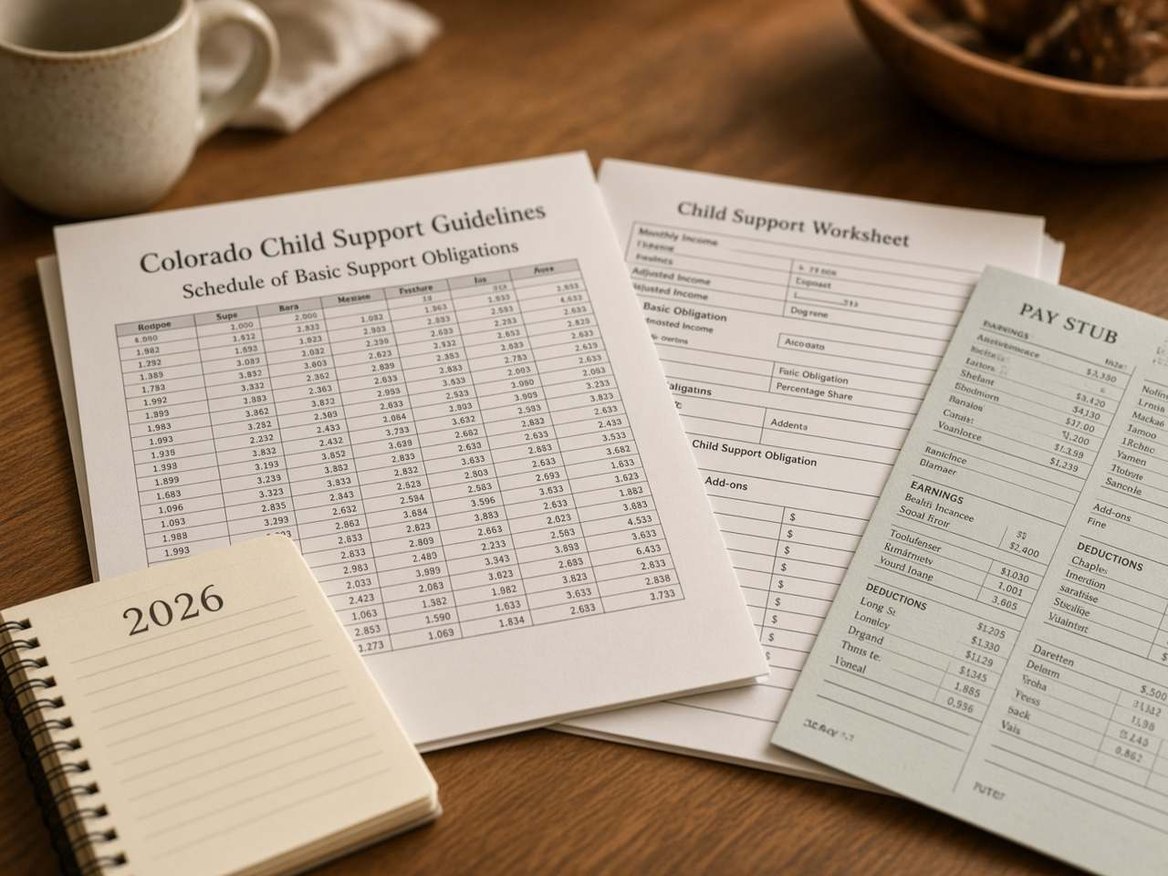
A divorce reaches back to the filing. A paternity case can reach back to the birth, on facts a parent can prove.
In a divorce or custody case, support for the past reaches back only to the day you separated, filed or served the papers. A paternity case can reach back to the child’s birth, and the judge can add the reasonable costs of the pregnancy and the delivery and the DNA test. It is not automatic. Since February 2026 the judge must weigh the father’s ability to pay both the past and the current support, whether anyone ever asked him for support, whether he dodged being served, what he actually provided in money, diapers, food, clothing and gifts, and whether he was kept from the child. Each of those is something a parent can document, starting now.
A parent owed years of support who files a custody case instead of a paternity case may give up everything before the filing date. Which case to file is the first decision, and it is worth a consultation on its own.
No preference for mothers, no preference for fathers; the schedule and the decision-making are decided on the child’s best interests, and asking for a DNA test cannot be held against you. The order that names the father creates no schedule by itself. Ask for parenting orders in the same case, propose a real plan, and live it while the case is pending.
Every Colorado county has a Child Support Services office. When the goal is support and nobody really disputes who the father is, it is the cheapest route there is: no application fee, and the DNA test paid up front.
The metro offices, as of September 2026: Denver 720-944-2960, Arapahoe 303-636-1170, Jefferson 303-271-4300, Douglas 303-814-7145; or apply online at the state’s child support site. If you are afraid of the other parent, say so before anything is filed. The state’s own brochure warns that establishing paternity can raise safety concerns for survivors of domestic violence, and a parent with good cause is excused from cooperating. The National Domestic Violence Hotline is 1-800-799-7233. See also Domestic Violence & Divorce.
Most cases are settled by agreement once the test is back. A contested one goes to a hearing in front of a judge, never a jury.
A petition to establish parentage (the Judicial Branch’s form is JDF 1501), naming every man who might be the father. The filing fee is $268 on the current fee list; confirm with the clerk. Tick the boxes for back support and birth expenses if you want them.
For the 120 days after service, neither of you may take the child out of Colorado, harass the other, or cancel the child’s health insurance without notice. The other parent files a short answer admitting or denying paternity.
Ordered by the court on request, or done by agreement. Get it done before the final order; afterward the only remedy is a two-year motion. If the result is 97 percent or more, temporary support can start right away.
By agreement, which is most cases, or after a hearing. The order names the father for every purpose.
Both parents file financial statements, the guideline worksheet sets support, and a parenting plan is agreed or decided. Most metro courts send parents to mediation and a parenting class first.
How long. An agreed case with a clean test can be finished in a few months. A contested parenting plan takes as long as any custody case, often the better part of a year, depending on the county and whether an evaluator is appointed.
The rules get stricter at each step, so the cheapest moment to act is always now.
Do not sign the hospital form. Get a legal DNA test first, privately if you can; $200 to $500 settles it. If she will not agree to a test, a court will order one once a case is filed.
Cancel the acknowledgment now, in writing, with the state registrar (vital records). You do not need a reason. The window closes early if a court case about the child is filed.
The acknowledgment can be undone only for fraud, duress or a serious mistake of fact, in court, and you carry the burden. Support continues while the case is decided. If you signed knowing you were not the father, the DNA remedy is closed to you.
A DNA test that excludes you can undo the order on a motion filed within two years of it, if the judge finds it fair and in the child’s interests. Support stops from the motion forward; unpaid support may be forgiven; nothing already paid is refunded.
Never refuse a court-ordered test. The court can rule that you are the father because you refused, and the county issues a default order. The test is the only thing that protects a man with doubts.
Colorado is not a mother state. No law gives the mother custody by default. But until paternity is established and a parenting plan is entered, the mother is the only legal parent, and that is what a father is up against.

Establish paternity early, then ask for parenting orders in the same case. An adoption plan runs on a thirty-five-day clock.
Early. Sign the acknowledgment if you are both sure; test first if either of you is not; file if she will not sign. Until there is a parenting order, the parent who has the child has the schedule, and each month of it becomes the normal one a judge is asked to change.
If she is married. Her husband is the presumed father, and the acknowledgment needs his signed denial. You can still file a case; the Colorado Supreme Court has said a biological father cannot be shut out just because the mother is married. But a DNA match does not end that case. The court weighs the child’s interests, and biological fathers have lost to husbands who raised the child.
If an adoption is planned. File the paternity case within thirty-five days of the birth, or of learning you are likely the father; in an expedited placement, within twenty-one days of notice. There is no registry to sign instead. See Step-Parent Adoption for the other side of that case.
Six things, in the order they come up. Not legal advice for your case; the mistakes I have watched for thirty years.

The hospital form is as good as a court order. If there is any doubt, a $300 test first is the best money in the case.
Afterward the only DNA remedy is a two-year motion, and it is closed to anyone who signed knowing he was not the father.
The court may decide paternity against you for refusing, and the county enters a default order.
When years of support are owed, a paternity case can reach back to the birth. A custody case reaches back to the filing.
Naming the father creates no schedule, and the county will not set one. Propose a real plan and live it.
What you paid, what you asked for, when you were kept from the child. The judge must now weigh each of those.
Colorado is a mother state.
No law gives the mother custody by default, and a judge may not prefer either parent because of sex. But until paternity is established, an unmarried father has nothing to enforce.
The hospital form becomes binding after 60 days.
It is binding the day the state files it. Sixty days is the most time there is to cancel it, and a court case closes the window sooner.
A home DNA kit is proof.
Over-the-counter tests cannot be used as evidence in court. The court needs an accredited laboratory and a documented chain of custody.
A 99.9 percent match makes him the legal father, full stop.
It makes him the presumed father. Against a husband who has raised the child, the court weighs the child’s interests, and biological fathers have lost.
There is a deadline to file a paternity case.
A parent can file until the child turns eighteen, the child until twenty-one. The five-year limit is only for challenging a husband’s presumption; the thirty-five-day clock is only when an adoption is planned.
If DNA later clears me, I get my support back.
A motion within two years of the order stops support from the motion forward. Unpaid support may be forgiven; nothing already paid is refunded.
For the lawyers, the statutes. The parentage article is C.R.S. § 19-4-101 and following: the presumptions, C.R.S. § 19-4-105; the acknowledgment and its sixty days, C.R.S. § 19-4-105(2); who may file and the deadlines, C.R.S. § 19-4-107 and C.R.S. § 19-4-108; filing before the birth, C.R.S. § 19-4-105.5(3); genetic testing and refusal, C.R.S. § 13-25-126; the order and back support, C.R.S. § 19-4-116; fees, C.R.S. § 19-4-117; parenting orders, C.R.S. § 19-4-130; the two-year DNA set-aside, C.R.S. § 19-4-107.3; the county’s administrative process, C.R.S. § 26-13.5-101 and following; the adoption clocks, C.R.S. § 19-5-105(3.1)(c)(I) and C.R.S. § 19-5-103.7. The leading cases on a husband’s presumption against a biological father are N.A.H. v. S.L.S., 9 P.3d 354 (Colo. 2000) and In re Marriage of Ohr, 97 P.3d 354 (Colo. App. 2004); on back support to the birth, People ex rel. B.W., 17 P.3d 199 (Colo. App. 2000); on custody before the birth, People in Interest of G.C.M.M., 2020 COA 152.

Biology answers one question. The court answers the rest: who supports the child, who decides, where the child lives, whose name is on the certificate.
Start with a confidential conversation: tell me where things stand →
A court case that decides who a child’s legal father is, and then sets parenting time and child support for the child. It is for parents who were never married to each other. Colorado’s official word is parentage, and the case is called a petition to establish parentage, but everyone says paternity. It does not divide property or debts and it does not award maintenance, because there was no marriage.
A divorce ends a marriage and sorts out everything the marriage created: the house, the accounts, the debts, maintenance and the children. A paternity case has no marriage to end and nothing to divide. It answers one question, who the legal parents are, and then decides the two things that matter for the child: where the child lives and when, and who pays what. There is no ninety-one-day waiting period, and the case is filed in the juvenile court in Denver or the district court elsewhere.
The mother, the man who believes he is the father (or who has been told he is), the county child support office, or the child through a representative. A parent can file any time before the child turns eighteen; the child can file until twenty-one. The case can even be started before the baby is born, although the DNA test and the parenting orders wait for the birth.
No. The acknowledgment you signed already makes him the legal father, once the state has filed it. What you need is a parenting case, which Colorado calls an allocation of parental responsibilities, and a child support order. Both can be handled in one case, or the county child support office can set support while the court handles the parenting plan.
Who the legal father is; the child’s birth certificate and last name; child support under the 2026 guidelines, including support back to the birth and the reasonable costs of the pregnancy and delivery; a parenting plan, meaning parenting time and decision-making; and who pays the lawyers and the DNA test. It cannot divide property or debts, and it cannot order either parent to support the other.
Four ways. Marriage: a husband is presumed to be the father of a child born during the marriage or within 300 days after it ends. The hospital form: both parents sign a voluntary acknowledgment, which is as good as a court order once it is filed. A DNA test: a legal test showing 97 percent or more makes him the presumed father, and a real result is 99.9 percent or zero. A court or county order: entered after a test, or by agreement.
A legal test from an accredited laboratory costs about $200 to $500 privately as of September 2026. If the county child support office has the case, it pays for the test up front and asks the confirmed father to pay it back. In a court case the people tested pay the laboratory, and the judge decides at the end who bears the cost. A drugstore or mail-in kit is not accepted by a court, because nothing proves whose cheek was swabbed.
The court can decide that he is the father anyway. If the county child support office has the case and he skips the test without a good reason, it enters a default order naming him the father and setting support. Refusing is the worst choice available to a man who has doubts; the test is what protects him.
Often, yes. This is one place a paternity case is stronger than a custody case. In a custody case, support reaches back only to separation, filing or service. In a paternity case the court may order support back to the child’s birth, plus the pregnancy and birth costs. It is up to the judge, who since February 2026 must weigh things like the father’s ability to pay, what he actually provided, whether support was ever asked for, and whether he was kept from the child.
Colorado is not a mother state. No law gives the mother custody by default, and a judge may not prefer either parent because of sex. But until paternity is established, an unmarried father has nothing a court will enforce: no parenting time, no say in decisions, no name on the certificate. Once it is established and a parenting plan is entered, he stands equal to the mother.
Move fast. You can cancel it for any reason within sixty days of signing, or sooner if a court case about the child is filed. After that it can be undone only for fraud, duress or a serious mistake of fact, and you have to prove it. If a court order names you the father, a DNA test can undo it on a motion filed within two years of the order; support changes from the motion forward and nothing already paid comes back.
The judge divides them between the parents in whatever proportions the judge finds fair, along with the cost of the DNA test and any expert. When one parent earns several times what the other does, that gap is the argument for putting most of the cost on the higher earner; it is an argument, not a formula.
The next page in this chapter, the pages that belong with it, and the blog posts on the same question.
In a hard-fought Colorado custody case the judge can appoint an attorney whose only client is the child's best interests. What a CLR does, how it differs from a…
Sept 18, 2026The SLAT Trap: When the Estate Plan Meets the DivorceSpousal Lifetime Access Trusts move wealth out of the taxable estate, with the marriage as the access mechanism. In a divorce, the donor loses the access,…
Sept 17, 2026Can You File for Divorce in Another State If You Live in Colorado?Where a divorce can be filed, where the money can be decided, and where the children's case belongs are three different questions. Colorado's 91-day domicile…
A consultation is a working session, in person in Greenwood Village or by video: we go through the birth, any form already signed or test already taken, and the clocks that are running, and I tell you which route fits, what a court is likely to order on support and parenting time, and what I would file. Your note reaches my office directly; during business hours we call you back within the hour, run the conflicts check, and set the meeting.
Talk to us about your case.
303-507-5529One call. A real person picks up, hears you out, and tells you how we would handle what you are facing and what to do first. No phone tree, no sales pitch, no obligation. Your first conversation is with our intake paralegal, who will get you to Aaron fast.
Rather write? Send a short note and during business hours we call you back within the hour.