3
Situations that open the door
A divorce, invalidity or legal separation; a child placed or allocated outside the parents’ home; or the death of the grandparent’s own child.

Colorado gives grandparents and great-grandparents a right to ask, not a right to visits. The request is called grandparent family time; it is open only when a court case, a placement or a death has already touched the family; and a fit parent’s decision is presumed correct. A grandparent who has been raising the child can ask for more: custody, as a non-parent. Each route, as of September 2026.
Talk to us about your case.
303-507-5529One call. A real person picks up, hears you out, and tells you how we would handle what you are facing and what to do first. No phone tree, no sales pitch, no obligation. Your first conversation is with our intake paralegal, who will get you to Aaron fast.
Rather write? Send a short note and during business hours we call you back within the hour.
A grandparent in Colorado has a right to ask. The parent has the right to be presumed right.
Most grandparents who call me have been part of a child’s life for years — school pickups, summers, the weekly dinner — and then a divorce, a death or a new marriage ends it. Colorado moved its grandparent statute out of the Children’s Code in 2023, renamed visitation “grandparent family time,” and wrote the constitutional rule into the text: the court “shall presume the parental determination regarding grandparent family time is in the best interests of the child,” and a grandparent may overcome that presumption only “upon a showing by clear and convincing evidence that the grandparent family time is in the child’s best interests” (C.R.S. § 14-10-124.4(4)). In June 2026 the legislature changed the definition of grandparent again, for families in which a parent has died.
Two different cases hide behind the phrase grandparents’ rights. The first is family time: a schedule of visits, requested inside an existing custody case, usually against a parent’s objection. The second is custody: an allocation of parental responsibilities to a grandparent, or to any other non-parent, who has actually been raising the child. They have different standing rules, different forms and different stakes, and the second is also where a stepparent, an aunt or a former partner ends up. This page covers both, plus guardianship and the dependency cases in which the county, not a parent, is on the other side. It states the law as of September 2026.

A divorce, invalidity or legal separation; a child placed or allocated outside the parents’ home; or the death of the grandparent’s own child.
No new petition for grandparent family time within two years of the last one, absent good cause.
Physical care for 182 days or more, and a filing within 182 days after it ended; or a child in neither parent’s care.
Any grandparent or great-grandparent may seek “reasonable grandparent family time” “when there is or has been a child custody case or a case concerning the allocation of parental responsibilities with respect to that child” (C.R.S. § 14-10-124.4(3)). The statute then says that such a case includes three situations, whether or not custody was actually an issue in them.
| The situation | What the statute says | What it means in practice |
|---|---|---|
| (a) The parents’ marriage ended in court | The marriage of the child’s parents “has been declared invalid or has been dissolved by a court or a court has entered a decree of legal separation.” | A divorce, an annulment or a legal separation, at any time, even if the parents agreed on everything and custody was never argued. |
| (b) The child is outside the parents’ home by court action | Custody or parental responsibilities “have been given or allocated to a party other than the child’s parent,” or the child “has been placed outside of and does not reside in the home of the child’s parent, excluding any child who has been placed for adoption or whose adoption has been legally finalized.” | A non-parent custody order, a guardianship, or a foster or kinship placement in a dependency case. Not an adoption. |
| (c) The grandparent’s own child has died | “The child’s parent, who is the child of the grandparent or grandchild of the great-grandparent, has died.” | The parents of a deceased mother or father. The 2026 amendment, below, is about this group. |
The court’s guide (JDF 1130) lists the cases in which a request can be made: a divorce, separation, custody or annulment case; a juvenile parentage case or one deciding parental responsibility; a neglect case with an out-of-home placement; and a guardianship or estate case after a parent has died, which starts a new domestic case.
Great-grandparents. Covered expressly (C.R.S. § 14-10-124.4(2)(b)). The older statute, as the Court of Appeals read it in 2013, did not include them (In re M.D.E., 2013 COA 13).
By blood, adoption or marriage. A grandparent is the parent of the child’s father or mother, related “by blood, in whole or by half, adoption, or marriage,” except the parent of a legal parent whose parental rights have been terminated (C.R.S. § 14-10-124.4(2)(a)). That exception matters after a stepparent adoption: see Step-Parent Adoption.
No case, no standing. Where the parents had never married and no court had ever been involved, the Court of Appeals held that a grandmother had no standing (In re D.C., 116 P.3d 1251 (Colo. App. 2005)). A parentage or custody case between unmarried parents counts, and the court’s guide lists it. In an intact family with no case, the relationship runs on the parents’ permission.
Siblings, aunts and uncles. They are not grandparents, and no Colorado statute lets a sibling petition for visitation in a divorce case. Siblings in foster care have a statutory right to “frequent and meaningful contact” (C.R.S. § 19-7-203(1)(g)), and after an adoption, contact depends on a post-adoption contact agreement that only the adopting parent can ask for (C.R.S. § 19-5-208(4.5)). A relative who has been raising the child uses the non-parent custody route below.
The Constitution protects a fit parent’s decisions about who spends time with the child. In Troxel v. Granville, 530 U.S. 57 (2000), the Supreme Court of the United States held unconstitutional, as applied, a visitation order that gave no special weight to a fit mother’s decision about the grandparents’ time. Colorado’s answer is a presumption and a heavy burden, set first by its Supreme Court and, since 2023, written into the statute.
The presumption. In In re Adoption of C.A., 137 P.3d 318 (Colo. 2006), the Colorado Supreme Court required “a presumption in favor of the parental visitation determination.” The statute now says the court “shall presume the parental determination regarding grandparent family time is in the best interests of the child.”
The burden. Clear and convincing evidence, the highest civil standard, and it stays on the grandparent: first to show that the parent’s decision is not in the child’s best interests, and ultimately that the schedule the grandparent asks for is. The grandparent does not have to prove the parent unfit.
The factors. The court weighs the same best-interests factors it uses for parenting time (C.R.S. § 14-10-124(1.5)(a)): the parents’ wishes, the child’s wishes if mature enough to express reasoned preferences, the child’s relationships with everyone who significantly affects the child’s best interests, adjustment to home, school and community, and the rest.
The findings. An order granting time over a parent’s objection must carry findings of fact and conclusions of law “identifying those ‘special factors’ on which it relies” (C.A.).
When the parents disagree. In In re Marriage of O'Connor, 2023 COA 35, one parent supported the grandparents and the other opposed them. The Court of Appeals held that “only the opposing parent’s Troxel presumption is implicated,” so the grandparents must overcome that parent’s presumption. The two positions do not cancel each other out.
A grandparent’s standing is a right to be heard. The parent’s decision is still presumed right.
Much of what is written online about Colorado grandparent visitation cites a statute that no longer exists. The history, in the order it happened:
The right to ask lived in former sections 19-1-117 and 19-1-117.5, and the presumption and the clear-and-convincing burden came from the courts, in C.A. (2006).
HB 23-1026, the Grandparents’ Rights for Aaliyah and Myah Act, repealed those sections and moved the law to C.R.S. § 14-10-124.4 and C.R.S. § 14-10-124.5. Visitation became “grandparent family time,” meaning “any form of contact or engagement” between grandparents and grandchildren “for the purposes of preserving and strengthening family ties.” The presumption and the burden went into the text, and the court may now appoint a legal representative for the child (C.R.S. § 14-10-124.4(5)).
The Colorado Supreme Court held that “after children are adopted, the parents of a deceased father or mother lack standing to seek grandparent visitation,” because standing belonged to a person who is presently the parent of the child’s parent (In re Parental Responsibilities Concerning K.M.S., 2025 CO 35).
A grandparent is now a person who “is or, if the child’s father or mother is deceased, was the parent of a child’s father or mother,” and the same for great-grandparents. The same bill added a kinship-placement presumption in dependency cases, below.

Since June 1, 2026, the parents of a deceased mother or father remain grandparents. The burden, the forms and the adoption exception did not change.
It appears to restore standing for the parents of a deceased mother or father, including after the surviving parent’s new spouse adopts the child. The definition no longer asks whether the grandparent is presently the parent of a living legal parent, and the death ground in subsection (3)(c) has no adoption exception. No appellate court has applied the new definition yet, so “appears” is the honest word.
It does not change the burden. An adoptive parent is a parent, and the presumption and the clear-and-convincing burden protect that parent’s decision as fully as anyone’s.
It does not reach the placement ground. Subsection (3)(b), a child placed outside the parents’ home, still excludes a child placed for adoption or adopted.
The forms have not caught up. The court’s guide, JDF 1130, was last revised in October 2023 and still says a request can’t be made if the child has been adopted. A grandparent filing on the new definition should cite it, not rely on the guide.
The other side of a stepparent adoption. The definition still excludes the parent of a legal parent “whose parental rights have been terminated,” and a stepparent adoption terminates the other parent’s rights (C.R.S. § 19-5-210(6)). That parent’s own parents are therefore likely shut out of new petitions. Whether an order entered before the adoption survives it is unsettled; the Court of Appeals has treated a stepparent adoption as a change in circumstances that can support ending one.
A request for grandparent family time is not a new lawsuit. It is made inside the case that gives you standing, by someone who is not yet a party to it. So it takes two filings: one to get in, one to ask.
A motion to intervene under C.R.C.P. 24 (JDF 1131), with a proposed order (JDF 1132), filed in the existing case. The court decides it; intervention is a request, not an automatic right.
Each parent may respond (the court’s guide points to JDF 1315), and the court rules on intervention. The request belongs in “the district court for the district in which the child resides,” so a case in another district may need a change of venue first (JDF 1323 and 1324).
The request (JDF 1133) and its order (JDF 1134), with “an affidavit setting forth facts supporting the requested order,” and notice with a copy of the affidavit to every party (C.R.S. § 14-10-124.4(4)). The form asks whether you filed in the last two years, whether a parent’s rights were terminated, your best-interests reasons, the schedule and transportation you propose, any protection order in the last two years, and whether you want a hearing.
“A hearing must be held if either party so requests or if it appears to the court that it is in the best interests of the child that a hearing be held.” The court may appoint a legal representative for the child, and in a contested case it often does.
An order granting time over a parent’s objection carries the special-factors findings. If it is not followed, enforcement is a separate motion under C.R.S. § 14-10-124.5.
| Item | Amount or rule | Source |
|---|---|---|
| Filing fee for the request | $234 | The court’s guide, JDF 1130 (2023); confirm with the clerk |
| Certified copy of the order | $20 | JDF 1130 |
| Fee waiver | JDF 205 and 206, filed on paper; they cannot be e-filed | JDF 1130 |
| Refiling | Not more than once every two years, absent good cause | C.R.S. § 14-10-124.4(6) |
| Attorney fees | “The court may order reasonable attorney fees to the prevailing party” | C.R.S. § 14-10-124.4(6) |
The fee figures come from the court’s 2023 guide; the current schedule is on the Judicial Branch’s self-help page for grandparent family time.

Family-time disputes belong with a mediator more often than a judge. An order that is ignored comes back on a verified motion.
A court may refer any case to mediation, but not over a party’s claim of physical or psychological abuse by the other (C.R.S. § 13-22-311). A family-time dispute is often a better fit for a mediator than for a courtroom: the relationship between parents and their own parents usually matters to the child more than the schedule does, and a hearing rarely improves it. A mediated schedule can also be modest and practical in ways an order seldom is. How the process works is on the mediation page.
When an order is not followed. A verified motion alleging noncompliance. The court may deny it, set a hearing, or “require said parties to seek mediation and report back to the court on the results of the mediation within sixty days” (C.R.S. § 14-10-124.5(1)). After a hearing the remedies include additional terms, a modified order, a bond, make-up time “within one year after the noncompliance occurs,” contempt with a fine or jail, and the actual expenses of enforcement, including attorney fees (C.R.S. § 14-10-124.5(2)).
Changing or ending an order. “The court may establish, modify, or terminate grandparent family time if the order would serve the best interests of the child” (C.R.S. § 14-10-124.4(7)). A change in the parents’ own parenting-time orders does not by itself affect it (C.R.S. § 14-10-124.4(8)). And the court may not restrict the child’s movement solely to preserve a grandparent’s time; a parent’s move is decided between the parents.
Two years, and fees both ways. A grandparent or great-grandparent “shall not file a petition seeking an order granting grandparent family time more than once every two years absent a showing of good cause” (C.R.S. § 14-10-124.4(6)). The same subsection lets the court award reasonable attorney fees to the prevailing party. Under the old statute the Court of Appeals read that sentence as not reaching a first request; the current wording has not been tested. Treat fees as a risk on both sides.
When a grandparent has been raising the child, family time is the wrong request. The right one is an allocation of parental responsibilities to a person other than a parent: decision-making, parenting time, or both (C.R.S. § 14-10-123(1)). The same route serves a stepparent after a divorce, an aunt, or a former partner who never became a legal parent.
| Standing | What the statute says | In practice |
|---|---|---|
| (1)(b) No parent has the child | A person other than a parent may file, “but only if the child is not in the physical care of one of the child’s parents.” | Filed in the county where the child permanently resides or is found. |
| (1)(c) 182 days of physical care | “By a person other than a parent who has had the physical care of a child for a period of one hundred eighty-two days or more, if such action is commenced within one hundred eighty-two days after the termination of such physical care.” | 182 days, not six months, since 2012. The care need not exclude the parent’s, and no parental consent is needed. |
| (1)(d) A juvenile court order | A non-parent already granted custody or parental responsibilities by a juvenile court order may file a certified copy of it in the county where the child permanently resides. | Moves a dependency-case order into a domestic case. |
Every parent must be joined and given notice, and parentage must be determined (C.R.S. § 14-10-123(1.8)). The forms are JDF 1030 (the guide, revised April 28, 2026), JDF 1031 (petition), 1032 (summons), 1035 (response) and 1039 (order), with a sworn financial statement (JDF 1111) and a parenting plan (JDF 1113). The guide says “parental responsibility for at least 182 days”; the statute’s words are “physical care.” The guide adds that the children must have lived in Colorado for 182 days.

Standing takes 182 days of physical care and a prompt filing, or a child in neither parent’s care. The merits take clear and convincing evidence against the parent’s presumption.
Care need not be exclusive. In In re Parental Responsibilities of E.K., 2022 CO 34, a stepfather who had lived with the child for eight years, been involved in school and activities, and paid expenses had standing: the statute “applies even where the nonparent’s physical care of the child is not exclusive of the parent’s,” and “parental consent is not required to establish standing.” The Court had said the same about consent in In re B.B.O., 2012 CO 40. Standing is the door, not the room: it entitles you to be heard, and the allocation is decided on the merits.
No Colorado statute uses the words psychological parent. The courts do, and the Court of Appeals has called the 182-day rule the legislature’s recognition of psychological parenting (In re E.L.M.C., 100 P.3d 546 (Colo. App. 2004)). In In re Custody of C.C.R.S., 892 P.2d 246 (Colo. 1995), the Supreme Court held that “the best interests of the child standard is the paramount consideration in a custodial dispute between a natural parent and the psychological parents,” and that the parent’s “first and prior right” is a rebuttable presumption; no finding of unfitness is required.
After Troxel, the burden is heavy. The Court of Appeals has held that a court may allocate responsibilities to a non-parent over a parent’s objection only by giving the parent’s decision special weight, requiring the non-parent to rebut it by clear and convincing evidence, and making special-factors findings, still without a finding of unfitness (In re Reese, 227 P.3d 900 (Colo. App. 2010); In re M.W., 2012 COA 162). When a grandparent asks, the court “shall consider any credible evidence of the grandparent’s past conduct of child abuse or neglect” (C.R.S. § 14-10-123.3).
Winning is not the end. If the parent later moves to modify, the parent’s status “creates a presumption that he is a fit parent who will act in the boy’s best interests,” and the non-parent must overcome it (In re Parental Responsibilities Concerning B.R.D., 2012 COA 63). Plan for the second case while you win the first.
Not the same as a presumed parent. A person who received the child into the home and openly held the child out as his or her own may be a legal parent by presumption (C.R.S. § 19-4-105(1)(d)). That is a parentage question, not a non-parent one: see Parentage & Paternity.
Physical care is not help with the children. It is the child living in your care, and the 182 days are counted.
Two situations fit neither request above: parents who agree that a grandparent should step in, and a child already in a dependency-and-neglect case.
| Grandparent family time | Non-parent custody | Guardianship | Power of attorney | |
|---|---|---|---|---|
| What it gives you | A schedule of time with the child | Parenting time, decision-making or both | Legal authority to care for the child, under court supervision | A parent’s delegated powers, for up to twelve months |
| The parent’s agreement | Not required, but the parent’s decision is presumed right | Not required for standing | Consent, or parents unwilling or unable, or rights terminated | The parent signs it |
| What must be shown | Best interests, by clear and convincing evidence | Enough to overcome the parent’s presumption, by clear and convincing evidence | The minor’s best interest, plus a statutory ground | Nothing; no court is involved |
| Statute | C.R.S. § 14-10-124.4 | C.R.S. § 14-10-123 | C.R.S. § 15-14-204 | C.R.S. § 15-14-105 |
Six things, in the order they come up. Not legal advice for your case; the mistakes I have watched for thirty years.

A letter, a mediator, a smaller request. A lawsuit against your own son or daughter rarely improves the relationship the case is about.
A divorce, invalidity or separation; a placement outside the home; or a death. Without one of them there is no case to file.
Dates, overnights, photographs, school and activity involvement, messages. The burden is clear and convincing; memories are not evidence.
A modest schedule that fits around the parents’ plan is easier to prove in the child’s interest than a second parenting plan.
182 days of physical care, and a filing within 182 days after it ends. Once the care stops, the second clock is running.
Judges watch whether an adult supports the child’s relationships or competes with them, and a child’s legal representative will hear what was said.
Colorado grandparents have a right to visitation.
They have a right to ask, in three situations. A fit parent’s decision is presumed correct, and the grandparent carries a clear-and-convincing burden.
The grandparent statute is section 19-1-117.
It was repealed in 2023. The law is now C.R.S. § 14-10-124.4 and C.R.S. § 14-10-124.5, and the term is grandparent family time.
A non-parent needs six months of care to seek custody.
The statute has said 182 days since 2012, with a filing within 182 days after the care ends, and the care need not exclude the parent.
A deceased parent’s family loses everything once the child is adopted.
Not since June 1, 2026, it appears: the parents of a deceased parent remain grandparents under the new definition. No appellate court has applied it yet.
If one parent agrees, the court will order the visits.
The objecting parent’s presumption still has to be overcome, by clear and convincing evidence.
A sibling can petition for visitation in a divorce.
No Colorado statute provides for it. Sibling contact rights exist for children in foster care, and after an adoption only through a contact agreement.
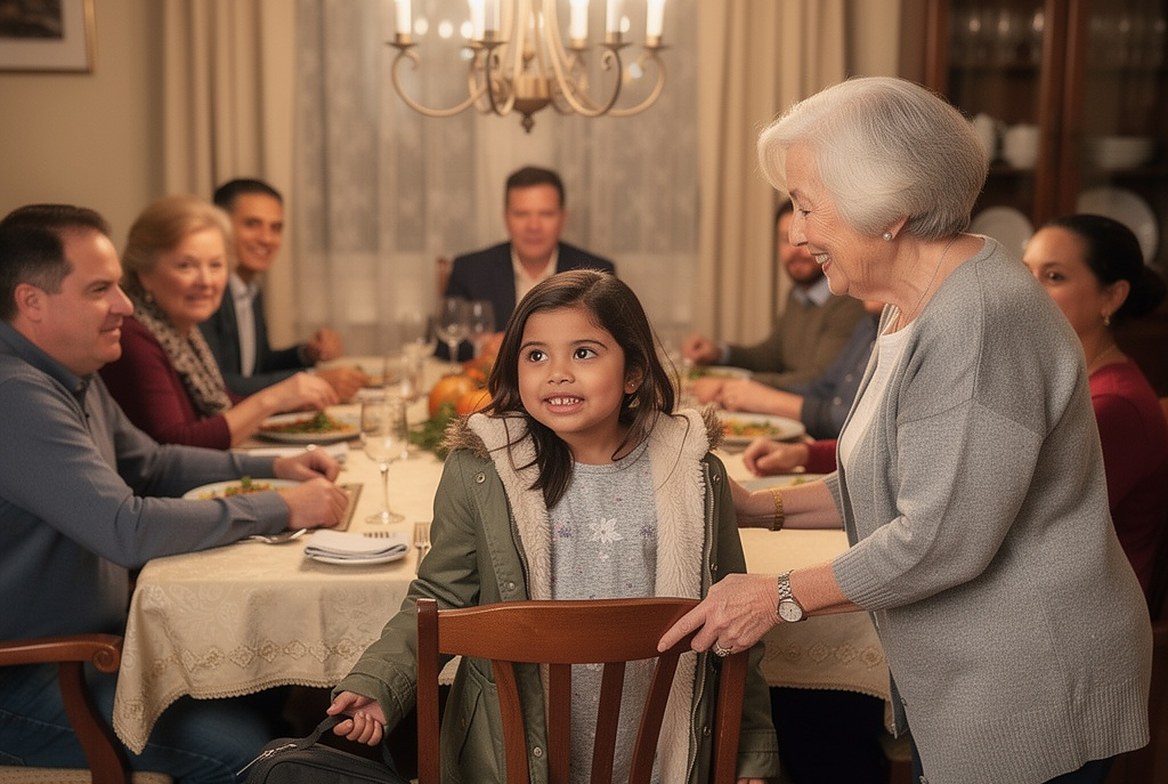
A grandparent’s case is won on the record of the relationship, measured against a parent’s presumed good judgment.
Start with a confidential conversation: tell me about the family →
They have a right to ask, not a right to visits. A grandparent or great-grandparent may seek grandparent family time, the statute’s term since 2023, only when there is or has been a custody case about the child: the parents’ marriage was dissolved, declared invalid or legally separated; the child was placed with or allocated to someone other than a parent; or the grandparent’s own child, the child’s parent, has died. Even then the court must presume that the parent’s decision about grandparent time is in the child’s best interests, and the grandparent must prove otherwise by clear and convincing evidence.
House Bill 26-1314, effective June 1, 2026, changed the definition of grandparent. It now includes a person who is or, if the child’s father or mother is deceased, was the parent of the child’s parent. The change answers a 2025 Colorado Supreme Court decision holding that after the children were adopted, the parents of a deceased father lacked standing. It appears to restore standing for those grandparents even after an adoption, but no appellate court has applied it yet, the parent’s presumption still protects adoptive parents, and the court’s own guide still says no request can be made after an adoption.
No. Without a divorce, invalidity or legal separation, a placement or allocation outside the parents’ home, or the death of your child who is the grandchild’s parent, the statute gives you no standing. The Court of Appeals held that a grandmother had none where the parents never married and no court had ever been involved. A parentage or custody case between unmarried parents does count; the court’s own guide lists it. If none applies, the relationship runs on the parents’ permission, and the most useful work is repairing it.
The objecting parent’s. The Court of Appeals held in 2023 that when one parent supports grandparent time and the other opposes it, the grandparents must overcome the objecting parent’s presumption; the two parents’ positions do not cancel each other out. The supporting parent’s testimony is still useful evidence about the relationship and what the children would lose, and nothing stops that parent from bringing the children to see you during his or her own parenting time.
That the time you ask for is in the child’s best interests, by clear and convincing evidence, against a presumption that the parent’s decision is right. The court weighs the ordinary custody factors, including the child’s relationships, adjustment and wishes, and if it orders time over the parent’s objection it must make findings identifying the special factors it relied on. You do not have to prove the parent unfit. The evidence that carries these cases is the record of the relationship: how often, for how long, doing what, and what changed for the child when it stopped.
Inside the existing case. The court’s forms make it two steps: a motion to intervene (JDF 1131, with the order JDF 1132), because you are not yet a party, and then the request itself (JDF 1133, with the order JDF 1134), with an affidavit of the supporting facts and notice to every party. The parties have twenty-one days to respond. A hearing is held if either side asks for one or the court thinks it is in the child’s interests. The filing fee in the court’s guide is $234; confirm the current amount with the clerk.
Not for two years, unless you show good cause. The statute says a grandparent or great-grandparent shall not file a petition for grandparent family time more than once every two years absent a showing of good cause, and the court’s form asks whether you filed in the last two years and, if so, for the order allowing another. A denial is also evidence in the next case. File once, with the record complete, rather than twice with half of it each time.
Yes, through a different case: an allocation of parental responsibilities to a non-parent. You need standing first: either the child is not in either parent’s physical care, or you have had physical care of the child for 182 days or more and file within 182 days after that care ended. The care need not have excluded the parent, and the parent’s consent is not required. Then you must overcome the parent’s presumption by clear and convincing evidence, and the court must consider any credible evidence of your own past abuse or neglect of a child.
An adult who is not a legal parent but has become one in the child’s life. No Colorado statute uses the phrase; the courts do. The Colorado Supreme Court held in 1995 that in a custody dispute between a parent and psychological parents the child’s best interests are paramount, and the parent’s prior right is a rebuttable presumption rather than a trump card. The 182-day standing rule is the legislature’s recognition of the idea. Since Troxel, the Court of Appeals has required the non-parent to overcome the parent’s presumption by clear and convincing evidence.
Move early. Within thirty days after a removal, the county must use due diligence to find and contact grandparents and other adult relatives, and since June 1, 2026 placement with a relative or kin is presumed to be in the child’s best interests at the temporary-custody stage, a presumption that can be rebutted by a preponderance of the evidence. After the court adjudicates the case, grandparents with information about the child’s care may intervene as a matter of right. If a motion to terminate parental rights is filed, make your request within twenty days; the statute lets the court give relatives preference.
It depends which side of the family you are on. If the adoption terminates your own child’s parental rights, the definition excludes the parents of a parent whose rights were terminated, so a new petition is likely closed; whether an existing order survives is unsettled, and the Court of Appeals has treated a stepparent adoption as a change that can support ending one. If your child has died, the 2026 amendment appears to keep you a grandparent. Either way, talk to a lawyer before the adoption hearing, not after it.
They do different jobs. A guardianship fits when the parents consent, are unwilling or unable to exercise their parental rights, or their rights have been terminated; it gives you legal authority to care for the child under the court’s supervision. A non-parent custody case fits when a parent objects and you have standing. A parent who needs short-term help can delegate care to you for up to twelve months by a power of attorney, except the power to consent to marriage or adoption. The court’s guardianship filing fee is $229, one fee for several children filed the same day.
The next page in this chapter, the pages that belong with it, and the blog posts on the same question.
In a hard-fought Colorado custody case the judge can appoint an attorney whose only client is the child's best interests. What a CLR does, how it differs from a…
Sept 18, 2026The SLAT Trap: When the Estate Plan Meets the DivorceSpousal Lifetime Access Trusts move wealth out of the taxable estate, with the marriage as the access mechanism. In a divorce, the donor loses the access,…
Sept 17, 2026Can You File for Divorce in Another State If You Live in Colorado?Where a divorce can be filed, where the money can be decided, and where the children's case belongs are three different questions. Colorado's 91-day domicile…
A consultation is a working session, in person in Greenwood Village or by video: we go through the court case that exists (or does not), the relationship and the record of it, and I tell you whether you have standing, which request fits, what the parent’s presumption means for your facts, and what I would file. Your note reaches my office directly; during business hours we call you back within the hour, run the conflicts check, and set the meeting.
Talk to us about your case.
303-507-5529One call. A real person picks up, hears you out, and tells you how we would handle what you are facing and what to do first. No phone tree, no sales pitch, no obligation. Your first conversation is with our intake paralegal, who will get you to Aaron fast.
Rather write? Send a short note and during business hours we call you back within the hour.