

Practice Area · Support
Child support in Colorado.
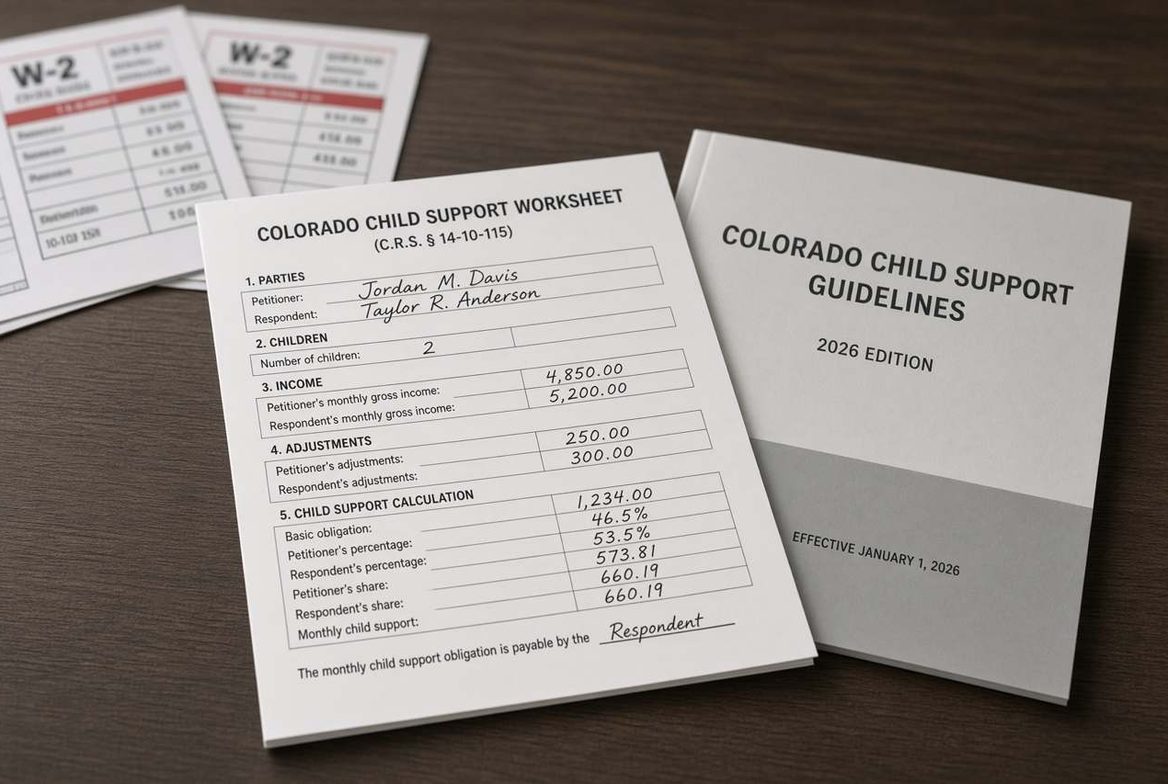
Colorado calculates child support on an income-shares model: both parents' incomes, combined, drive a statutory schedule. For most families the math is mechanical. For the families I represent, the fight is almost never the table — it's the inputs.
The Model
Both incomes. One schedule. Proportional shares.
Under C.R.S. § 14-10-115, the parents' combined monthly adjusted gross income and the number of children produce a basic obligation from the statutory schedule, divided between the parents in proportion to income. Adjustments layer on: health insurance, childcare, and extraordinary expenses. Overnights matter too: under the statute as amended effective March 1, 2026, every overnight generates a graduated parenting-time credit — the old 93-overnight cliff is gone, so each night moves the number incrementally instead of all at once. Which is why schedule design and support are negotiated with each other in view — they're connected systems, not separate topics.
The Ceiling
The schedule now runs to $40,000 a month. Discretion starts there.
Under the 2026 amendments, the guideline schedule runs to combined adjusted gross income of $40,000 per month — $480,000 a year — up from the prior $30,000 cap. Above the top of the schedule, the statute hands the question to judicial discretion, with one floor: the presumptive obligation generally can't be less than it would be at the top of the schedule. For high earners, that converts support from arithmetic into advocacy: the child's reasonable needs, the family's actual standard of living, and what the evidence shows.
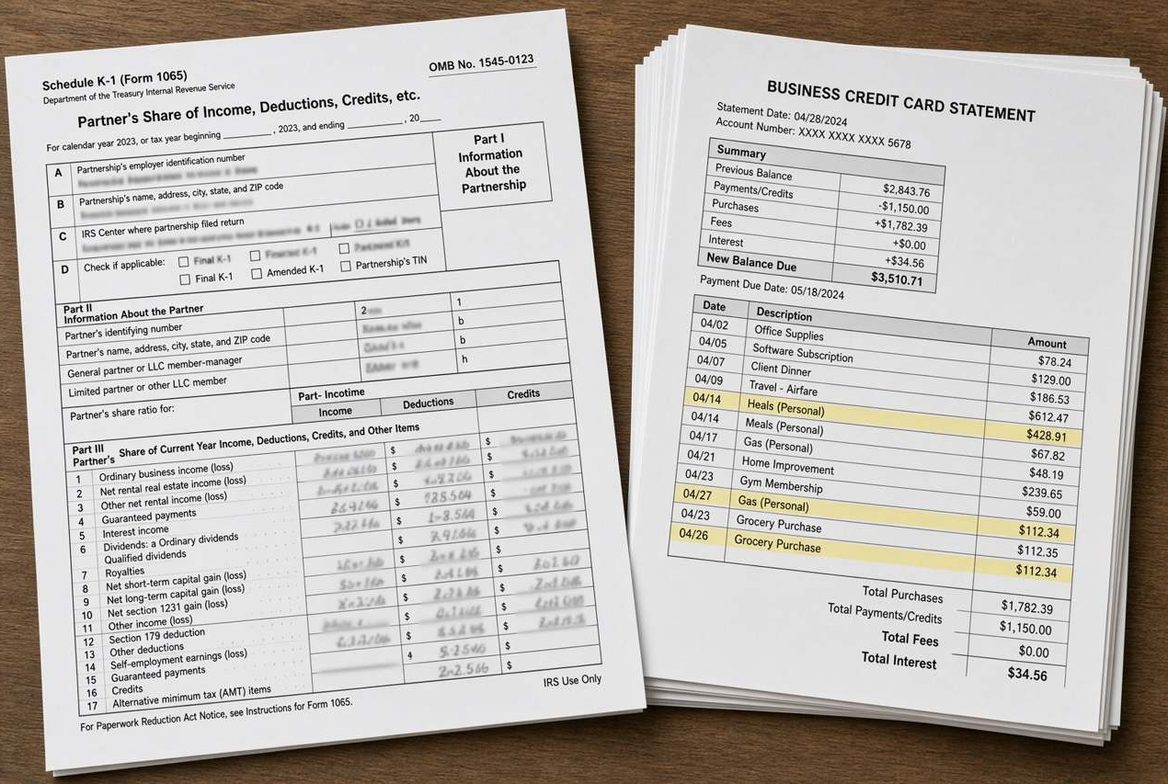
And for business owners, the deeper fight arrives before the schedule is ever consulted: what is your income? W-2 wages are easy; K-1 allocations, retained earnings, distributions, depreciation, and perks are not. The same income-normalization work that drives maintenance and valuation drives support — and it's precisely where a lawyer who reads financial statements as an operator earns his fee.
What It Covers
Support, add-ons, and the rule people break at their peril.
Basic support covers the ordinary costs of raising a child; items like private-school tuition and significant extracurriculars are typically addressed as agreed or ordered extraordinary expenses rather than assumed into the base number. And one rule protects everyone: support and parenting time are independent obligations. Neither parent may withhold one to enforce the other — the remedy for nonpayment is enforcement, and the remedy for missed time runs through the court — not the checkbook.
Common Questions
The support questions with real money attached.
I own my company. How will my income be determined?
Carefully — by someone. Better that it's your side doing the careful work: normalizing owner compensation, distinguishing true economic income from paper income, and presenting it credibly. Support built on a wrong income number is wrong every month for years.
We share time 50/50. Does anyone pay support?
Usually yes. Equal time changes the formula; it doesn't erase it. When incomes differ — and in my cases they almost always do — the higher earner typically still pays under the shared-care calculation.
Can we just agree on our own number?
Parents can agree, but the court must find the result adequate for the children — deviations from the guideline need findings supporting them. Well-drafted agreements anticipate that and give the court what it needs to approve your deal.

The rest of this chapter.
Parental responsibilities and parenting time under Colorado's best-interests standard, support that reflects real income, and the hard cases: relocation and custody across state lines.
- Parental Responsibilitiesbest interests, decided on credibility→
- Parenting Timeschedules engineered for real life→
- Child Supportthe 2026 guidelines, and owner incomeYou are here
- Relocation & Move-Awaytwo doors, different rules→
- Interstate & International Custodywhich state decides, before what it decides→
- Custody for Executives & Business Ownersparenting plans for demanding careers→
- CFI & PRE Guidepreparing for the evaluator→
- False Allegationsdefending against abuse claims→
- Supervised Parenting Timewhen it is ordered, and how it ends→
- Colorado Custody Termsthe vocabulary, translated→
- Parenting-Time Schedulesthe common arrangements and their trade-offs→
Engagement
Before anyone runs the calculator, let's establish the real inputs.
A consultation is a scheduled working session — in person in Greenwood Village or by video — in which we go through your situation and I tell you what I would do. It is a paid meeting, not a free call and not a sales pitch; my assistant quotes the consultation fee when you schedule. There is no chatbot here: the contact form and the phone both reach my office, my assistant reviews every inquiry personally, and the meeting goes on my calendar. Please hold the confidential details until we have run a conflicts check.