5 years
The filing deadline
A motion to reallocate for a misstatement or omission must be filed within five years of the decree. The court shall deny one filed later.

A Colorado property division is final. The statute says the court shall not revoke or modify it unless it finds conditions that justify reopening a judgment. Two doors survive that sentence. One is the family-case rule’s own remedy for a disclosure that contained a misstatement or omission, with no fraud element and a hard five-year filing deadline. The other is the civil rule’s relief from a judgment for mistake or fraud, on clocks measured in months. This page is the whole of it: what counts, who proves what, what the court can award, and how the cases came out.
Talk to us about your case.
303-507-5529One call. A real person picks up, hears you out, and tells you how we would handle what you are facing and what to do first. No phone tree, no sales pitch, no obligation. Your first conversation is with our intake paralegal, who will get you to Aaron fast.
Rather write? Send a short note and during business hours we call you back within the hour.
The division is final because the disclosures were supposed to be complete.
Colorado’s family-case rule rests on a bargain. Parties to a divorce owe each other and the court a duty of full and honest disclosure of all facts that materially affect their rights and interests; they hand over the mandatory documents and a sworn financial statement without being asked; and in exchange the property division, once entered, is final. When one side breaks the bargain, the rule supplies its own remedy: any party may move to reallocate assets or liabilities based on a misstatement or omission in the disclosures, and the court shall consider and rule on it, provided the motion is filed within five years of the decree. After five years, the court shall deny it.
I have brought these motions for spouses who learned about the account, the second business or the pending sale from a mutual friend, and defended them for spouses whose only sin was a valuation the other side wishes they had fought harder. The cases turn on one line the Court of Appeals drew in 2018: the rule requires disclosure of facts and assets, not an opinion of value. Facts withheld are an omission. A number you disagreed with is not. Everything on this page follows from that line.

A motion to reallocate for a misstatement or omission must be filed within five years of the decree. The court shall deny one filed later.
The question is whether the disclosure contained a misstatement or omission that materially affected the division, not whether it was intended.
Mistake, inadvertence, surprise, excusable neglect, fraud or misconduct: a motion within 182 days of the judgment.
The moving spouse must plead the grounds with particularity and prove them at the hearing by a preponderance of the evidence.
Support and parenting orders follow the facts as they change. The property division does not: it is a judgment about what existed on the day of the decree, and the legislature wrote the statute to keep it closed.

The statute forbids modifying the property disposition except on conditions that justify reopening a judgment: the civil rule’s grounds, and the family-case rule’s own remedy for a failed disclosure.
The court shall not revoke or modify the provisions as to property disposition unless the court finds the existence of conditions that justify the reopening of a judgment. A change in the value of the house, a business that later sold for more, a spouse who regrets the deal: none of these is a condition that justifies reopening a judgment. The division stands.
What “conditions that justify reopening a judgment” means. The phrase points to the civil rules. Colorado’s Rule 60(b) lists the grounds for relief from any judgment and the deadlines that go with them. And since 2005 the family-case rule has carried a remedy of its own for the one thing that most often justifies reopening a divorce judgment: a disclosure that was not what it was supposed to be. The Supreme Court held in 2010 that the family-case remedy displaces Rule 60(b)’s short window for that kind of claim; a spouse who finds an omitted asset in year three is not too late.
What this page is not about. A property term the parties agreed could be modified, a maintenance award structured as property, or the enforcement of a division the other side has not carried out, are different questions: the first two are on the Modifying Orders page and the third on the Enforcement page. An order the court got wrong on the law is an appeal, on a deadline measured in days.
Rewritten in 2020. The current text, element by element.
| The element | The current text | What it means |
|---|---|---|
| The duty | It is the duty of parties to an action for a decree of dissolution of marriage, legal separation or invalidity of marriage to provide full disclosure of all material assets and liabilities. | The duty is affirmative and rests on the party who has the information. The other spouse does not have to ask, and does not have to investigate. |
| The trigger | If a disclosure contains a misstatement or omission materially affecting the division of assets or liabilities, any party may file, and the court shall consider and rule on, a motion seeking to reallocate assets and liabilities based on such a misstatement or omission. | A misstatement or an omission, in a disclosure, that materially affected the division. No fraud, no intent, no reliance element is written in. |
| The deadline | Provided that the motion is filed within five years of the final decree or judgment. The court shall deny any such motion filed more than five years after the final decree or judgment. | A filing deadline, not a discovery rule: the clock runs from the decree whether or not you knew. Before the 2020 rewrite the rule spoke of the court retaining jurisdiction for five years; the new text makes it a hard bar. |
| Rule 60(b) does not bar it | The provisions of Rule 60 do not bar a motion by either party to allocate such assets or liabilities pursuant to this paragraph. | The 182-day windows in the civil rule do not apply to a disclosure motion. This is the door that stays open for years. |
| Other remedies survive | This paragraph does not limit other remedies that may be available to a party by law. | Rule 60(b) fraud, an independent action for fraud on the court, and contract remedies on the separation agreement remain available on their own terms. |
The remedy applies to disclosures made under the family-case rule that took effect January 1, 2005. For an earlier decree the Supreme Court has held the five-year provision does not apply retroactively.
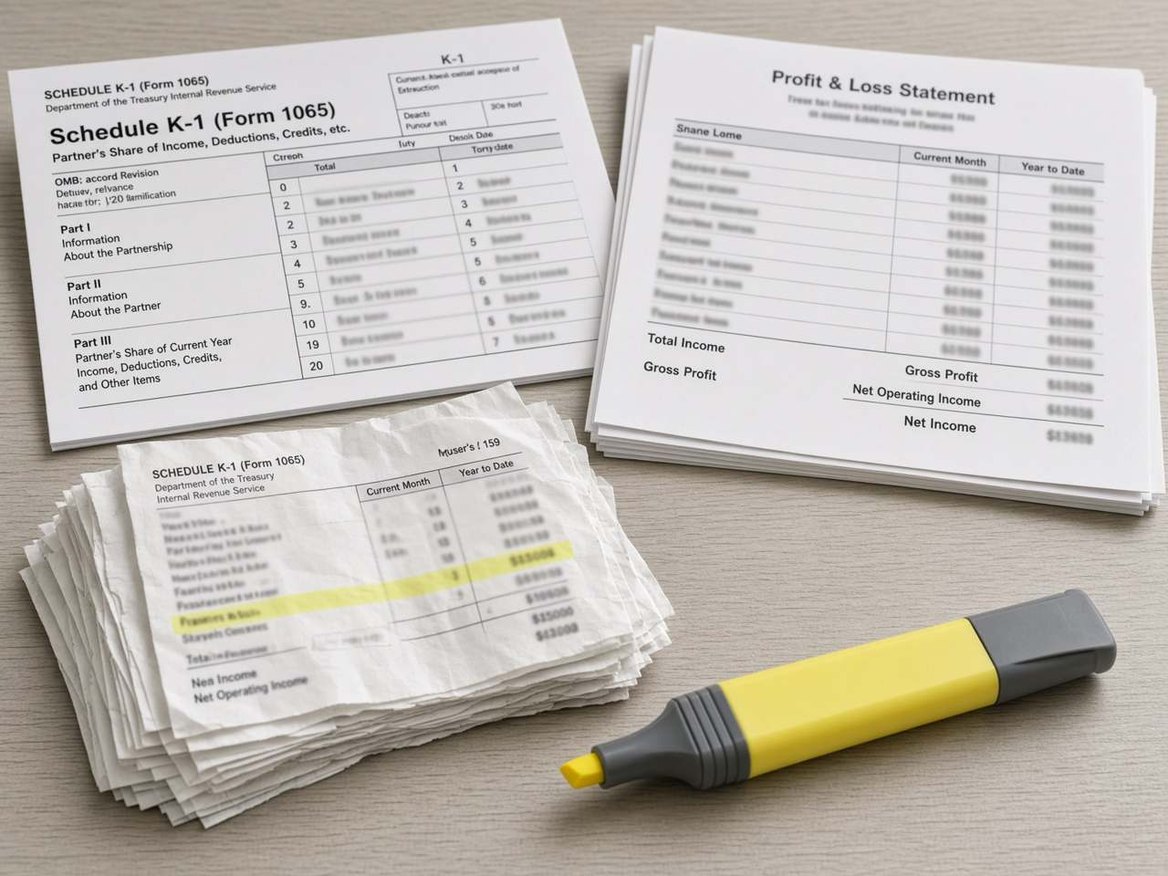
The mandatory-disclosure list is the measuring stick, and the duty continues to the decree: an offer for the company that arrived after the disclosures and was never mentioned is the classic omission.
The rule’s mandatory disclosure form lists the categories, and the list is what a reopening motion is measured against: a sworn financial statement; three years of federal tax returns with all schedules; personal financial statements, statements of assets and liabilities, and credit or loan applications prepared in the last three years; three fiscal years of business financial statements plus year-to-date; real estate title and value documents; debt documents; investment statements; documents identifying each employment benefit and its current value, which is where stock grants and deferred compensation belong; retirement plan statements and summary plan descriptions; bank statements; income documentation; and the children’s child-care, insurance and expense records. A business owner who produced tax returns but not the financial statements, loan applications or appraisals has not made the mandatory disclosure, whatever the returns showed.
The continuing duty. The duty to disclose does not end with the first exchange. A party is under a continuing duty to supplement or amend any disclosure in a timely manner, including facts that arise between the disclosures and the decree: an offer to buy the company, a bonus announced, an inheritance that came in. The sale negotiations that began before the decree and closed after it are the classic omission.
Facts withheld are an omission. A number you disagreed with is not.
The question that decides most of these motions before discovery.
| The situation | Which side of the line | The authority |
|---|---|---|
| An account, a business interest or a debt that never appeared in the disclosures or the sworn financial statement | Omission. The core case. The rule reaches it whether the spouse forgot or hid it. | Evans, 2021 COA 141 (a concealed company; the wife awarded an equal share and fees) |
| An asset listed, but the mandatory documents behind it withheld: financial statements, loan applications, appraisals | Omission. Settling without the documents does not waive the remedy; a waiver would have to be very explicit. | Hunt, 2015 COA 58 |
| An asset listed and documented; the spouse’s stated value was low and the other side did not fight it | A lost valuation fight. The rule requires disclosure of facts and assets; it does not require a party to give an opinion of value. | Runge, 2018 COA 23M |
| A joint appraisal at one figure; a sale for many times that within months, with negotiations under way before the decree and never disclosed | A misstatement, if the facts were withheld. The gap between value and sale price alone raises red flags; the undisclosed negotiations are the omission. | Durie, 2020 CO 7 |
| A claim the moving spouse knew all about at the time of the divorce and did not raise | Not an omission. The remedy is for a failure of the other party’s disclosure duty, not the movant’s own choices. | Martin, 2021 COA 101 |
| A mutual mistake about what an asset was, or who owned it | Rule 60(b)(1), within 182 days; not the five-year remedy. | Martin, 2021 COA 101 |
| A premarital share of a pension misstated as twenty-three days instead of twelve years; a second pension left off | Misstatement and omission — but the decree pre-dated the rule, so the remedy did not apply. | Schelp, 228 P.3d 151 (Colo. 2010) |
Materiality is the second question: the misstatement or omission must have materially affected the division. A $4,000 account left off a $4 million estate is an omission the court will not reopen for; a $400,000 one is.
The Supreme Court set the procedure in 2020. It is neither a full trial on demand nor a summary denial.

Plead with particularity, on information and belief where necessary; the court may deny outright, allow discovery, or hold a hearing; the movant proves it by a preponderance and had no duty to investigate.
Plead with particularity. The motion must state its grounds with particularity under the civil rules: what was misstated or omitted, when, how the movant learned of it, and why it mattered to the division. The movant may plead on information and belief where the facts are in the other side’s hands, and the motion is not tested under the stricter plausibility standard that applies to a civil complaint.
The court’s options. On the motion and any response the court may deny the motion outright if the facts alleged, taken as true, would not entitle the movant to relief; it may allow discovery; it may schedule a hearing; or both. A motion that alleges a concealed asset with a source gets discovery. A motion that alleges the business must have been worth more gets denied.
The burden. At the hearing the moving spouse bears the burden of proving the misstatement or omission, and its materiality, by a preponderance of the evidence. The responding spouse defends on the disclosures actually made, the movant’s own knowledge, and materiality.
No duty to have investigated. The rule shifts the burden of disclosure to the party in possession of the information; a spouse should not have had to conduct a business evaluation to find an asset the other spouse was obligated to disclose. The motion is defeated by what the movant actually knew, not by what a forensic accountant might have found.
The Court of Appeals answered this in 2021, in a case where the husband had concealed all of a construction company.
| The question | The answer |
|---|---|
| The whole division, or the one asset? | The court may allocate the omitted or misstated asset without reopening the entire property division. That is the usual result; whether a court may reopen everything in an extreme case was left open. |
| On what standard? | The statutory division factors: each spouse’s contribution to the acquisition of the asset, the value of the property set apart to each, the economic circumstances of each spouse, and any increase or decrease in separate property. The 2020 rewrite removed the old language that the reallocation was made without regard to those factors; the court must apply them. |
| As of what date? | The asset is valued as of the decree, like every other asset in the division; but the court must consider the parties’ economic circumstances at the time of the hearing on the motion, not as they were at the divorce. |
| A penalty? | Colorado has no punitive share for concealment. The concealing spouse’s conduct informs the equities, and the court can award attorney fees under the family-law fee statute; in the leading case the wife received an equal share of the company, about $1.17 million, plus fees. |
| What about the other assets? | Untouched, unless the court finds the omission so distorted the division that only a reopening cures it. The movant should expect to keep what they received and receive a share of what was hidden. |
Expect a share, not a windfall. Colorado divides the hidden asset under the ordinary factors and has no penalty share for concealment.
The civil rule’s grounds for relief from any judgment, with their own clocks. Colorado’s version differs from the federal rule in ways that matter.
| The ground | The deadline | In a divorce |
|---|---|---|
| (1) Mistake, inadvertence, surprise or excusable neglect | Within a reasonable time, and not more than 182 days after the judgment | A mutual mistake about an asset; a clerical error in the decree; a default entered against a spouse who did not receive notice. The Court of Appeals has routed a mutual-mistake claim here rather than to the five-year remedy. |
| (2) Fraud, misrepresentation or other misconduct of an adverse party | Within a reasonable time, and not more than 182 days after the judgment | An affirmative lie relied on in settling. Rarely used since 2005 for disclosure failures, because the family-case remedy has no fraud element and a five-year window. |
| (3) The judgment is void | Within a reasonable time | No jurisdiction, no valid service. Rare. |
| (4) The judgment has been satisfied, released or discharged, or it is no longer equitable that it should have prospective application | Within a reasonable time | Usually an enforcement question rather than a reopening. |
| (5) Any other reason justifying relief | Within a reasonable time | The catch-all, construed narrowly; not a way around the 182 days for mistake or fraud. |
| Independent action; fraud upon the court | No fixed limit in the rule | Fraud that corrupts the judicial process itself, such as a forged document or a scheme involving an officer of the court, as distinct from one party deceiving the other. The door that remains after five years, and a narrow one. |
Colorado’s rule has no “newly discovered evidence” ground; that belongs to the post-trial motion rule and its own short deadline. A spouse who discovers an omitted asset in year two is not in Rule 60(b) at all; the family-case remedy is the motion.
Six decisions, and every one of them is decided on where the facts fell against the omission-versus-value line.
| Case | The facts | The result |
|---|---|---|
| In re Marriage of Schelp, 228 P.3d 151 (Colo. 2010) | Three decrees before 2005: an interest in a company that became Crocs listed at zero, a pension’s premarital share misstated as twenty-three days, a second pension omitted. | The five-year remedy does not apply to disclosures made before the modern rule; the Supreme Court also confirmed that the remedy displaces Rule 60(b)’s short window for claims it covers. |
| In re Marriage of Hunt, 2015 COA 58 | The husband admittedly withheld the business’s financial statements, loan applications and appraisals; the settlement said neither lawyer endorsed a valuation of the business. | Denial reversed. No fraud or intent is required; the wife’s familiarity with the business and her decision to settle did not waive the remedy, which would require a very explicit waiver. |
| In re Marriage of Runge, 2018 COA 23M | Voluminous disclosures; a business listed with its value as unknown; the wife, herself a lawyer with accounting expertise, moved one day before the deadline alleging it was worth about $5 million. | Denial affirmed. Suspicions and speculation are not enough, and the rule does not require a party to state an opinion of the value of a disclosed asset. |
| In re Marriage of Durie, 2020 CO 7 | A joint expert valued the business at $878,589; it sold thirteen months after the decree for $6.9 million; the wife alleged undisclosed sale negotiations before the decree. | The Supreme Court set the pleading standard and the court’s options; the gap between value and sale price alone raised red flags; whether an understated valuation with no withheld facts is a misstatement was left open. |
| In re Marriage of Martin, 2021 COA 101 | The husband claimed a share of proceeds from property he had quitclaimed to the wife’s parents, and of the wife’s IRA, on facts he knew at the time of the divorce. | Denied. The remedy is for the other party’s disclosure failure, not the movant’s own knowledge; a mutual mistake belongs under Rule 60(b)(1) and its 182 days. |
| In re Marriage of Evans, 2021 COA 141 | The husband concealed all of a construction company. | The wife was awarded an equal share, $1,168,639, plus $62,691.75 in fees. The court must apply the statutory factors, value the asset as of the decree, weigh economic circumstances at the hearing, and may reallocate the one asset without reopening the whole division. |
No published Colorado decision since 2021 has changed these rules. Whether a bare undervaluation with no withheld facts is ever a misstatement remains open after Durie; the safe framing of a motion is facts withheld from the other side and the appraiser, not a number that turned out to be wrong.
A reopening motion is litigation, with discovery and usually an expert. The first step decides whether it is worth the second.

The sworn financial statements, the mandatory disclosures, the certificate of compliance, the settlement and the decree, side by side with the evidence of the asset. Omission, misstatement, or a valuation fight already had; material or not; inside five years or not. This step ends half the cases honestly.

What was omitted or misstated, when, how you learned of it and why it mattered to the division, with the exhibits that show it and information-and-belief allegations for what is in the other side’s hands. A request for discovery and a hearing, and for fees.
Subpoenas to the company, the bank, the buyer and the appraiser; depositions; a forensic accountant where the asset is a business. The court manages it in proportion to the case; a motion with a source gets it, a motion with a hunch does not.

The moving spouse proves the misstatement or omission and its materiality by a preponderance; the responding spouse answers with the disclosures made and the movant’s own knowledge. Valuation experts on both sides where the asset is a business.
The court values the asset as of the decree, applies the division factors, weighs the parties’ economic circumstances now, and allocates the asset, with fees where the family-law fee statute supports them. The rest of the division stays.
| Stage | In my experience | What stretches it |
|---|---|---|
| Reading the file and the evidence | Two to four weeks | Getting the original disclosures from prior counsel |
| Motion to ruling on discovery or hearing | One to three months | A response that argues the movant knew; a court that decides on the papers |
| Discovery and the forensic work | Three to six months | Third-party subpoenas; a business that has since been sold or restructured |
| Hearing and order | One to three months after discovery closes | Expert scheduling; a court that takes the matter under advisement |
Ranges from my own cases in the Denver metro courts; the case management order and the court’s calendar control the dates. The five-year deadline runs throughout; a motion filed in year four with discovery to follow is timely, and one filed in year six is not.
Six things, in the order they come up. Not legal advice for your case; the mistakes I have watched for thirty years.

The deadline is on filing, it runs from the decree whether or not you knew, and the court shall deny a motion filed after it. Everything else can be fixed; this cannot.
The rule reaches an asset left out and documents not produced. It does not reach a valuation you could have contested and did not. Frame the motion on the facts.
The duty of disclosure was theirs. What defeats you is what you actually knew at the time, so be candid with me about that before we file.
Particularity gets you discovery. A motion that says the business must have been worth more gets denied on the papers.
The court divides the hidden asset under the ordinary factors and can award fees. Colorado has no penalty share for concealment.
The usual remedy is a reallocation of the one asset; a motion that tries to reopen everything invites a fight over things you won.
The property division can't be touched after the decree.
It can, for an asset misstated in or omitted from the disclosures, on a motion filed within five years, and under Rule 60(b) on shorter clocks.
I have to prove he lied on purpose.
Not under the disclosure remedy. Intent is irrelevant; the question is whether the disclosure contained a misstatement or omission that materially affected the division.
The five years run from when I found out.
They run from the decree, whether or not you knew. It is a filing deadline, not a discovery rule.
The business sold for triple the appraisal, so I get half the difference.
Only if facts were withheld from the appraisal. A disclosed business with a low value you did not contest is a fight you already had. Undisclosed sale negotiations are a different case.
Since I signed that I was satisfied with the disclosures, I waived it.
A waiver of the remedy would have to be very explicit. Boilerplate satisfaction language is not.
The judge will punish him by giving me most of it.
The court divides the hidden asset under the ordinary factors and can award fees. There is no punitive share in Colorado.
The division is final because the disclosures were supposed to be complete. When they were not, the rule gives you five years.
Start with a confidential conversation: tell me what you found →
The disclosure remedy is closed: the rule tells the court to deny any motion filed more than five years after the decree. What remains is the civil rule’s savings clause, an independent action for fraud upon the court, which has no fixed deadline but requires a showing of fraud that corrupted the judicial process itself, not merely a lie to the other side. It is a narrow door and an expensive one. Bring the evidence and let me tell you honestly whether it fits.
The line the Court of Appeals drew: the rule requires disclosure of facts, information and assets, and does not require a party to give an opinion of the value of an asset that was disclosed. A low valuation with the underlying facts disclosed is a fight you had and lost. A low valuation built on facts withheld from you and the appraiser, such as sale negotiations under way before the decree or financial statements never produced, is a misstatement the rule reaches. The Supreme Court has said a sale for eight times the appraised value thirteen months after the decree raises red flags on its own.
No. The disclosure rule has no fraud or intent element; it asks whether a disclosure contained a misstatement or omission that materially affected the division. The Court of Appeals reversed a denial where the husband admittedly withheld mandatory documents, without any finding that he meant to deceive. Rule 60(b) fraud is different and does require it.
The motion must state its grounds with particularity: what was misstated or omitted, how you know, and why it mattered. You may plead on information and belief when the facts are in the other side’s hands. The court may then deny the motion outright if the facts alleged are insufficient, allow discovery, schedule a hearing, or both. You carry the burden at the hearing by a preponderance of the evidence.
Probably not. The Court of Appeals held that a spouse who settled without receiving the mandatory documents did not waive the remedy, and that a waiver of it would have to be very explicit. Boilerplate satisfaction language, or an agreement that neither lawyer endorsed a valuation, is not that.
It may allocate the omitted or misstated asset without reopening the entire division, and that is the usual result. It values the asset as of the decree, applies the statutory division factors to it, and must consider both parties’ economic circumstances at the time of the hearing on the motion. In the leading case the wife received an equal share of a concealed company, plus her fees.
Colorado has no punitive share rule for concealment. The court divides the asset under the ordinary factors, which include each spouse’s contribution and economic circumstances, and it can award attorney fees. A concealing spouse’s conduct can affect the equities, but the remedy is a fair share of what was hidden, not a windfall.
No. The rule shifts the burden of disclosure to the party who has the information, and the Court of Appeals has said a spouse should not have to conduct a thorough business evaluation to discover an asset the other spouse was obligated to disclose. What defeats the motion is your own actual knowledge of the asset at the time of the divorce, not your failure to dig.
The disclosure remedy applies to disclosures made under the modern family-case rule, which took effect January 1, 2005. For a decree before that, the Supreme Court has held the five-year rule does not apply retroactively; the only doors are Rule 60(b) and the independent action for fraud on the court.
A motion with a hearing and discovery is a real piece of litigation, and one that often needs a forensic accountant. The court can award fees under the family-law fee statute, and did in the leading concealment case. Before anyone spends money, I read the disclosures, the sworn financial statements and the settlement, and tell you whether the facts are an omission or a lost argument.
The next page in this chapter, the pages that belong with it, and the blog posts on the same question.
A two-year marriage goes through the same Colorado divorce process as a twenty-year one. What changes is the economics: maintenance is rare, courts lean toward…
Sept 17, 2026Can You File for Divorce in Another State If You Live in Colorado?Where a divorce can be filed, where the money can be decided, and where the children's case belongs are three different questions. Colorado's 91-day domicile…
Sept 16, 2026Colorado's New Child Support Law: What Changed on March 1, 2026Colorado rebuilt child support on March 1, 2026: a schedule that now runs to $40,000 a month, a credit for every overnight in place of the 93-night cliff, a…
A consultation is a working session, in person in Greenwood Village or by video: I read the disclosures, the sworn financial statements and the settlement against what you have found, and tell you whether it is an omission the rule reaches or a valuation fight you already had. Your note reaches my office directly; during business hours we call you back within the hour, run the conflicts check, and set the meeting.
Talk to us about your case.
303-507-5529One call. A real person picks up, hears you out, and tells you how we would handle what you are facing and what to do first. No phone tree, no sales pitch, no obligation. Your first conversation is with our intake paralegal, who will get you to Aaron fast.
Rather write? Send a short note and during business hours we call you back within the hour.