
Executive compensation in divorce.
Bonuses not yet paid, awards not yet vested, deferred compensation not yet distributable. Property to divide, or income to share? The grant documents decide, and the drafting is the outcome.
- 01Three things that decide these cases
- 02Property, income, or both
- 03Plans have rules; orders must respect them
- →What people ask first
- →Stock Options & RSUs
- →High-Asset Divorce
Talk to us about your case.
303-507-5529One call. A real person picks up, hears you out, and tells you how we would handle what you are facing and what to do first. No phone tree, no sales pitch, no obligation. Your first conversation is with our intake paralegal, who will get you to Aaron fast.
Rather write? Send a short note and during business hours we call you back within the hour.
The most consequential line in the case.
Compensation earned during the marriage is generally marital even if paid later; awards granted for purely future services may remain separate until an enforceable right exists — and most executive packages sit somewhere between, part reward for the past and part retention for the future. Colorado allocates the marital share of unvested awards by their purpose and timing, which is why reading what each award was actually granted for is where the analysis starts. Getting the grant documents and reading what each award was for is where this analysis actually starts — and it's the step most divisions skip.
The same dollars can't be both: an award counted as property in the division shouldn't also be counted as income for support. Policing that line — the executive's version of the double-dip — is a recurring high-stakes issue.
An executive’s balance sheet is mostly promises: bonuses not yet paid, awards not yet vested, deferred compensation not yet distributable.

Three things that decide these cases.
A bonus paid in March for last year’s work is marital if it was earned during the marriage; the payroll calendar does not change its character. Multi-year awards turn on the grant terms.
Deferred comp plans, LTIPs and severance arrangements carry distribution schedules, forfeiture and clawback provisions, transfer restrictions, and for public-company insiders, trading windows. A settlement that ignores the plan documents produces orders the plan administrator cannot honor.
I draft divisions that work inside the plans as written: if-as-when payment structures, tax gross-up terms, and security for the payments still to come, so the non-employee spouse is paid when the executive is.
Property, income, or both.

The same award cannot be divided as property and then counted again as income for support without a deliberate decision about which it is. That sequencing, and the after-tax value of each form of compensation, is where a Georgetown tax LL.M. changes the settlement.
Plans have rules; orders must respect them.
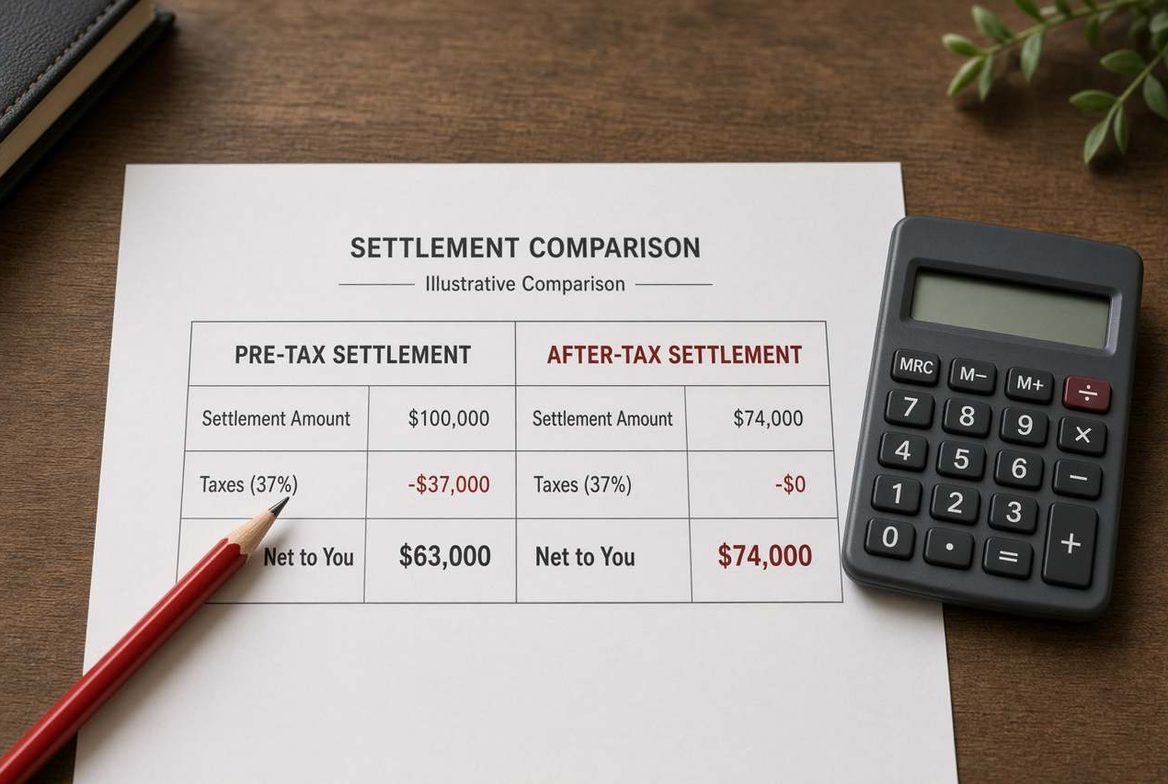
Deferred comp plans, LTIPs, and severance arrangements come with their own governing documents — distribution schedules, forfeiture and clawback provisions, transfer restrictions, and for public-company insiders, trading-window realities. A settlement that ignores the plan documents produces orders the plan administrator can't honor. I draft divisions that work inside the plans as written: if-as-when payment structures, tax gross-up terms, and security for the promises — because in this corner of divorce law, the drafting is the outcome.
What I tell every executive about their pay.
Five things, before the grant documents leave your desk.

- Inventory every grant.
Date, purpose, vesting schedule, tax character. The argument is made grant by grant, not on the total.
- Property or income is negotiable.
Unvested equity is part property, part future compensation. Where the line falls changes both the division and support.
- Tax character is the number.
Options, RSUs, deferred compensation and carried interest are taxed differently. The face value of an award is not its value to you.
- The same dollar is counted once.
An award divided as property should not also be counted as income for maintenance. The record has to show the line.
- Draft the mechanics.
How an unvested award is divided when it vests, who bears the tax, what happens if you leave the company. The decree has to say it.
Property to divide, or income to share? On an executive’s balance sheet the answer is worth arguing about.
Start with a confidential conversation: tell me what is at stake →
What executives ask between meetings.
My bonus gets paid in March for last year's work. Is it marital?
If it was earned during the marriage, its later payment date doesn’t change its character — the earning period controls, not the payroll calendar. The messier questions come with multi-year awards, and those turn on the grant terms.
My unvested awards might be worth nothing. How can they be divided?
Through structures that share the risk: if-as-when divisions that pay the former spouse only when and if you actually receive value, in the marital proportion. You shouldn’t buy out uncertainty at a certain price.
Will my company get involved in my divorce?
Minimally, if it’s handled well. Plan documents get produced, and occasionally a plan administrator confirms mechanics — but a properly drafted order works within the plan’s rules, which is exactly what keeps your employer at arm’s length from your case.
Where to go next.
The next page in this chapter, the pages that belong with it, and the blog posts on the same question.
From the blog, on this topic
Executive pay does not fit neatly into "property" or "income." Colorado law apportions unvested equity, allocates bonuses to when they were earned, and expects…
Sept 2, 2026A Balance Sheet Made of Promises: Executive Compensation in DivorceBonuses not yet paid, awards not yet vested, deferred comp not yet distributable: property to divide, or income to share? For executives, the grant documents…
Before the grant documents are read by the other side, let’s read them first.
A consultation is a working session, in person in Greenwood Village or by video: we go through your situation and I tell you what I would do. Your note reaches my office directly; during business hours we call you back within the hour, run the conflicts check, and set the meeting.
Talk to us about your case.
303-507-5529One call. A real person picks up, hears you out, and tells you how we would handle what you are facing and what to do first. No phone tree, no sales pitch, no obligation. Your first conversation is with our intake paralegal, who will get you to Aaron fast.
Rather write? Send a short note and during business hours we call you back within the hour.