
Practice Area · Support
Spousal maintenance in Colorado.
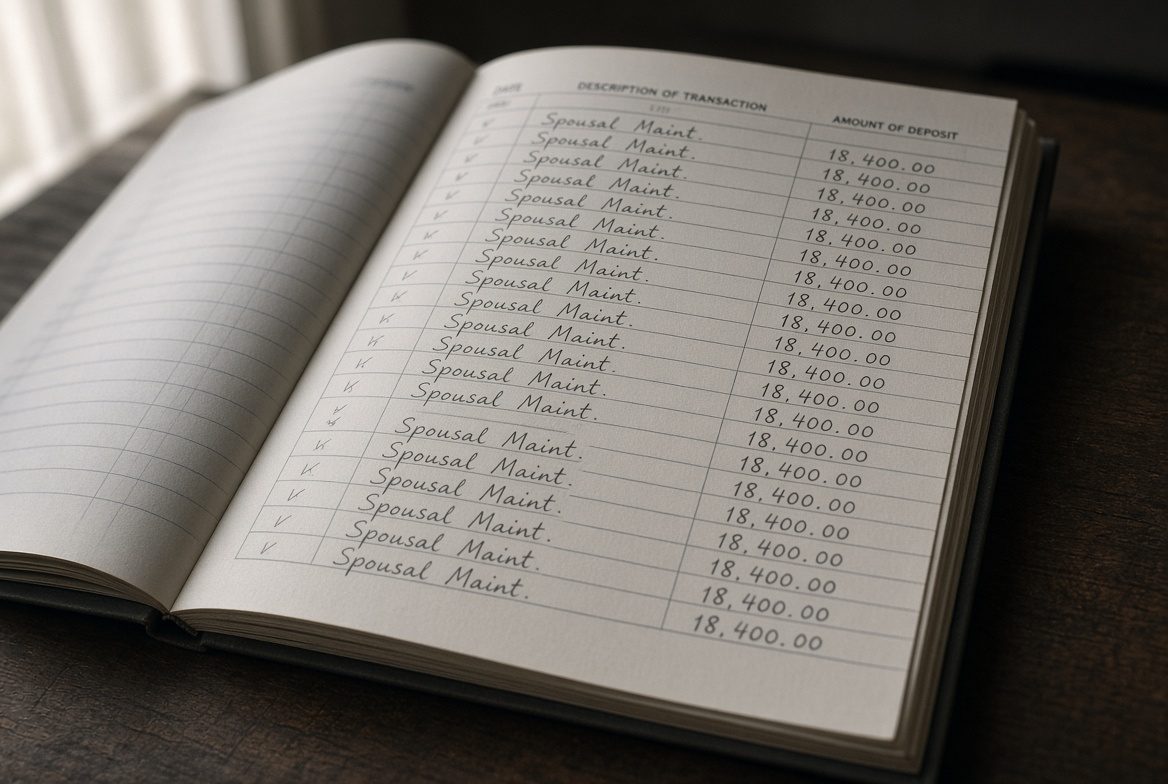
Colorado has a maintenance formula. It is advisory, not binding — and for the clients I represent, the formula is usually where the argument starts, not where it ends.
The Framework
A guideline the court must consider — and may reject.
C.R.S. § 14-10-114 gives courts an advisory guideline. For couples married at least three years with combined annual adjusted gross income of $240,000 or less (the statutory threshold as of 2026), the guideline amount is 40% of the higher earner's monthly adjusted gross income, minus 50% of the lower earner's — capped so the recipient's own income plus maintenance doesn't exceed 40% of the parties' combined income — then multiplied by 80% (combined monthly income of $10,000 or less) or 75% (above $10,000), an adjustment built into the statute because maintenance is no longer tax-deductible. Example: monthly incomes of $12,000 and $4,000 → 40% of $12,000 is $4,800, minus 50% of $4,000 is $2,000, leaving $2,800; combined income exceeds $10,000, so ×75% → a guideline of $2,100 per month.
The term guideline runs on a schedule tied to the marriage's length — starting around 31% of the marriage at three years and rising to 50% for marriages of twelve and a half years or more; past twenty years, the court may set any term or make maintenance indefinite. And all of it is advisory: the court must consider the guideline, is not bound by it, and must still find the result fair under the statutory factors — which means advocacy, evidence, and credibility still decide these cases.
The High-Earner Reality
Above the guideline, it's an evidence case.
The guideline applies only up to combined annual adjusted gross income of $240,000 (as of 2026) — a threshold two Denver professionals, or one owner's normalized K-1 income, can clear easily. Above it, the formula no longer controls: maintenance turns on the statutory factors and the evidence — a factor list the legislature most recently amended in 2025: under Senate Bill 25-116, effective August 2025, courts now also consider whether a spouse engaged in domestic violence, coercive control, or economic abuse against the other when setting the amount and term of maintenance — one factor among many, not an automatic adjustment. For executives and owners, that converts the case into a fight about facts: the marital lifestyle, each spouse's earning capacity, and — the biggest one — what counts as income. W-2 salary is easy. K-1 income, retained earnings, distributions, and perks are not, and for an owner the difference between reported income and real economic income can be the whole case. It also intersects with the business's value: the same dollars shouldn't fund a valuation and a maintenance award twice.
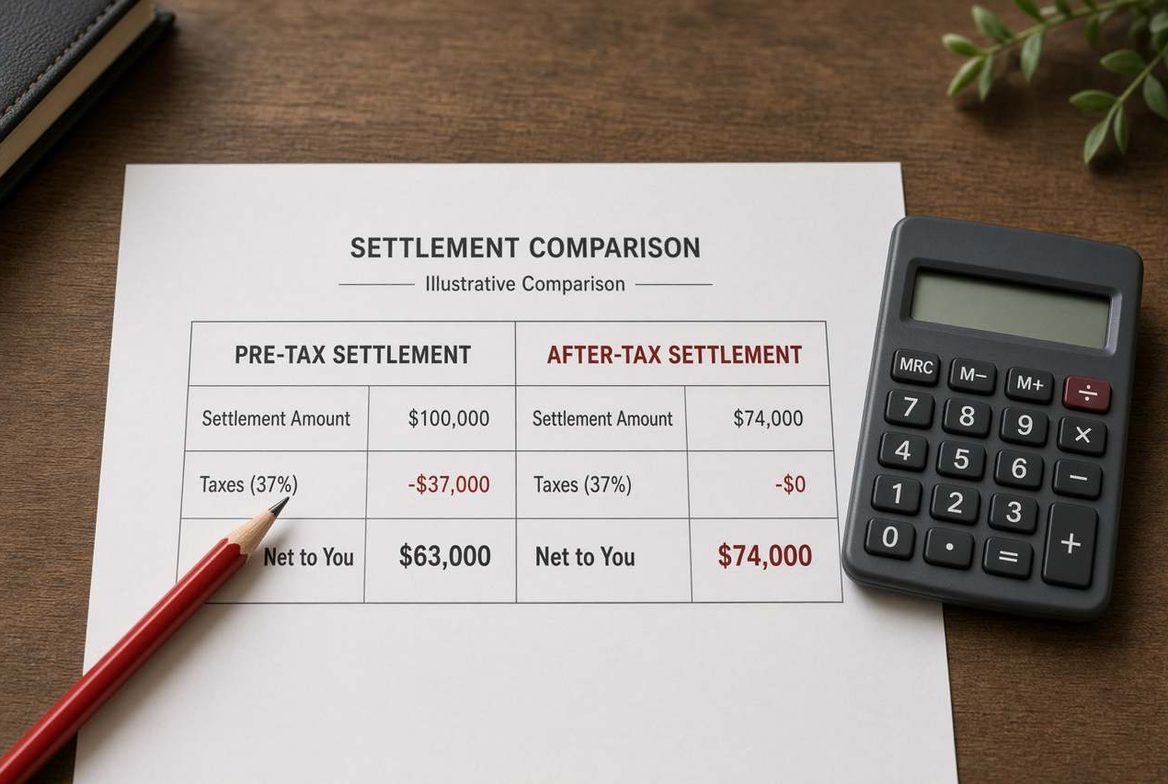
One more piece of math most people miss: for most divorce or separation instruments executed after 2018, maintenance is neither deductible to the payor nor taxable to the recipient for federal purposes — and older instruments or later modifications can require their own tax review. That changed the real cost of every dollar of maintenance, reshaped how settlements trade support against property — and is exactly why the guideline formula now carries its 75–80% multiplier.
Structure and Finality
Maintenance is a term to be engineered, not endured.
Maintenance can generally be modified when circumstances change substantially — unless the parties agree to make it contractual and non-modifiable, which trades flexibility for certainty and is one of the most useful settlement tools in a high-asset case. Security matters too: a support award is only as good as the payor's life and income, so life insurance and other security provisions belong in the structure, not as afterthoughts.
Common Questions
What high earners — and their spouses — ask first.
How long does maintenance last?
The advisory guideline scales the term to the length of the marriage, and courts retain discretion around it. Short marriages may see little or none; long marriages can support long terms. The honest answer is a range, built from your facts — not a promise.
Is the formula mandatory?
No. Courts must consider it and must still find the result fair — and above the statutory income level it doesn't control at all. In the cases I handle, the formula is the opening position, not the answer.
Can we make maintenance final and untouchable?
Yes — by agreement, maintenance can be made contractual and non-modifiable. Whether you should wants real analysis: it's certainty for both sides, which is worth different amounts depending on which side of the check you're on.

The rest of this chapter.
Closely held businesses, professional practices, executive and equity compensation, trusts, real estate, and the tracing that decides what is marital and what is not.
- Business Valuationthe number that decides the case→
- High-Asset Divorcecomplex estates, disclosure, and the five-year rule→
- Business Owner Divorcekeeping the company you built→
- Complex Financial Divorcevalue, characterize, tax-effect — then divide→
- Property Divisionequitable, not automatic 50/50→
- Separate Propertya records-management discipline→
- Spousal Maintenancethe formula, published with a worked exampleYou are here
- Executive Compensationproperty or income — the line worth arguing→
- Stock Options & RSUstax character changes real value→
- Trust Intereststhe instrument, not the balance, decides→
- Real Estatevalue, equity, and after-tax proceeds differ→
- Retirement AssetsQDROs, and three different currencies→
- Professional Practicesgoodwill, licensure, and buyouts→
- Tax Strategythe settlement that matters is the after-tax one→
- Hidden Assets & Forensic Discoverythe disclosure duty, and the five-year hammer→
- Cryptocurrency & Digital Assetsfindable, valuable, divisible→
- Married to the Business Ownerleveling the information field→
- Income Determinationwhat “income” means when you own the company→
Engagement
Before you argue about the formula, let's establish what the income actually is.
A consultation is a scheduled working session — in person in Greenwood Village or by video — in which we go through your situation and I tell you what I would do. It is a paid meeting, not a free call and not a sales pitch; my assistant quotes the consultation fee when you schedule. There is no chatbot here: the contact form and the phone both reach my office, my assistant reviews every inquiry personally, and the meeting goes on my calendar. Please hold the confidential details until we have run a conflicts check.