0
Newspaper notices to restore a prior name
The post-decree motion under the divorce statute needs no publication and no fingerprints.
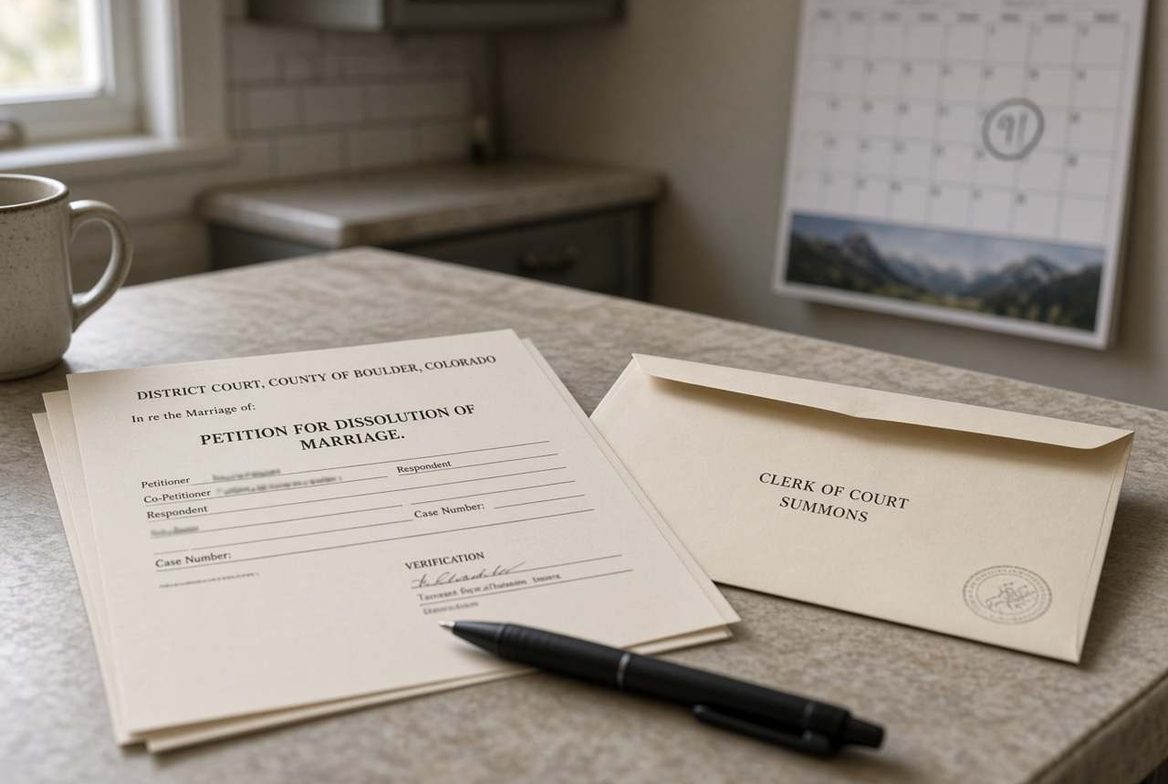
There are three procedures, and people mix them up. Restoring a prior name is part of the divorce: ask in the petition, or by motion any time after the decree, with no fingerprints and no newspaper. A new name takes the general petition. A child’s name takes a court order and notice to the other parent, who has no veto. As of September 2026, including the 2026 changes for minors.
Talk to us about your case.
303-507-5529One call. A real person picks up, hears you out, and tells you how we would handle what you are facing and what to do first. No phone tree, no sales pitch, no obligation. Your first conversation is with our intake paralegal, who will get you to Aaron fast.
Rather write? Send a short note and during business hours we call you back within the hour.
Going back to a former name is the easiest thing a divorce decree does. Changing a child’s name is one of the hardest.
Most of the people who ask me about names after a divorce want their own back, and the law makes that simple. The petition for divorce asks whether you want a prior name restored, and the decree orders it on a single finding: that the restoration is not detrimental to any person. If you did not ask, or changed your mind, the legislature added a second door in 2016: at any time after the decree, a verified motion in the same case, with none of the fingerprinting or newspaper notice that a general name change requires (C.R.S. § 14-10-120.2; C.R.S. § 13-15-101(6)). No Colorado statute uses the phrase maiden name. The statute says “prior full name,” and it is open to either spouse.
A child’s name is different. A parent who wants a child to carry her new surname, or a hyphenated one, is asking the court to change something the other parent has an interest in. The Colorado Supreme Court held in 1988 that the other parent is entitled to reasonable notice and a chance to be heard, but not to a veto. The legislature changed the procedure for minors in 2026: no newspaper notice for anyone under eighteen since April 20, and a suppressed court record since July 1. This page sets out all three procedures, the forms and the fees, and what to do after the order, as of September 2026.

The post-decree motion under the divorce statute needs no publication and no fingerprints.
At least three notices within twenty-one days in a newspaper in your county, unless excused.
For a new name, the background check must be dated within ninety days before filing, for anyone over fourteen.
The easiest time to restore a prior name is in the divorce itself. The request is a section of the petition, and the decree does the rest.
The request. The petition for divorce or legal separation (JDF 1011, revised October 30, 2025) has a name-restoration section, section 7. The petition for a declaration of invalidity (JDF 1041) has the same request in section 12; see Annulment. Write the full name you want restored exactly as it should appear on your records.
The finding. The decree (JDF 1019) finds that “the name restoration request is not detrimental to any person” and orders the name restored to the one you gave. The restoration is part of the decree: no separate case and no notice to anyone.
What it does not do. A restored name does not change the decree’s terms, and it does not change the children’s names. It also changes no record by itself: every agency, from Social Security to your bank, needs to see a certified copy of the decree.
A legal separation, or a civil union. A decree of legal separation can restore a name too, and the post-decree motion, below, covers the dissolution of a civil union as well as a marriage; the court’s form says so in its title.
Since September 1, 2016, a party who did not restore a name in the decree can do it later, in the same case, on a sworn motion.

Any time after the decree, by verified motion in the same case. The court shall grant it unless the restoration would be detrimental to someone.
“At any time after the entry of a decree of dissolution or legal separation, a party to the action may request restoration of a prior full name” (C.R.S. § 14-10-120.2(1)).
The request is “a verified motion and affidavit under the same case number in the district court in which the decree of dissolution or legal separation was entered,” with the caption and case number and “the requesting party’s sworn statement that the restoration of a prior full name is not detrimental to any person” (C.R.S. § 14-10-120.2(2)).
“The court shall enter an order restoring the requesting party’s name if the court determines that” it entered the decree and “the request to restore a prior full name is not detrimental to any person” (C.R.S. § 14-10-120.2(3)). Shall, not may.
The order “does not affect any party’s rights or obligations pursuant to the decree” (C.R.S. § 14-10-120.2(4)).
The forms are JDF 1824 (the verified motion and affidavit) and JDF 1825 (the order). The motion must be notarized or signed before a deputy clerk. It goes in your existing case, in the court that entered the decree, even if you now live somewhere else. The general name-change statute says its provisions “do not apply to a motion filed pursuant to section 14-10-120.2” (C.R.S. § 13-15-101(6)): no fingerprints, no publication, no felony bar, no new case. The limit is the word prior. The motion restores a name you have held; it cannot create a new one.
What “not detrimental” means in practice. Detriment has to be concrete: a change that would help someone avoid a debt, a judgment or an investigation, or mislead the people who deal with them, is the kind of thing the requirement guards against. A return to a name you have held before almost never raises it, and the statute says shall.
The divorce motion restores a name you have held. A name you have never held takes the general petition.
Most of the confusion about name changes in Colorado comes from mixing these three. They have different statutes, forms, notice rules and standards.
| Restoring a prior name (divorce) | A new adult name | A child’s name | |
|---|---|---|---|
| Statute | C.R.S. § 14-10-120.2 | C.R.S. § 13-15-101 | C.R.S. § 13-15-101; Hamman |
| Where | The divorce case, same case number, in the court that entered the decree | District or county court in the county where you live | The court with the child’s custody or support case; otherwise district or county court |
| Forms | In the petition (JDF 1011, section 7); after the decree, JDF 1824 and 1825 | JDF 432 (guide), 433, 426, 427, 448 | JDF 421, 422, 423, 448 |
| Fingerprints | No | Yes, if over fourteen, dated within ninety days | Yes, if the child is over fourteen |
| Newspaper notice | No | Yes, unless excused | No, since April 20, 2026 |
| Who must be told | No one beyond the parties to the case | The public, through the newspaper | The other parent: consent (JDF 423) or notice of the hearing (JDF 422) |
| Standard | Not detrimental to any person | Proper, and not detrimental to the interests of any other person | The child’s best interests, on the Hamman factors |
| Court fee | None in the decree; ask the clerk about the motion | $98 county court, $268 district court | Set by the court that hears it; confirm with the clerk |
Fees for an adult petition are from the court’s guide, JDF 432, revised March 9, 2026; certified copies are $20 each. The fingerprint, background-check and newspaper charges are separate.
The petition was your spouse’s, and the decree restored no one’s name. You file JDF 1824 in the same case, sworn, and the court enters JDF 1825 if the restoration is not detrimental to anyone. No new case, no fingerprints, no newspaper.
You want a name you have never used: your mother’s surname, or one of your own choosing. The divorce motion cannot do it. You file the general petition in your county, with the fingerprint check, publication unless excused, and the filing fee.
Your own name is the motion. The children’s names are a separate petition in the divorce case, with notice to their father and a decision on their interests. The two can be filed together; they are decided on different standards.
Anyone who wants a name they have not held before, including a new surname after a divorce, uses the general name-change statute. It is a separate case with its own requirements. The court’s own guide notes that you don’t need this process just to change your last name after a marriage or civil union.
“If the petitioner is over fourteen years of age, the petition shall also include the results of a certified, fingerprint-based criminal history record check,” obtained within ninety days before filing (C.R.S. § 13-15-101(1)(a)(II)).
Filed in the district or county court of the county where you live, verified by affidavit, stating your full name, the new name and “a concise statement of the reason for the name change” (C.R.S. § 13-15-101(1)(a)(I)). The forms are JDF 432 (the guide, revised March 9, 2026) and JDF 433 (the petition). Some counties set a hearing.
“Unless the petitioner has shown good cause why the publication provisions of section 13-15-102 should not apply,” the court orders publication (C.R.S. § 13-15-101(1.5)): at least three times within twenty-one days, in a newspaper published in your county (C.R.S. § 13-15-102(1)). The forms are JDF 426 (the order) and JDF 427 (the notice); then file the proof.
The court orders the change “if the court is satisfied that the desired change would be proper and not detrimental to the interests of any other person” (C.R.S. § 13-15-101(2)(a)). The decree is JDF 448.
A parent cannot change a child’s legal name alone. It takes a court order, in the right court, and the other parent must be told.
The court with the custody case. “If the petitioner is under nineteen years of age and is the subject of an action concerning child support, allocation of parental responsibilities, parenting time, or dependency and neglect, then the petition for name change must be filed in the court having jurisdiction over” that action (C.R.S. § 13-15-101(1)(a.5)). For divorced parents, that is the divorce case, not a new case in county court, and the petition must give its caption (C.R.S. § 13-15-101(1)(a)(III)). The divorce court also has its own power to change a child’s name, and it applies the same factors within the child’s best interests (In re Marriage of Nguyen, 684 P.2d 258 (Colo. App. 1983)).
Notice, not a veto. In Hamman v. County Court, 753 P.2d 743 (Colo. 1988), the Colorado Supreme Court held that “a non-custodial parent has an interest in a minor child’s use of his or her surname” and “is entitled to reasonable notice” of a petition to change it, notice “reasonably calculated to notify the non-custodial parent of the pending action in a meaningful time and manner.” Publication does not do that when the parent’s name and address are known or easily found. But the interest does not give the other parent “the power to necessarily prevent a name change.” The court decides.
The forms. JDF 421 (the petition for a minor, revised December 30, 2024), with the other parent’s consent (JDF 423) or a notice of the hearing sent by certified mail (JDF 422); the decree is JDF 448. The packet also has a publication form (JDF 424); since April 20, 2026, a minor’s petition needs no newspaper notice. A child over fourteen needs the fingerprint check. A hyphenated name follows the same rules; I have found no published Colorado appellate decision specifically about hyphenation.
| The factor | What the court looks at | The evidence |
|---|---|---|
| How long the child has used the name | Years, and where: school, activities, medical records, friends | School and activity records, report cards, team rosters |
| The effect on each parent-child relationship | Whether the change would strengthen the child’s place in one home without weakening it in the other | The parenting history since the decree; a counselor’s observations |
| The child’s preference | The child’s own view, in the child’s own words | Heard in a way that keeps the child out of the parents’ dispute: through a professional, or as the court directs |
| Misconduct by the other parent | Conduct that justifies the change, or makes the name “possibly deleterious” to the child | Court records, protection orders, the history of contact and support |
The factors are the ones the Colorado Supreme Court listed in Hamman. The court weighs them together, within the child’s best interests; a parent’s preference, on either side, is not one of them.
Senate Bill 26-018, the Legal Protections for Dignity of Minors act, changed two things for anyone under eighteen.

Since April 20, 2026, no newspaper notice for anyone under eighteen; since July 1, 2026, the record is suppressed. Notice to the other parent is unchanged.
April 20, 2026: no publication. “A petitioner is not required to give public notice of a name change as required by subsection (1) of this section if the petition is being filed by, or on behalf of, a person who is under eighteen years old” (C.R.S. § 13-15-102(3.5)).
July 1, 2026: a suppressed record. “Beginning July 1, 2026, if a petitioner is under eighteen years old at the time of filing the petition, a court record associated with a petition seeking to change the petitioner’s name is a suppressed court record.” The court may use it for administrative purposes, “but the court shall not under any circumstance publish the petitioner’s name or the petitioner’s new name online” (C.R.S. § 13-15-101(7)(b)(I)). A petition filed before July 1, 2026 must be suppressed on request (C.R.S. § 13-15-101(7)(b)(III)).
What did not change. Notice to the other parent. The end of the newspaper requirement is about notice to the public; Hamman’s rule about notice to the parent still applies. And adults still publish unless the court excuses it.
The forms lag the law. The minor’s petition, JDF 421, was last revised in December 2024 and still shows the old publication-waiver checkboxes. File on the current statute, and say so in the petition.
The eighteen-year-old in between. At eighteen a child petitions as an adult, so the newspaper rule applies unless excused. But the court-of-the-custody-case rule reaches anyone under nineteen who is the subject of a support or parenting case, so an eighteen-year-old still covered by a support order files in that court (C.R.S. § 13-15-101(1)(a.5)).
A name-change order changes nothing by itself. Each record changes when you show the agency a certified copy, so order several at once.
The other agencies expect your name to match its record. Start at the Social Security Administration’s name-change page; it says a replacement card arrives in five to ten business days.
The Colorado Division of Motor Vehicles for your license or ID, and the U.S. Department of State for your passport. Use the forms each agency posts for a name change; they change, so check before you go.
Banks, credit cards and loans, retirement and brokerage accounts, your employer and payroll, insurers, and the credit bureaus.
Professional licenses, voter registration, and the county clerk and recorder for property records.
The school, the pediatrician and the dentist, the child’s Social Security record and passport, and the activities that hold a legal name.
“Upon receipt of a certified copy of a court order changing the name of a person born in this state and upon request of such person,” the original certificate “shall be amended to reflect the new name” (C.R.S. § 25-2-115(2)).
When your name and your children’s differ. Many parents restore their own names while the children keep the other parent’s. Nothing about that is unusual, and nothing about it changes a parenting plan, but it raises questions at school, at the doctor’s office and at the airport. Keep a certified copy of the decree and each child’s birth certificate where you can reach them, and carry them when you travel with the children.
Six things, in the order they come up. Not legal advice for your case; the mistakes I have watched for thirty years.

Restoring a prior name in the decree takes one section of the form. Doing it later is easy, but it is another filing.
No fingerprints, no newspaper, no new case. The general statute is for a name you have never held.
Every agency wants to see one, and some keep it. One trip to the clerk saves several.
The statute sends the petition there. A county-court filing while the divorce court has the case wastes a fee and a month.
Consent if you can get it, certified mail if you cannot. Publication is not enough when you know where the parent lives.
How long the name has been used, what it means to the child, what the child wants. The court decides on those, not on who has the children more.
You can restore your former name only in the divorce.
Any time after the decree, by verified motion in the same case (C.R.S. § 14-10-120.2).
Going back to a former name takes fingerprints and a newspaper notice.
Not under the divorce statute. The general name-change statute expressly does not apply to that motion.
Publication for name changes was abolished in 2026.
Only for anyone under eighteen. Adults still publish unless the court excuses it.
Both parents must consent to change a child’s name.
The other parent gets notice and a chance to be heard, not a veto. The court decides on the child’s interests.
A parent with sole custody can change the child’s name.
Not without a court order and notice to the other parent, in the court that has the custody case.
You can make your ex stop using your surname.
No Colorado statute gives that remedy. At common law a person may use a name unless it is for fraud.

Restoring your own name is paperwork. Changing your child’s name is a decision about the child, and the court makes it.
Start with a confidential conversation: tell me what you want to change →
Yes. Ask on the petition: the divorce petition has a name-restoration section, and the decree orders the change on a finding that it is not detrimental to any person. Anyone who did not ask in the case, or changed their mind, can ask later by motion. Colorado’s statutes do not say maiden name; they say prior full name, and the post-decree statute says a party, so it is open to either spouse.
Yes, at any time after the decree. File a verified motion and affidavit under the same case number, in the court that entered the decree, stating that restoring your prior full name is not detrimental to any person. The court’s forms are JDF 1824 and JDF 1825, and the motion must be notarized or signed before a deputy clerk. The court shall enter the order if it entered your decree and finds the request is not detrimental to anyone. No fingerprints, and no newspaper notice.
Not through the divorce motion. That statute restores a prior full name, one you have held before. A new name requires the general name-change petition: a fingerprint-based background check dated within ninety days, publication of notice for an adult unless the court excuses it, a filing fee of $98 in county court or $268 in district court, and a decree. The court grants it if the change is proper and not detrimental to the interests of anyone else.
No. The court asks whether restoring your name is detrimental to any person, not whether your former spouse consents, and the order does not change anyone’s rights or obligations under the decree. An ex who objects has to show real detriment, which is rare. The same is true of a new name under the general statute: the question is whether the change is proper and not detrimental to the interests of any other person.
No Colorado statute gives you that remedy. At common law a person may use another name without court action, and the name-change statute is an added method, not the only one; the Court of Appeals has said applications should generally be granted unless made for a wrongful or fraudulent purpose. A former spouse who keeps the married name is doing what the law allows. If the name is being used to commit fraud, that is a different problem, with different remedies.
For an adult’s new name, usually yes: the court orders publication unless the petitioner shows good cause, and the notice runs at least three times within twenty-one days in a newspaper published in your county. The statute makes exceptions for victims of domestic violence or child abuse, young people in dependency cases, the simplified process at seventy and older, and gender identity. For anyone under eighteen, no publication since April 20, 2026. For restoring a prior name after a divorce, none at all.
For an adult’s new name, $98 to file in county court or $268 in district court under the court’s March 2026 guide, plus $20 for each certified copy, the fingerprint and background checks, and the newspaper’s charge for publication. Restoring a prior name in the divorce itself is part of the decree, with no separate case. The post-decree motion is filed in the existing case; ask the clerk whether a fee applies.
Yes, with a court order, and the other parent gets notice. If there is a custody or support case about the child, the petition must be filed in that court, which for divorced parents means the divorce case. The court decides on the child’s interests, weighing how long the child has used the name, the effect of the change on the child’s relationship with each parent, the child’s own preference, and any misconduct by the other parent. There is no special rule for hyphenation; the same factors apply.
The other parent has no veto, but is entitled to notice. The Colorado Supreme Court held that a parent whose surname the child carries has an interest in the child’s use of it and is entitled to reasonable notice, in a meaningful time and manner, of a petition to change it; notice by publication is not enough when the parent’s name and address are known or easy to find. The same decision said that interest does not give the parent the power to necessarily prevent a change. The judge decides, on the child’s interests.
Not since the 2026 changes. For petitions filed by or for anyone under eighteen, the newspaper notice ended on April 20, 2026, and beginning July 1, 2026 the court record of a minor’s name change is a suppressed court record. The court may use it for administrative purposes, but it will not publish the child’s old or new name online. A minor’s petition filed before July 1, 2026 must be suppressed on request.
Generally not. The court shall not grant a name-change petition if it finds the petitioner was previously convicted of a felony, or adjudicated a juvenile delinquent for an offense that would be a felony for an adult, subject to narrow exceptions, including some involving identification documents and gender identity. The court has a separate packet for prior felons (JDF 385). Restoring a prior name after a divorce runs under the divorce statute, and the general statute, with its felony bar, does not apply to that motion.
Social Security first; the other agencies expect your name to match its record, and the Social Security Administration says a replacement card arrives in five to ten business days. Then your driver license and passport. Then banks and credit cards, your employer and payroll, insurers, professional licenses, voter registration, the credit bureaus and the county property records. For a child, add the school and the doctor. If you were born in Colorado, a certified copy of the order lets Vital Records amend your birth certificate.
The next page in this chapter, the pages that belong with it, and the blog posts on the same question.
In a hard-fought Colorado custody case the judge can appoint an attorney whose only client is the child's best interests. What a CLR does, how it differs from a…
Sept 18, 2026The SLAT Trap: When the Estate Plan Meets the DivorceSpousal Lifetime Access Trusts move wealth out of the taxable estate, with the marriage as the access mechanism. In a divorce, the donor loses the access,…
Sept 17, 2026Can You File for Divorce in Another State If You Live in Colorado?Where a divorce can be filed, where the money can be decided, and where the children's case belongs are three different questions. Colorado's 91-day domicile…
A consultation is a working session, in person in Greenwood Village or by video: we go through the decree, any custody case, and the name you want for yourself or your child, and I tell you which procedure applies, who must be notified, what the court will weigh, and what I would file. Your note reaches my office directly; during business hours we call you back within the hour, run the conflicts check, and set the meeting.
Talk to us about your case.
303-507-5529One call. A real person picks up, hears you out, and tells you how we would handle what you are facing and what to do first. No phone tree, no sales pitch, no obligation. Your first conversation is with our intake paralegal, who will get you to Aaron fast.
Rather write? Send a short note and during business hours we call you back within the hour.